Charcuterie Board for Beginners: A Step-by-Step Guide to Your First Board
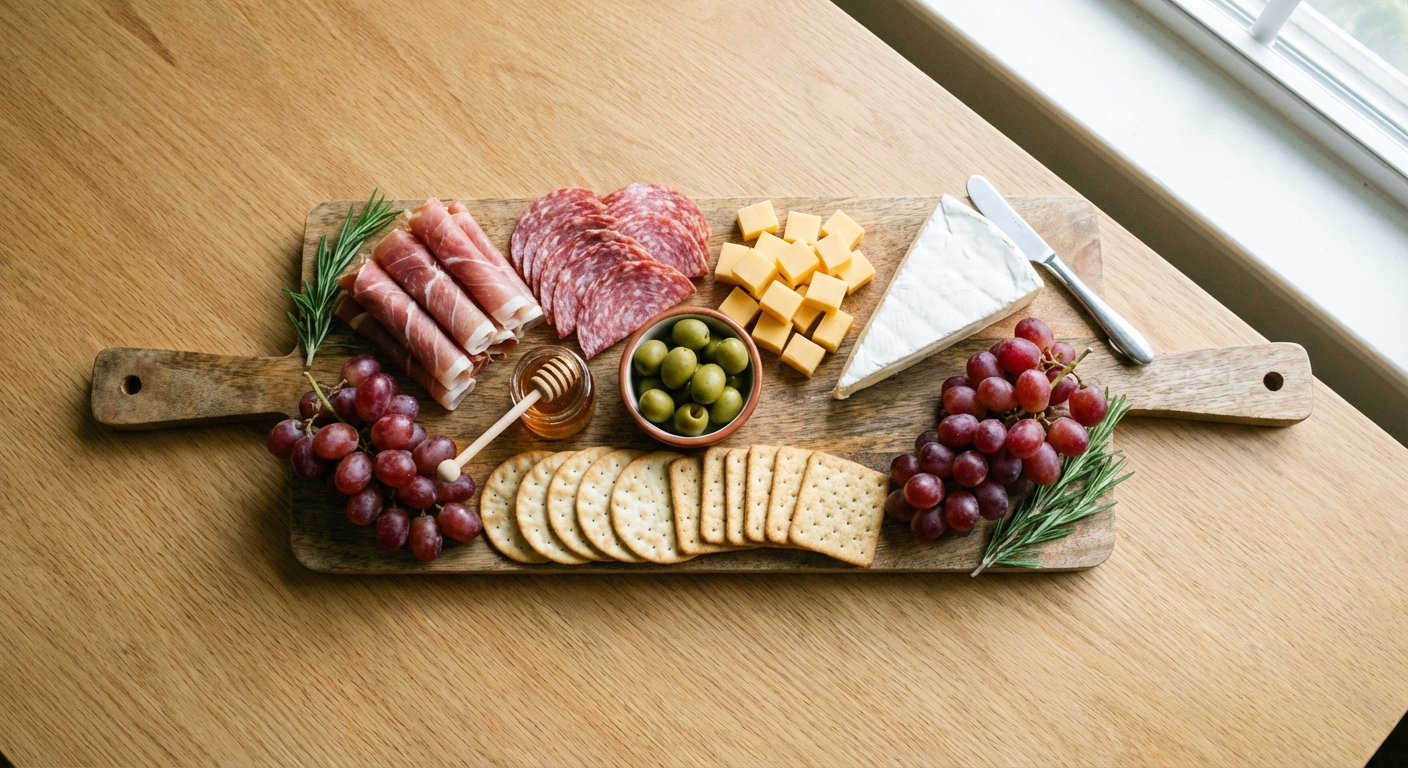
A charcuterie board for beginners is one of the most rewarding things you can make with zero cooking. You buy ingredients, arrange them, and suddenly you have something that looks like it belongs in a magazine. The secret is that charcuterie boards are far more about shopping and arrangement than technique.
If you have never built one before, the options can feel overwhelming. Dozens of meats, hundreds of cheeses, and an endless list of accompaniments. This guide strips it down to exactly what you need to know — what to buy, how much, how to arrange it, and how to make it look like you have been doing this for years.
What Is a Charcuterie Board?
At its core, a charcuterie board is a curated spread of cured meats, cheeses, and accompaniments served on a board or platter. The word charcuterie comes from French and literally means the craft of preparing and assembling cured meats. Over time the term has expanded to include the entire spread — meats, cheeses, fruits, nuts, crackers, and condiments.
A good charcuterie board balances flavors (salty, sweet, savory, tangy), textures (creamy, crunchy, chewy), and visual appeal. That sounds complicated, but it follows a simple formula that works every time.
The Beginner Formula: 3-3-3-3
For your first board, follow the 3-3-3-3 rule. This keeps shopping simple and guarantees variety without decision paralysis.
- 3 meats: One sliced salami, one whole-muscle (prosciutto or coppa), one wildcard
- 3 cheeses: One soft, one semi-firm, one hard
- 3 accompaniments: One fruit, one olive or pickle, one nut
- 3 vehicles: Crackers, breadsticks, sliced baguette
That is 12 items total. You can find every single one at a regular grocery store. No specialty shop required.
Choosing Your Meats
Meat is the anchor of any charcuterie board. As a beginner, you want meats that are widely available, universally liked, and easy to arrange. Here are the three categories to fill.
Salami (The Familiar One)
Genoa salami is the safest starting point. It is mild, slightly garlicky, and something almost everyone has eaten before. Buy it pre-sliced from the deli counter — about 4 ounces for a board serving 4-6 people. Fold each slice into quarters to create little fans or flowers.
If you want to step up slightly, try soppressata. It has a coarser grind and bolder flavor that adds interest without being polarizing.
Prosciutto (The Elegant One)
Prosciutto is air-dried ham sliced paper thin. It is salty, silky, and melts on the tongue. This is usually the ingredient that makes people say your board looks professional. Buy 3-4 ounces and loosely bunch the slices into rosettes — grab one end of a slice and let the rest drape and fold naturally.
Prosciutto di Parma is the gold standard, but any Italian-style prosciutto from the deli counter works for a beginner board.
The Wildcard
Your third meat adds personality. Good beginner wildcards include:
- Coppa (capicola): Beautifully marbled, richer than prosciutto, stunning visual
- Mortadella: Mild Italian bologna with pistachios — cube it for a different texture
- Pepperoni: Familiar, slightly spicy, crowd-pleasing — works especially well if kids are eating
Choosing Your Cheeses
The key to cheese selection is texture variety. One soft, one semi-firm, one hard. This creates natural contrasts that make the board interesting.
Soft Cheese
Brie is the beginner default and for good reason. It is creamy, mild, and looks beautiful on a board. Buy a small wheel or wedge. Let it sit at room temperature for 30 minutes before serving — cold brie is firm and bland, room-temperature brie is oozy and rich.
Alternatives: Camembert (earthier than brie), fresh goat cheese log (tangy, bright).
Semi-Firm Cheese
Gouda hits the sweet spot. Mild, slightly sweet, universally liked. Young gouda (aged 1-3 months) is creamy and approachable. Aged gouda (12+ months) has caramel notes and crunchy crystals. Either works — young for crowd-pleasing, aged for conversation.
Alternatives: Havarti (buttery, very mild), Manchego (nutty, Spanish).
Hard Cheese
Aged cheddar is the most accessible hard cheese. White or yellow, sharp or extra-sharp — pick what you like. Cut it into small cubes or rectangular sticks. The firm texture contrasts beautifully with the soft brie.
Alternatives: Parmigiano-Reggiano (break into rustic chunks with a knife tip), Pecorino Romano (salty, sharp). See our full cheese pairing guide for more options.
Portion guide: 2 ounces of cheese per person across all varieties. For 6 guests, that is 12 ounces total — about 4 ounces of each type.
Accompaniments: Sweet, Salty, Crunchy
Accompaniments are what transform a meat and cheese plate into a charcuterie board. They add color, flavor contrast, and visual drama. Stick to the three categories below and you cannot go wrong.
Fruit (The Sweet Element)
Red grapes are the classic choice. They add pops of color, pair with everything, and guests can pull off individual grapes without disrupting the board. Break a bunch into smaller clusters of 4-6 grapes and tuck them into gaps on the board.
Seasonal alternatives: fresh figs (fall), strawberries (spring/summer), dried apricots (year-round, add a chewy texture).
Olives or Pickles (The Salty-Tangy Element)
Castelvetrano olives are the beginner olive. They are bright green, buttery, mild, and even people who think they dislike olives often enjoy them. Put them in a small bowl on the board to contain the brine.
Alternatives: Kalamata olives (bolder), cornichons (tiny French pickles, tangy and crunchy), marinated artichoke hearts.
Nuts (The Crunchy Element)
Marcona almonds are the charcuterie-board nut. They are roasted, lightly salted, and have a buttery sweetness that pairs with everything. Scatter them in small clusters across the board.
Alternatives: Candied walnuts (sweet contrast), roasted pistachios (vibrant green color), mixed nuts.
Vehicles: Crackers, Bread, and Breadsticks
You need something to carry the meat and cheese from board to mouth. Offer variety — some people prefer crackers, others want bread.
- Water crackers or plain table crackers: Neutral flavor, sturdy enough for soft cheese, do not compete with toppings
- Sliced baguette: Cut on a bias into half-inch rounds. Toast lightly if you want extra crunch
- Breadsticks (grissini): Tall, dramatic, great for wrapping with prosciutto
Count on 4-5 crackers or bread slices per person. Err on the side of more — running out of crackers before the meat is gone is the most common beginner mistake. For more on selecting the perfect crackers, see our crackers guide.
Condiments: The Finishing Touches
Condiments are optional for a beginner board but make a big difference in flavor depth. Start with one or two.
- Honey: Drizzle over brie or serve in a small pot with a honey dipper. Honey plus aged cheese is a classic combination.
- Whole grain mustard: Tangy, slightly crunchy, pairs perfectly with salami and cheddar. Serve in a small ramekin.
- Fig jam or pepper jelly: Adds a sweet-savory element. A tablespoon next to the soft cheese gives guests a flavor revelation.
Choosing a Board or Platter
You do not need a fancy board. Here is what works at every budget level:
- Budget: A large wooden cutting board you already own. Any shape works.
- Mid-range: A 12-16 inch round or rectangular wood board from a kitchen store. Acacia and olive wood are popular.
- Upgrade: A marble slab keeps cheese cool and looks stunning.
- No board? Use a rimmed baking sheet lined with parchment paper. It works perfectly and cleans up in seconds.
Size guide: Plan roughly 1 inch of board length per guest. A 12-inch board serves 4-6 comfortably. A 16-inch board handles 8-10.
How to Arrange Your Board: Step by Step
This is where beginners get nervous, but arrangement follows a predictable sequence. Do it in this order and your board will look professional every time.
Step 1: Place the Cheeses First
Cheeses are your anchor points. Place them in different zones of the board — one near the top, one center-left, one bottom-right. This creates visual balance and forces variety across the board. Cut brie into a wedge to show the creamy interior. Leave gouda in a wedge and provide a cheese knife. Pre-cube or slice the cheddar.
Step 2: Add Small Bowls
Place small bowls or ramekins for olives, mustard, honey, or anything with liquid. Tuck them between the cheeses to create more anchor points. The bowls break up the surface and add height.
Step 3: Arrange the Meats
Fold and arrange meats around the cheeses and bowls. Prosciutto rosettes go in clusters of 3-4. Salami folds fan out in a line or S-curve. The wildcard meat fills a remaining zone. Let meats flow organically — slight overlaps and curves look more natural than rigid rows.
Step 4: Add Crackers and Bread
Fan crackers in rows along the edges of the board. Stack baguette slices in a few spots. Stand breadsticks upright by leaning them against a bowl or cheese wedge. Crackers fill space fast and add visual rhythm.
Step 5: Fill the Gaps
This is where grapes, nuts, dried fruit, and herbs go. Tuck grape clusters into empty corners. Scatter almonds in small piles. Add a few sprigs of fresh rosemary or thyme for greenery. The goal is eliminating all visible board surface — a full board looks generous and intentional.
Portion Planning by Group Size
Getting the right amount prevents waste and ensures nobody goes hungry. These numbers assume the board is an appetizer, not a full meal.
- 2-4 guests: 8-12 oz meat total, 8-12 oz cheese, one cracker variety, 2-3 accompaniments
- 6-8 guests: 16-24 oz meat, 16-24 oz cheese, two cracker varieties, 3-4 accompaniments
- 10-12 guests: 24-36 oz meat, 24-36 oz cheese, two-three cracker varieties, 4-5 accompaniments, consider a second board
For a full breakdown on meat quantities, see our portion planning guide.
Beginner Shopping List
Here is your exact shopping list for a board serving 6-8 people. Print this or screenshot it.
- 4 oz Genoa salami (sliced)
- 4 oz prosciutto (sliced)
- 4 oz coppa or sopressata (sliced)
- 1 small brie wheel or wedge (8 oz)
- 6 oz gouda (wedge)
- 6 oz aged cheddar (block)
- 1 bunch red grapes
- 6 oz Castelvetrano olives
- 4 oz Marcona almonds
- 1 box water crackers
- 1 baguette
- Small jar of honey
- Small jar of whole grain mustard
Total cost: Roughly 35-55 dollars depending on your store. That feeds 6-8 people a generous appetizer spread — far cheaper per person than most restaurant appetizers.
Common Beginner Mistakes to Avoid
Every first-timer makes at least one of these. Now you will not.
- Serving cheese cold: Pull cheese from the fridge 30-45 minutes before serving. Cold cheese has muted flavor and firm texture. Room-temperature cheese is dramatically better.
- Not enough crackers: The most common complaint is running out of vehicles. Buy more than you think you need.
- Leaving meat in deli packaging: Unfold and separate every slice. Peel apart prosciutto gently. Bunched-up deli meat looks lazy.
- Forgetting small plates and napkins: Set a stack nearby. Nobody wants to hover over the board dripping olive brine.
- Overcomplicating it: Your first board does not need 20 ingredients. The 3-3-3-3 formula with 12 items looks and tastes impressive.
How Long Can a Charcuterie Board Sit Out?
Food safety matters. The general rule is 2 hours at room temperature. In hot weather (above 90°F), cut that to 1 hour. After that window, soft cheeses and meats should be refrigerated or discarded.
Practical tips for longer events:
- Build a smaller board and replenish from a backup tray in the fridge
- Use a marble or stone board — it stays cooler longer
- Place the board in a shaded area, away from direct sunlight
- Hard cheeses and dry-cured meats are more forgiving than soft cheeses and fresh items
Leveling Up: Your Second Board
Once you have nailed the basics, here is where to grow:
- Upgrade meats: Try nduja (spreadable spicy salami), duck prosciutto, or bresaola
- Upgrade cheeses: Burrata, truffle gouda, aged Comté, blue cheese
- Add a theme: Italian-only, French-only, or seasonal boards (see our Easter board guide)
- Make your own: Start with beef jerky or duck prosciutto — both are beginner-friendly curing projects
- Pair with wine: See our wine pairing guide for specific combinations
The most important thing is to start. Your first board will not be perfect, and that is completely fine. Charcuterie is forgiving — even a messy board tastes great when the ingredients are good. Build one this weekend. You will wonder why you waited.
For premium charcuterie meats that make any board special, quality sourcing is the difference between good and unforgettable.
Frequently Asked Questions
What is the easiest charcuterie board to make for beginners?
Follow the 3-3-3-3 formula: 3 meats (salami, prosciutto, coppa), 3 cheeses (brie, gouda, cheddar), 3 accompaniments (grapes, olives, almonds), and 3 vehicles (crackers, baguette, breadsticks). Twelve items total, all available at any grocery store.
How much does a charcuterie board cost to make at home?
A board serving 6-8 people typically costs 35-55 dollars depending on where you shop. That breaks down to roughly 5-8 dollars per person — significantly cheaper than restaurant charcuterie platters that often start at 15-25 dollars per person.
How far in advance can I make a charcuterie board?
You can assemble a charcuterie board up to 2 hours before serving. Cover it tightly with plastic wrap and refrigerate. Pull it out 20-30 minutes before guests arrive to let cheeses come to room temperature. Do not add crackers until serving time — they go stale quickly.
What is the best board size for beginners?
A 12-16 inch board works for most situations. A 12-inch board comfortably serves 4-6 people, while a 16-inch board handles 8-10. Start with a wooden cutting board you already have — you do not need a specialized charcuterie board for your first attempt.
More Charcuterie Guides
What Is Pink Curing Salt? Sodium Nitrite Explained for Home Charcuterie
Pink curing salt is the most essential — and most misunderstood — ingredient in meat curing. This guide explains what it is, why it's pink, how sodium nitrite prevents botulism, proper usage rates, and whether you can cure meat without it.
10 min readHow Long Does Charcuterie Last? Storage Guide for Cured Meats & Cheese
Understanding proper charcuterie storage ensures you enjoy it at peak quality while avoiding food safety risks.
10 min read