How Much Meat for a Charcuterie Board: Portions by Group Size
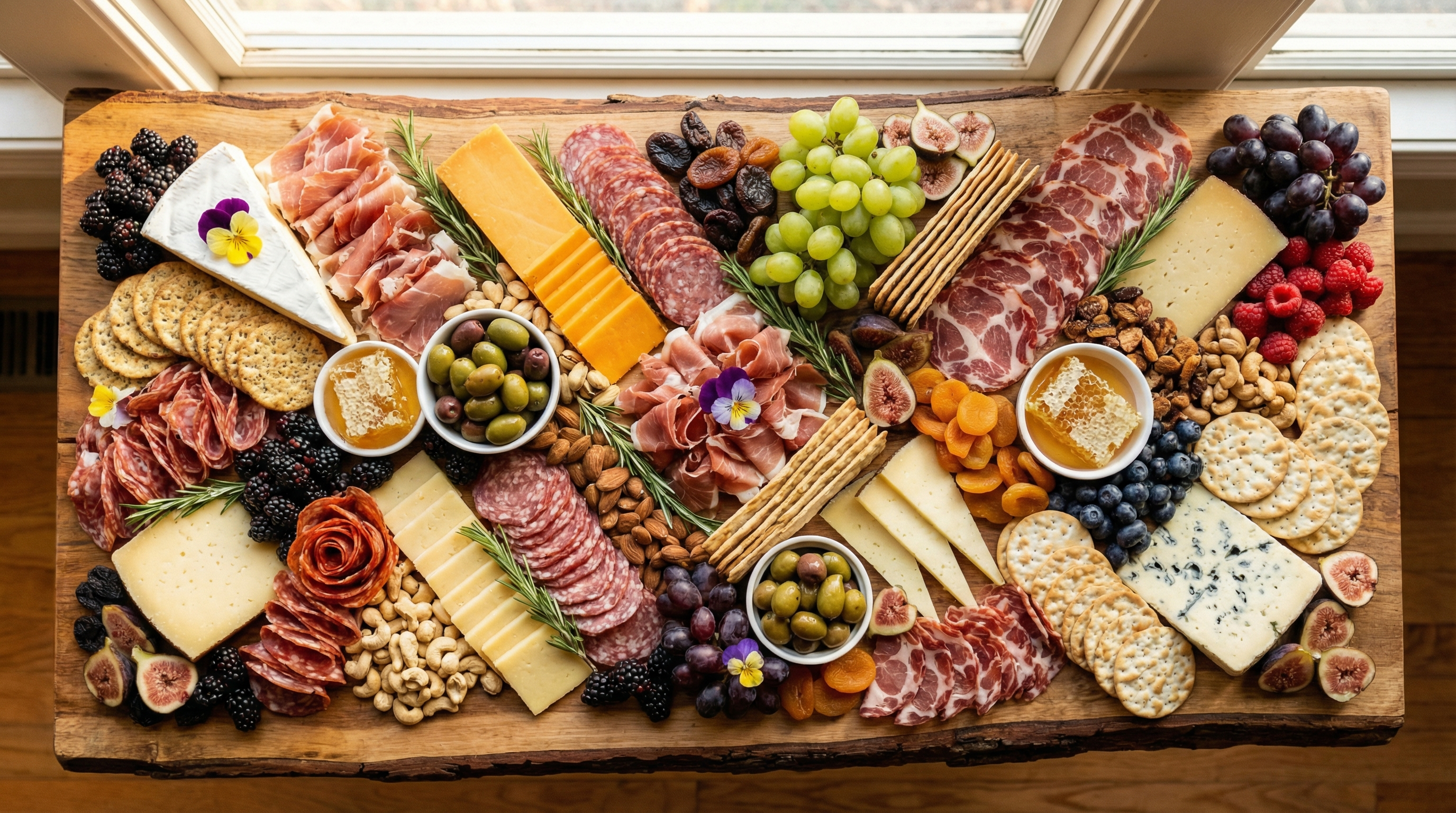
The number one question people ask before building a charcuterie board isn’t which meats to buy or how to arrange them. It’s simpler than that: how much do I actually need?
Buy too little and you’re left with a sparse, embarrassing spread that runs out before the first drink is finished. Buy too much and you’re eating prosciutto for breakfast for the next five days—which isn’t the worst fate, but it’s not what you planned.
This guide gives you precise portion calculations for any group size, from an intimate evening for two to a party of fifty. No vague estimates, no “it depends.” Just the numbers that work.
The Golden Rule: 2 Ounces of Meat Per Person
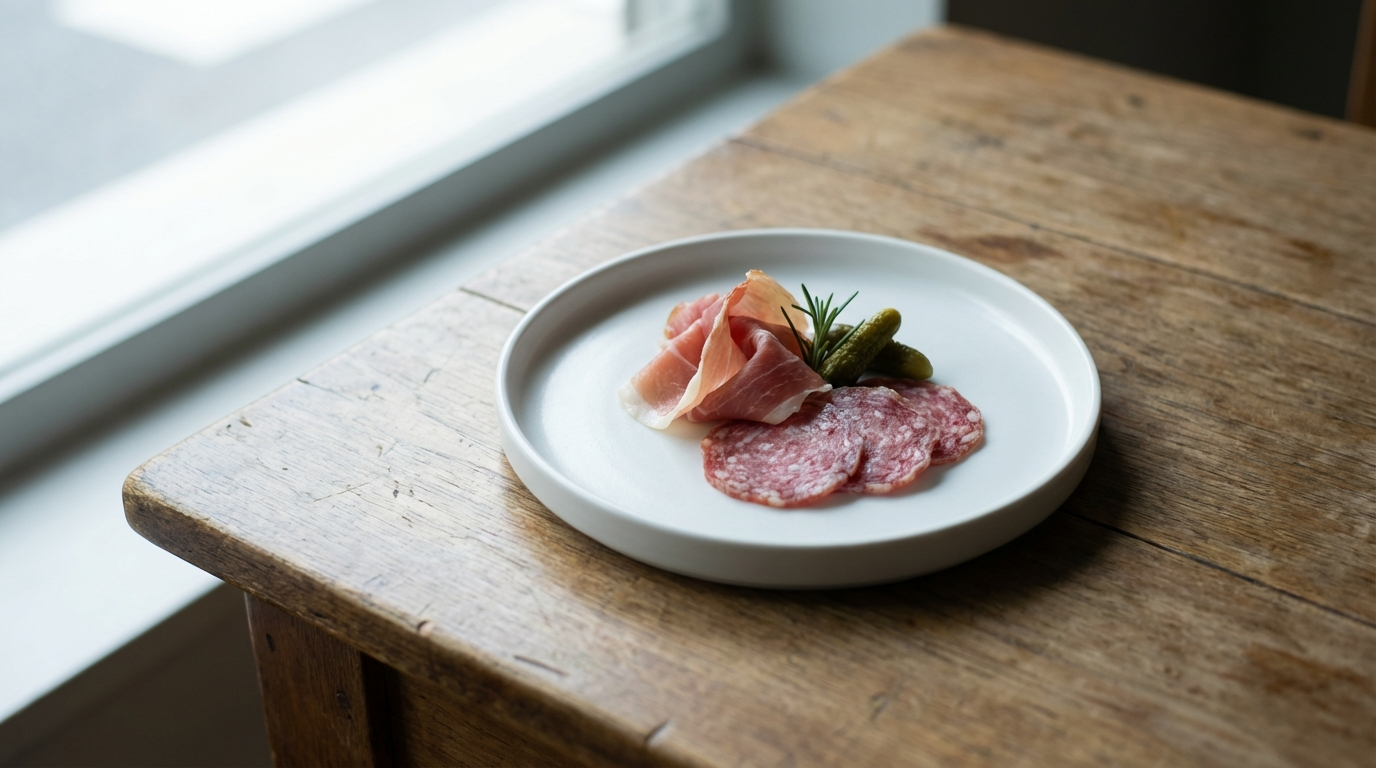
For a charcuterie board served as an appetizer or part of a larger meal, plan on 2 ounces (55–60 grams) of cured meat per person. This is the baseline number that professional caterers and charcuterie businesses use, and it works consistently.
If the charcuterie board is the main event—a grazing dinner, a wine-and-cheese night, or the centerpiece of a casual gathering—increase that to 3–4 ounces (85–115 grams) per person.
These numbers account for the reality that cured meats are dense and richly flavored. Two ounces of prosciutto is far more satisfying than two ounces of deli turkey. The salt, fat, and concentrated flavor of cured meats mean people eat less volume than they would with fresh meats.
Why This Number Works
A standard slice of prosciutto weighs about 0.3–0.5 ounces. A thin round of salami is about 0.2–0.3 ounces. At 2 ounces per person, each guest gets roughly 5–8 individual pieces of meat across your varieties—enough to sample everything without overwhelming their palate before the cheese and accompaniments.
Portion Breakdown by Group Size
Here’s a quick-reference breakdown that accounts for the appetizer scenario (2 oz per person). For main-event boards, multiply the meat column by 1.5–2.
2 guests: 4 oz meat total (about ¼ lb) • 2–3 meat varieties • 4 oz cheese • Small board (10–12 inches)
4 guests: 8 oz meat total (½ lb) • 3 meat varieties • 8 oz cheese • Medium board (14–16 inches)
8 guests: 1 lb meat total • 3–4 meat varieties • 1 lb cheese • Large board (18–22 inches)
12 guests: 1.5 lbs meat total • 4–5 meat varieties • 1.5 lbs cheese • Extra-large board or two medium boards
20 guests: 2.5 lbs meat total • 5–6 meat varieties • 2.5 lbs cheese • Multiple boards or a grazing table
30 guests: 3.75 lbs meat total • 5–6 meat varieties • 3.75 lbs cheese • Grazing table setup
50 guests: 6.25 lbs meat total • 6–8 meat varieties • 6.25 lbs cheese • Full grazing table or multiple stations
Notice the pattern: the meat-to-cheese ratio stays roughly 1:1 by weight. This is intentional. Cheese and meat complement each other in both flavor and satiety, and equal portions ensure neither runs out before the other.
How Many Meat Varieties Do You Need?
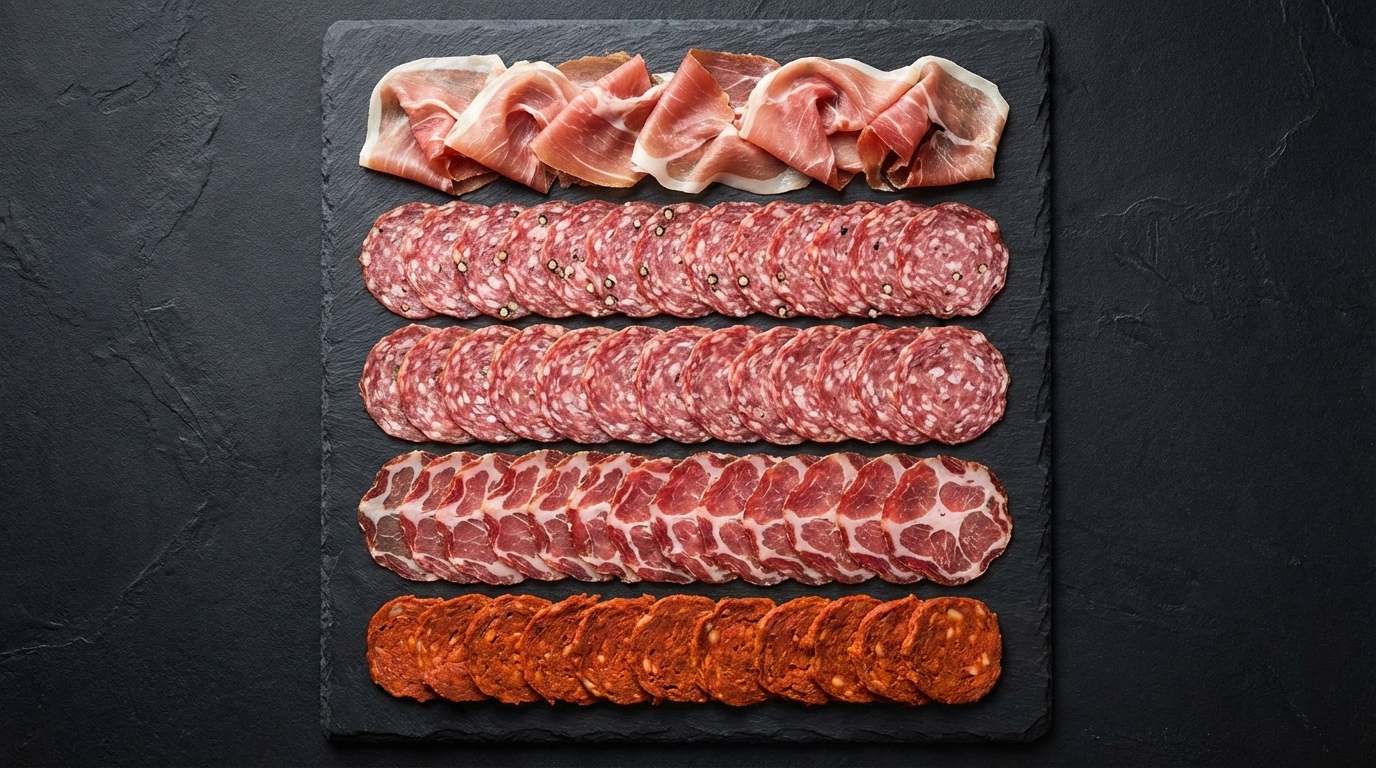
More isn’t always better. The right number of meat varieties depends on your group size and how much total meat you’re buying:
Under 8 oz total meat: Stick to 2–3 varieties. With less than half a pound, spreading across more types means each variety gets only a few slices—barely enough to taste.
8 oz to 1.5 lbs total meat: 3–4 varieties is the sweet spot. Each variety gets enough slices to be represented well without overcrowding the board.
Over 1.5 lbs total meat: 4–6 varieties. At this scale, more variety adds visual impact and lets guests explore different flavors. Beyond 6 varieties, you start creating decision fatigue rather than excitement.
The Variety Formula
For balanced flavor, choose one meat from each of these categories:
1. A silky, thinly sliced whole-muscle meat — Prosciutto, bresaola, lonza, or coppa. This is your “melt in your mouth” option.
2. A firm, sliceable salami — Genoa salami, soppressata, finocchiona, or saucisson sec. Provides chew, spice, and substance.
3. A spreadable or soft option — ’Nduja, pâté, rillettes, or a soft cured sausage. Gives textural contrast and pairs beautifully with bread and crackers.
4. A bold or distinctive pick (for larger boards) — Chorizo, peppered salami, truffle salami, or a regional specialty. This is your conversation starter.
Adjusting Portions: When to Go Higher or Lower
The 2-ounce baseline is reliable, but several factors should shift your planning:
Increase Portions When:
- The board is the main meal. Bump to 3–4 oz per person. When there’s no entrée following, guests will eat more from the board.
- It’s a long event. Cocktail parties, game days, or multi-hour gatherings see sustained grazing. Add 50% more than the standard calculation.
- Your crowd loves charcuterie. If you know your guests are enthusiastic eaters who’ll hover around the board, plan for 3 oz per person minimum.
- There are few other food options. If the board sits alongside just drinks and one other snack, it’ll get hit harder.
Decrease Portions When:
- It’s a pre-dinner appetizer. If a full meal follows within 30–45 minutes, 1.5 oz per person is plenty. You want guests intrigued, not full.
- You’re serving multiple appetizers. If the charcuterie board competes with bruschetta, dips, or other starters, scale back to 1.5 oz.
- Children are included in the headcount. Kids typically eat very little cured meat. Count children at half portions or skip them entirely in your meat calculation.
- Dietary restrictions are common. If several guests don’t eat pork (most cured meats are pork-based), reduce the pork meats and add beef bresaola, duck prosciutto, or turkey-based options for those guests specifically.
The Complete Charcuterie Board Shopping Formula
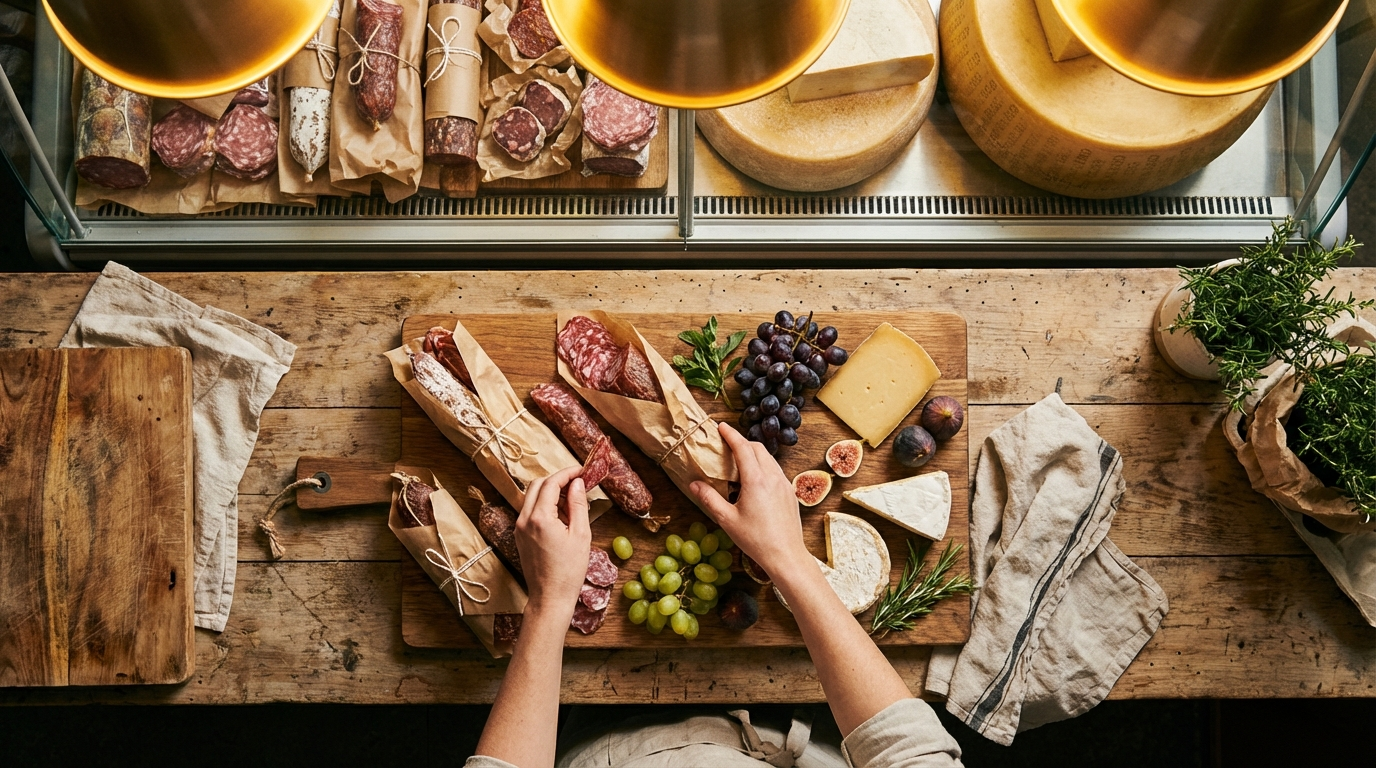
Meat is the star, but a charcuterie board is an ensemble. Here’s how every component scales relative to your meat purchase:
Cheese: Match your meat weight 1:1. If you’re buying 1 lb of meat, buy 1 lb of cheese. Choose 2–4 varieties covering soft, semi-firm, and hard categories.
Crackers and bread: Plan 4–6 crackers or bread pieces per person. A standard box of water crackers (about 4 oz) serves 6–8 people. For a nicer spread, add sliced baguette or crostini.
Fresh fruit: A small cluster of grapes, a handful of berries, or a few fig halves. About 1–2 oz per person. Fruit is a palate cleanser, not a main component.
Olives and pickled items: About 1 oz per person. A small bowl of mixed olives and/or cornichons. These provide acid and contrast to the richness of meat and cheese.
Nuts: About 0.5–1 oz per person. Marcona almonds, walnuts, or candied pecans. Primarily for texture and to fill visual gaps on the board.
Spreads and condiments: 1–2 small pots of honey, whole-grain mustard, fig jam, or pepper jelly. These don’t scale linearly—one jar of each covers up to 20 people.
How to Buy the Right Amount at the Deli Counter
Buying cured meats at a deli counter versus pre-packaged makes a meaningful difference in both quality and portion control.
Deli Counter Tips
Ask for specific weights. “I’d like 3 ounces of prosciutto, sliced thin” is far better than “give me some prosciutto.” Deli staff work with weight all day—they’ll nail it.
Request thin slicing for whole-muscle meats. Prosciutto, bresaola, and coppa should be sliced paper-thin (setting 1–2 on most deli slicers). Thin slices fold and drape beautifully on the board and are easier to eat.
Request medium slicing for salami. Firm salamis like soppressata and Genoa should be about 1/8 inch thick—thin enough to eat in one bite but thick enough to maintain their texture.
Ask for parchment between layers. Thinly sliced prosciutto sticks to itself mercilessly. Request parchment or wax paper between every few slices to prevent a tangled mess when you’re arranging the board.
Pre-Packaged Buying
Pre-packaged cured meats typically come in 3 oz, 4 oz, or 6 oz packages. This is actually convenient for charcuterie boards because the portions align well with per-person calculations:
For 4 people (8 oz total): Buy two 4-oz packages of different meats, or three 3-oz packages for more variety.
For 8 people (16 oz total): Buy three to four 4-oz or 6-oz packages across different varieties.
The trade-off with pre-packaged is less control over slice thickness and slightly less freshness. For casual gatherings, it’s perfectly fine. For a dinner party where presentation matters, hit the deli counter.
Common Portioning Mistakes
Even with good math, these errors trip people up repeatedly:
Mistake 1: Counting Total Guests, Not Eaters
Not everyone at your gathering will eat from the charcuterie board. Some guests arrive late, some are chatting in another room, some fill up on other food. A reasonable estimate is that 75–80% of your total guest count will actually eat from the board. For a party of 20, plan meat for 15–16.
Mistake 2: Forgetting the “First Wave” Effect
When the board first comes out, everyone descends at once. If you’ve calculated exactly the right amount with no buffer, the board will look demolished within 20 minutes even though there’s technically enough food. Add a 15–20% buffer and plan to refill once if it’s a long event. A stocked board that looks abundant encourages relaxed grazing; a sparse board triggers hoarding behavior.
Mistake 3: Uneven Variety Distribution
If you’re buying three meat varieties for 8 people (1 lb total), don’t buy 8 oz of prosciutto and 2 oz each of salami and coppa. Distribute roughly equally: about 5–6 oz of prosciutto (since it’s the most popular) and 5–6 oz split between the others. The most popular meat should get at most 40% of the total weight.
Mistake 4: Ignoring Board Real Estate
You might have the right amount of food but a board that’s either too large (making portions look meager) or too small (creating an overcrowded pile). The rule of thumb: 4–5 square inches of board surface per ounce of total food. For 2 lbs of total food (meat + cheese + accompaniments), you want a board with roughly 128–160 square inches of surface area—about a 12×12 inch board.
Scaling for Large Events
Once you cross 20 guests, the logistics change. You’re no longer building a single board—you’re building a system.
20–30 Guests
Use two medium boards placed at different spots in the room, or one large board with a backup tray in the kitchen ready to refill. Buy your meat in bulk from a deli or specialty shop—explain you’re building a charcuterie spread and they’ll often price-break on volume.
30–50 Guests
Consider a grazing table: a long table covered in parchment paper with meats, cheeses, and accompaniments arranged directly on the surface. This approach uses less board space, allows easy refilling from one end, and creates a stunning visual centerpiece.
At this scale, pre-slice everything in advance. Fold prosciutto into rosettes (easier to grab than flat slices), fan salami in overlapping rows, and pre-cut cheese into bite-sized pieces. Nobody wants to be the person sawing a wedge of Manchego while 40 people wait.
50+ Guests
You’re in catering territory. Consider placing a dedicated person to manage the spread—refilling, straightening, and removing empty areas. Buy whole salamis and slice them yourself (a sharp knife and some patience saves significant money at this volume). Budget approximately $4–6 per person for the meat component alone at quality-grocery prices, or $8–12 per person for premium artisanal options.
Budget Planning by Quality Tier
How much you spend per ounce varies dramatically by where you shop and what you buy:
Grocery store pre-packaged: $1.00–1.50 per ounce. Brands like Columbus, Fratelli Beretta, and Creminelli offer solid quality. Good for casual gatherings and larger groups where budget matters.
Deli counter / specialty store: $2.00–3.50 per ounce. Better quality, custom slicing, and access to varieties not available pre-packaged. This is the sweet spot for most charcuterie boards.
Artisanal / imported: $3.50–7.00+ per ounce. Authentic Prosciutto di Parma DOP, Spanish Ibérico, handcrafted American salumi. Worth it for small groups where quality is the point.
For a dinner party of 8 with quality deli-counter meat at $2.50/oz: 16 oz of meat = roughly $40 for the meat component. Add cheese ($30–40), crackers ($8–12), and accompaniments ($15–20), and your total board costs $93–112. That’s about $12–14 per person for an impressive spread—less than a single cocktail at most restaurants.
Leftover Strategy
Even with perfect math, you’ll sometimes have leftover cured meats. Here’s how to handle them:
Wrap tightly and refrigerate immediately. Cured meats exposed to air during the party should be consumed within 2–3 days. Rewrap in plastic wrap or place in an airtight container.
Unopened packages keep well. Vacuum-sealed deli meats last 2–4 weeks in the refrigerator. Don’t open packages until you need them—if you bought a backup, keep it sealed.
Use leftovers in cooking. Leftover prosciutto crisps beautifully in a pan and tops pasta, salads, or eggs. Salami adds punch to sandwiches, frittatas, or pizza. Coppa and bresaola make excellent sandwich meats. Nothing needs to go to waste.
Quick-Reference Cheat Sheet
Pin this formula and you’ll never overthink charcuterie portions again:
- Appetizer board: 2 oz meat per person + 2 oz cheese per person
- Main-event board: 3–4 oz meat per person + 3–4 oz cheese per person
- Varieties: 1 per 4–5 oz of total meat weight
- Buffer: Add 15–20% for parties over 10 people
- Board size: 4–5 sq inches per oz of total food
- Budget: $10–15 per person covers everything at quality-grocery level
The best charcuterie boards aren’t the ones with the most expensive ingredients or the most elaborate arrangements. They’re the ones where everything is proportioned right—enough abundance to feel generous, enough variety to stay interesting, and enough restraint that every item gets the attention it deserves.
More Charcuterie Guides
What Is Pink Curing Salt? Sodium Nitrite Explained for Home Charcuterie
Pink curing salt is the most essential — and most misunderstood — ingredient in meat curing. This guide explains what it is, why it's pink, how sodium nitrite prevents botulism, proper usage rates, and whether you can cure meat without it.
10 min readHow Long Does Charcuterie Last? Storage Guide for Cured Meats & Cheese
Understanding proper charcuterie storage ensures you enjoy it at peak quality while avoiding food safety risks.
10 min read