How to Make Nduja at Home: Calabria's Spreadable Salami
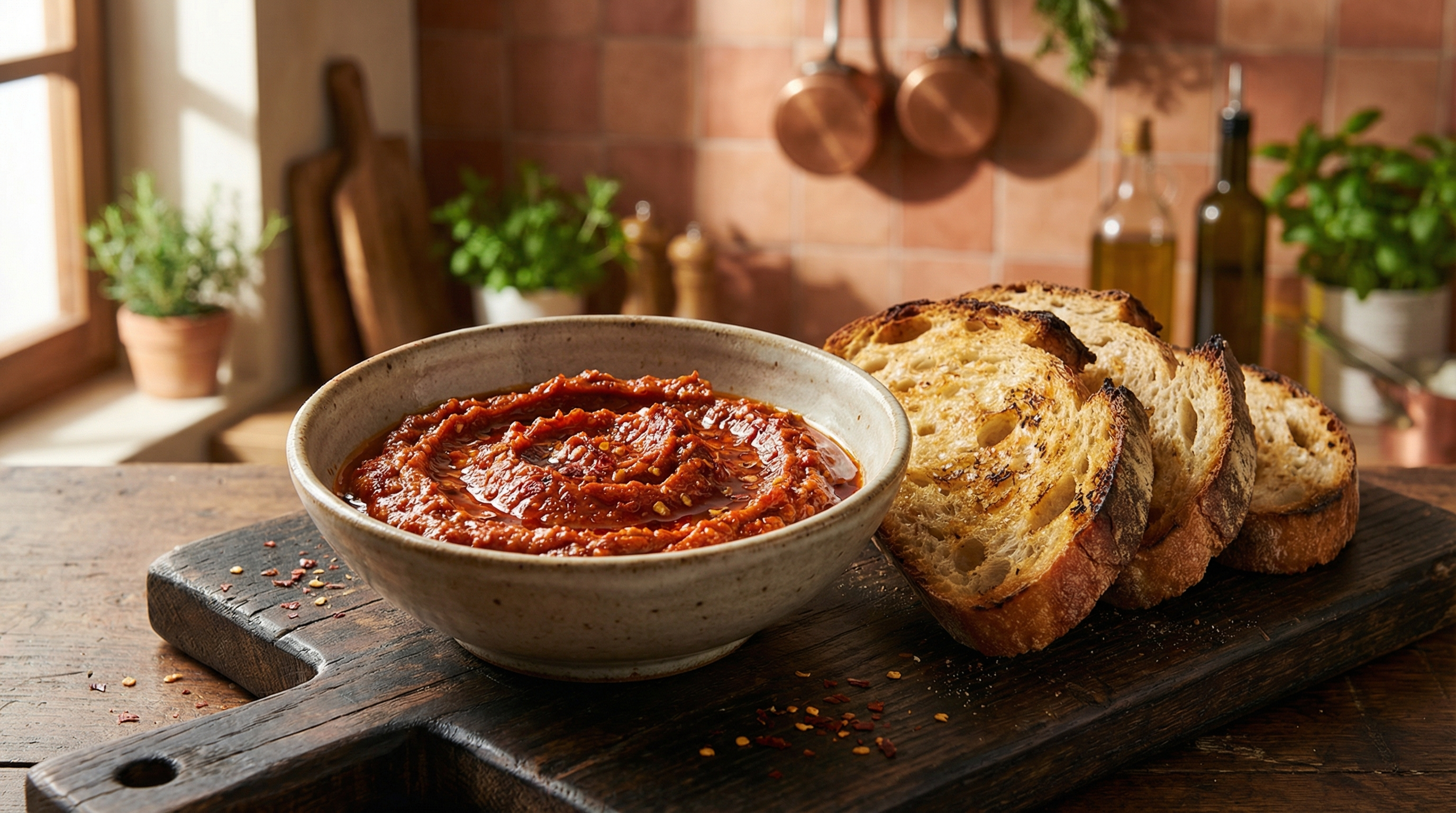
Nduja is the charcuterie world’s best-kept secret that isn’t really a secret anymore. This spreadable, fiery salami from Calabria, Italy has gone from obscure regional specialty to one of the most sought-after items on restaurant menus and charcuterie boards worldwide. And once you taste real nduja — not the watered-down commercial versions — you’ll understand why.
What makes nduja unique in the salami family is its texture. While most salami firms up during curing, nduja stays soft and spreadable, almost like a spicy meat butter. That’s because it contains a much higher ratio of fat and chili peppers than any other cured meat. The result is something that melts on warm bread, dissolves into pasta sauces, and adds an umami-rich heat to almost anything it touches.
Making nduja at home is surprisingly approachable if you’ve done any charcuterie work before. The ingredient list is short, the technique is straightforward, and the results are dramatically better than anything you can buy at a store. Here’s how to do it right.
What Is Nduja, Exactly?
Nduja (pronounced “en-DOO-yah”) originates from the town of Spilinga in Calabria, the toe of Italy’s boot. The name likely derives from the French andouille, brought to southern Italy during the Napoleonic period, though nduja bears almost no resemblance to its French ancestor.
Traditional nduja is a paste of pork, Calabrian chili peppers, and salt, stuffed into natural casings and cold-smoked before a short cure. The proportions are what set it apart from everything else in the salami world:
- Fat content: 50-70% of the total mixture is fat (pork belly, jowl, or back fat), compared to 25-35% in most salami
- Chili pepper ratio: 25-30% of the total weight is roasted Calabrian chili peppers — an extraordinary amount
- Lean meat: Only 15-25% lean pork, usually from the shoulder
This extreme fat-to-lean ratio is what keeps nduja spreadable. Fat doesn’t firm up the way lean protein does during curing, so the finished product stays soft enough to spread with a knife at room temperature. The massive dose of chili peppers contributes capsaicin, which acts as a natural preservative alongside the salt and curing process.
In Spilinga, nduja is made in January when temperatures are cool enough for safe curing, and families have been passing down their specific pepper-to-pork ratios for generations. Every family insists theirs is the best. They’re probably all right.
Ingredients and Equipment
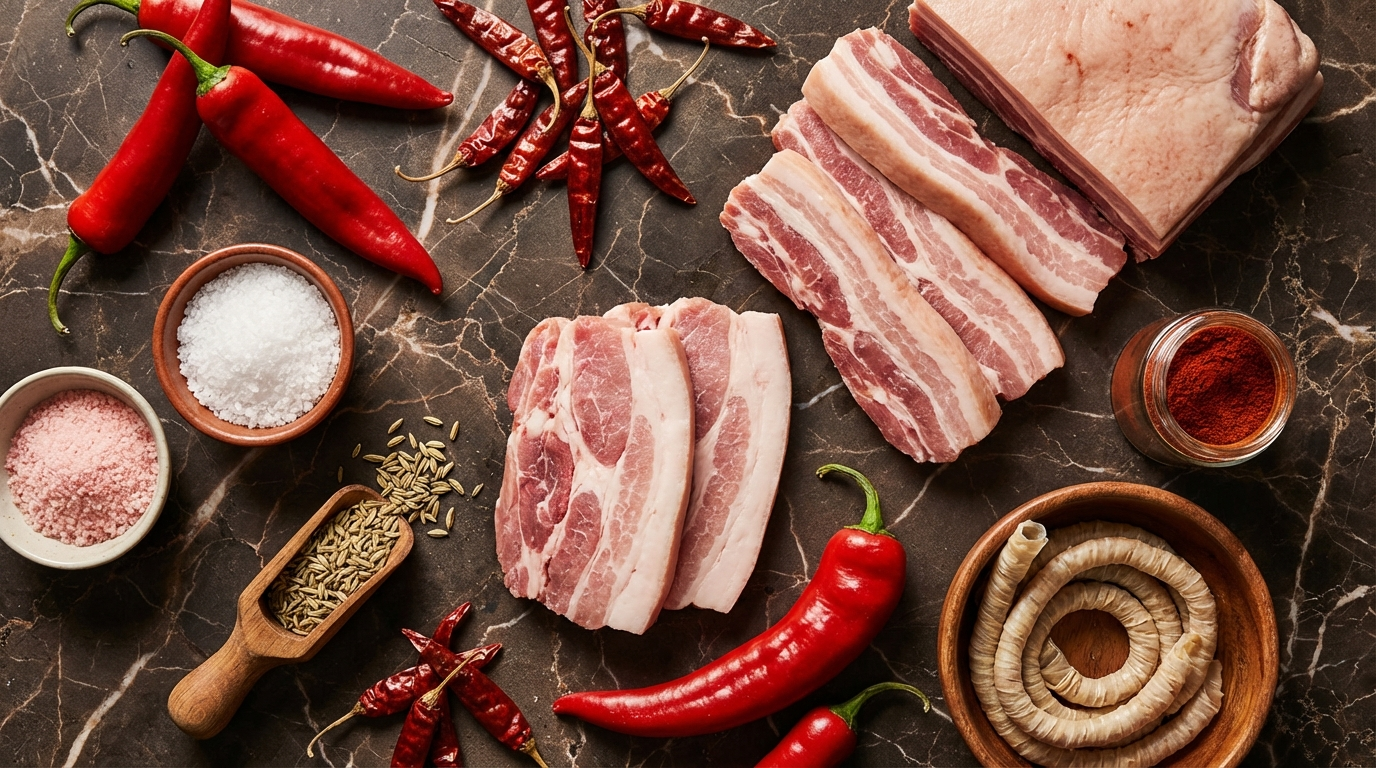
Nduja requires fewer ingredients than most cured meats, but the quality of each one matters enormously. Here’s what you need for a 5-pound batch:
Meat and Fat
- 1.5 lbs (680g) pork belly — skin removed, cut into 1-inch cubes. This provides the primary fat base.
- 1 lb (450g) pork jowl (guanciale cut) — the traditional fat source for nduja. If unavailable, substitute additional pork belly or back fat.
- 0.5 lb (225g) pork shoulder — lean meat for structure and flavor depth. Don’t go leaner than shoulder — you need intramuscular fat even in the lean component.
Peppers and Seasonings
- 1.5 lbs (680g) roasted Calabrian chili peppers — this is the soul of nduja. Use dried Calabrian peppers (peperoncini calabresi) that you rehydrate and roast, or jarred roasted Calabrian peppers drained of oil. If you absolutely cannot find Calabrian peppers, a blend of 70% sweet roasted red peppers and 30% hot chili peppers (like Fresno or guajillo) approximates the flavor.
- 45g fine sea salt — approximately 2% of total weight
- 6g Cure #2 (Prague Powder #2) — 0.25% of total weight. Cure #2 is preferred because nduja undergoes a slow cure, and the nitrate in Cure #2 converts to nitrite over time. See our curing salts guide for details.
- 5g smoked paprika — for additional depth (optional but recommended)
- 3g fennel seeds, toasted and ground — optional, but traditional in some Calabrian families
- 2g freshly ground black pepper
Casings
- Hog casings, 38-42mm for standard links, or beef middles, 55-65mm for the traditional large format. Natural casings only — nduja needs to breathe during the cold smoke and cure.
Equipment
- Meat grinder with fine plate (3/16-inch or 4.5mm) and coarse plate (3/8-inch or 10mm)
- Sausage stuffer — a dedicated vertical stuffer is ideal
- Digital scale accurate to 0.1g
- Cold smoking setup — a smoke generator (like an A-MAZE-N tube smoker) in your regular smoker, or a dedicated cold smoker
- Curing space at 55-65°F, 70-80% humidity
- Nitrile gloves — you’re handling a lot of hot peppers
- Food processor (optional, for making pepper paste)
Preparing the Peppers
The peppers are what make or break your nduja. This step takes time but it’s where all the flavor lives.
If using dried Calabrian peppers: Remove stems and most seeds (leave some seeds for extra heat). Soak in warm water for 30 minutes until pliable. Drain thoroughly — excess moisture is the enemy. Roast on a sheet pan at 350°F for 15-20 minutes until fragrant and slightly charred. Cool completely, then puree in a food processor to a thick paste. You should have a deep red, intensely aromatic pepper paste.
If using jarred roasted Calabrian peppers: Drain thoroughly in a colander for at least 30 minutes, pressing gently to remove excess oil. Puree to a paste. These are more convenient but the flavor won’t be quite as complex as starting from dried.
Your pepper paste should be thick, not watery. If it’s too loose, spread it on a parchment-lined sheet and bake at 250°F for 20-30 minutes to concentrate it, stirring occasionally. The paste should hold its shape on a spoon.
Grinding and Mixing
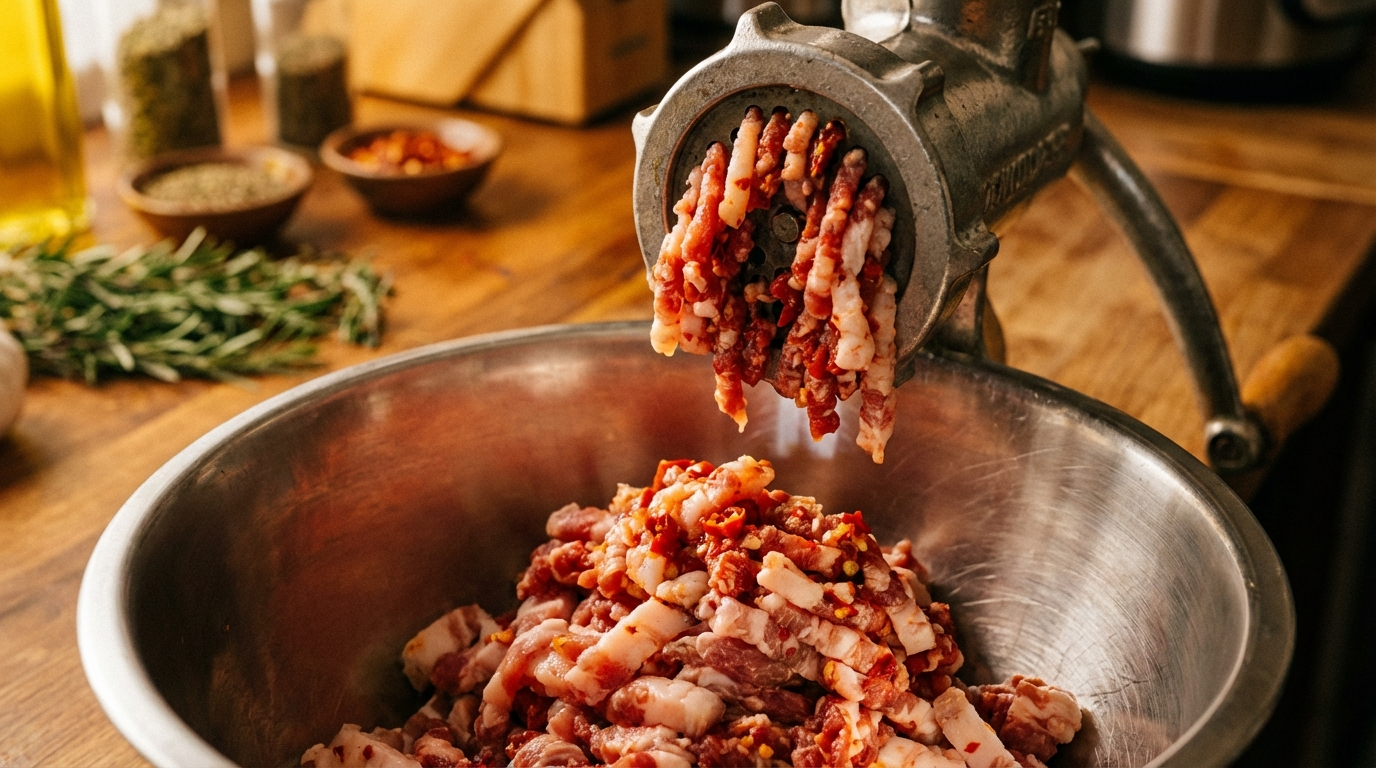
Temperature control during grinding is critical. You want the meat and fat cold enough to grind cleanly but not so frozen that your grinder struggles.
- Partially freeze the meat and fat: Cut all pork into 1-inch cubes and spread on a sheet pan. Freeze for 45-60 minutes until firm on the outside but not rock-solid. The internal temperature should be around 28-30°F.
- First grind (coarse plate): Run all pork through the 3/8-inch plate. This breaks down the structure while keeping distinct fat and lean pieces.
- Second grind (fine plate): Switch to the 3/16-inch plate. Run the ground pork through again. This is essential — nduja needs a finer texture than standard salami because it must be spreadable.
- Combine with peppers and seasonings: In a large bowl (stainless steel, not plastic — the pepper oils will stain), combine the double-ground pork with your pepper paste, salt, Cure #2, and all other seasonings.
- Mix thoroughly: Using your hands (gloved — trust me on this), mix and knead the mixture for 8-10 minutes. You want the fat, lean, and peppers fully integrated into a uniform, sticky paste. The mixture should be deep red-orange throughout with no white fat streaks. If it looks marbled, keep mixing.
- Final grind (optional): For an ultra-smooth texture, run the mixed paste through the fine plate one more time. Traditional Spilinga nduja is ground three times total.
At this point, your nduja mixture should look like a thick, intensely red-orange paste that’s slightly sticky. It should smell powerfully of chili peppers and raw pork. Take a tiny piece, cook it in a pan, and taste for salt and heat. Adjust now — you can’t fix seasoning after stuffing.
Stuffing the Casings
Stuffing nduja is different from stuffing regular sausage because the mixture is much softer and wetter. It wants to squish out of the casing rather than hold its shape.
- Prepare casings: Soak natural casings in warm water for 30 minutes. Rinse inside and out. If using hog casings, you’ll make links 6-8 inches long. Beef middles make single large pieces 10-12 inches.
- Load the stuffer: Pack the nduja paste into your stuffer firmly, eliminating air pockets. Air pockets are the enemy of any cured meat but especially problematic in nduja because the soft texture makes them harder to detect.
- Stuff slowly: Use steady, gentle pressure. Overstuffing will burst the casings. Understuffing creates air pockets. You want the casings full but not taut — about 80% capacity. The nduja will shrink slightly during smoking and curing.
- Tie off: Twist or tie with butcher’s twine at your desired length. Leave a loop of twine at one end for hanging.
- Prick carefully: Use a sausage pricker or sterilized pin to poke tiny holes where you see any air bubbles. Be gentle — the soft mixture can ooze out of large holes.
Cold Smoking
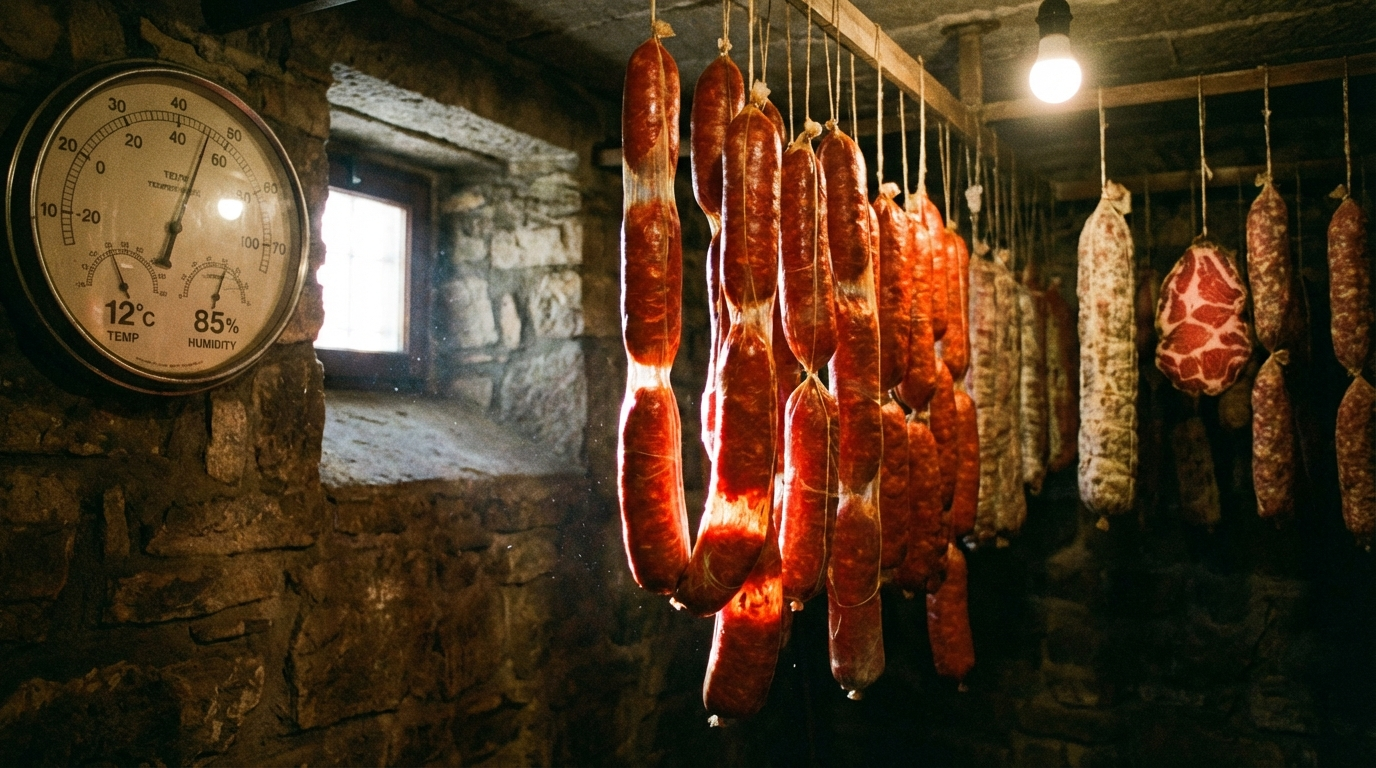
Cold smoking is what gives nduja its characteristic smoky undertone that balances the intense chili heat. In Spilinga, nduja is traditionally smoked over olive wood or local hardwoods for several days in stone smokehouses.
For home production:
- Temperature: Keep the smoker below 80°F at all times. Above this, the fat starts to render and you’ll lose the spreadable texture. An A-MAZE-N tube smoker or similar cold smoke generator works perfectly for this.
- Wood choice: Olive wood is traditional. Cherry, apple, or oak work well too. Avoid mesquite or hickory — they’ll overpower the pepper flavor. See our smoking wood guide for details.
- Duration: Smoke for 2-3 days, approximately 4-6 hours per day. Let the nduja rest overnight between smoking sessions in a cool place (40-50°F). You’re not trying to cook it — just deposit smoke flavor and help form the outer pellicle (the dry surface that protects the interior).
- Pellicle formation: Before the first smoking session, hang the stuffed nduja uncovered in your refrigerator (or curing chamber) for 12-24 hours. This forms a tacky surface that absorbs smoke more effectively.
After smoking, the casings should have a golden-brown tint and the nduja should smell incredible — smoky, spicy, and deeply savory.
Curing and Fermentation
Nduja cures faster than most salami because of its high fat and pepper content, but it still needs time to develop flavor.
- Temperature: 55-65°F — a curing chamber is ideal
- Humidity: 70-80%. Lower than most salami because nduja’s high fat content means less moisture to manage.
- Duration: 3-6 weeks minimum. Hog casing links (smaller diameter) cure faster — 3-4 weeks. Beef middle casings need 5-6 weeks.
- Weight loss target: 15-25% weight loss. Unlike hard salami that targets 30-35%, nduja should retain more moisture to stay spreadable.
Check your nduja weekly. Squeeze gently — it should feel soft and yielding, like a thick paste inside the casing. If the outside is getting hard while the inside is still very wet, your humidity is too low or there’s too much airflow. Cover loosely with cheesecloth if case hardening develops.
White mold on the casing surface is normal and desirable — it’s the same Penicillium nalgiovense that develops on other dry-cured meats. Green, black, or fuzzy mold should be wiped with a vinegar-dampened cloth immediately.
How to Know When It’s Ready
Nduja is ready when:
- Weight loss: You’ve hit 15-25% of starting weight
- Texture: It yields to gentle pressure — soft and spreadable, not firm like regular salami
- Aroma: Deep, complex smell of smoke, fermented meat, and chili peppers without any off or sour odors
- Taste test: Cut a small piece from one end. It should spread easily on bread, with a rich pork flavor, pronounced but not overwhelming heat, and a pleasant smoky finish
If it’s too firm, it cured too long or at too low humidity. You can rescue slightly over-cured nduja by cutting it from the casing, mixing it with a tablespoon of good olive oil per pound, and re-packing into a jar. Not traditional, but it works.
Serving and Using Nduja
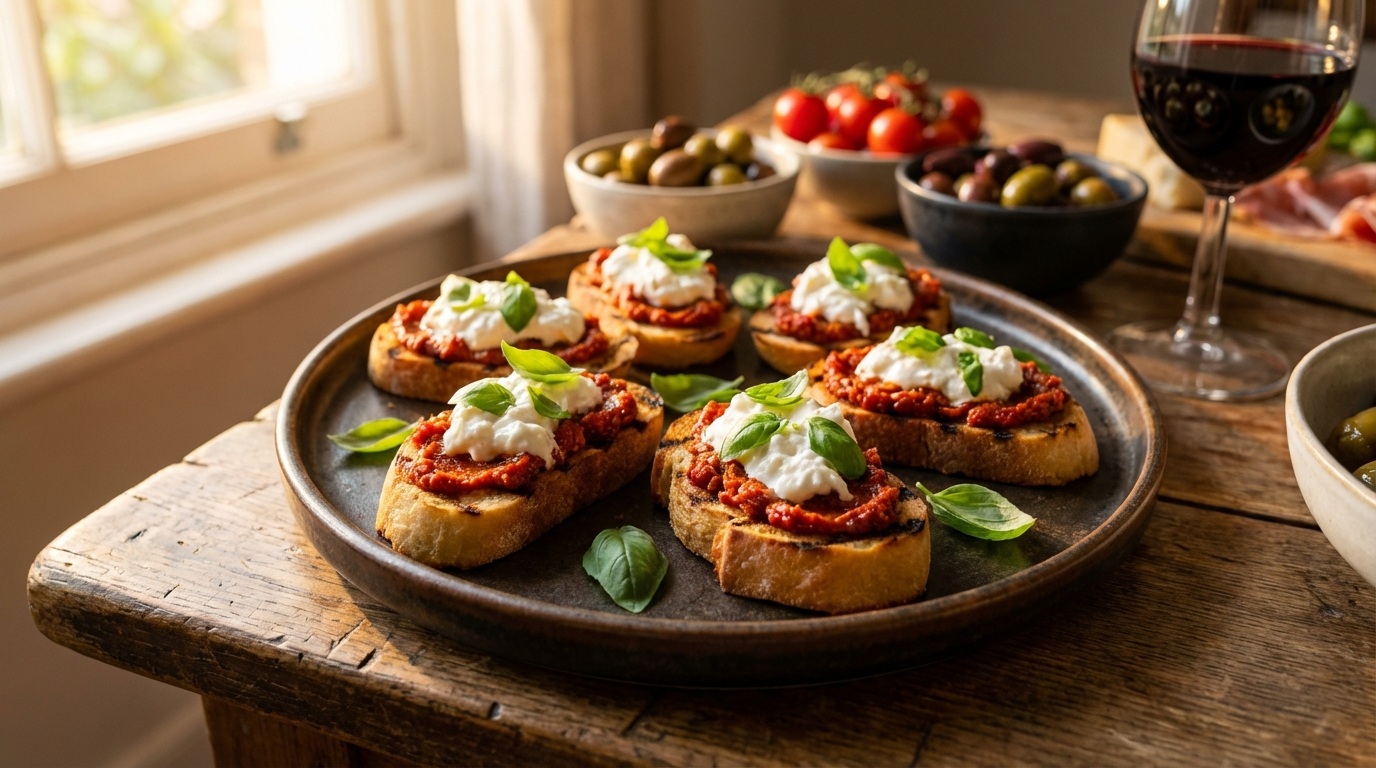
Nduja is one of the most versatile items in Italian charcuterie. Here’s how to use it:
- Spread on warm crostini: The classic. Toast good bread, spread nduja while it’s warm so the fat melts slightly, top with fresh ricotta or burrata. Done.
- Stir into pasta: Drop a tablespoon of nduja into hot pasta with olive oil and garlic. It melts into an instant, deeply flavorful sauce. Works especially well with orecchiette or rigatoni.
- Pizza topping: Dot nduja on pizza either before or after baking. It melts into rich, spicy pools.
- Scrambled eggs: Stir a teaspoon into eggs while scrambling. Transforms breakfast.
- Compound butter: Blend equal parts nduja and softened butter for a spicy spread on steak or roasted vegetables.
- Charcuterie boards: Serve in a small bowl with a spreading knife alongside your cured meats and cheeses. See our best meats for charcuterie boards guide for pairing ideas.
Storage
Nduja stores beautifully:
- Whole, in casing: Keeps 3-6 months in the refrigerator. The curing continues slowly, so it may firm up over time.
- Opened: Once cut, wrap tightly in plastic wrap and refrigerate. Use within 3-4 weeks.
- Frozen: Nduja freezes exceptionally well for up to 12 months. Portion into small jars or ice cube trays for easy use. Thaw in the refrigerator.
- Jarred: Pack nduja into sterilized jars, cover the surface with a thin layer of olive oil, and refrigerate. This is how many Italian producers sell it, and it keeps for months.
Troubleshooting Common Issues
- Too firm after curing: Over-cured or humidity was too low. Mix with olive oil and repack into jars.
- Too wet or not spreadable: Under-cured. Return to the curing chamber for another 1-2 weeks.
- Not spicy enough: Your pepper ratio was too low, or you used mild peppers. For next batch, increase Calabrian peppers or add cayenne to the mix.
- Too spicy: Reduce peppers to 20% of total weight in the next batch, or blend in more sweet roasted red peppers.
- Case hardening (hard outside, soft inside): Humidity too low. Wrap in a damp cheesecloth and return to chamber. For prevention, maintain 75%+ humidity.
- Off smells: Sour, ammonia, or putrid odors indicate spoilage. Discard. Usually caused by insufficient salt, improper curing temperatures, or contaminated equipment.
- Fat separation: The fat pools or separates inside the casing. This means the mixture wasn’t mixed thoroughly enough, or the meat was too warm during grinding. More thorough mixing and colder temperatures next time.
Nduja is forgiving compared to many cured meats because the high fat and pepper content create a hostile environment for harmful bacteria. But standard food safety practices still apply — accurate curing salt measurements, clean equipment, and proper temperature control are non-negotiable.
Once you’ve made nduja a few times, you’ll start experimenting. Some makers add roasted garlic, others swap in different pepper varieties, and some use smoked pork for even more depth. That’s the beauty of charcuterie — the technique is the tradition, and the variations are yours to discover.
More Charcuterie Guides
What Is Pink Curing Salt? Sodium Nitrite Explained for Home Charcuterie
Pink curing salt is the most essential — and most misunderstood — ingredient in meat curing. This guide explains what it is, why it's pink, how sodium nitrite prevents botulism, proper usage rates, and whether you can cure meat without it.
10 min readHow Long Does Charcuterie Last? Storage Guide for Cured Meats & Cheese
Understanding proper charcuterie storage ensures you enjoy it at peak quality while avoiding food safety risks.
10 min read