Charcuterie Board Wine Pairing: The Complete Guide to Perfect Matches
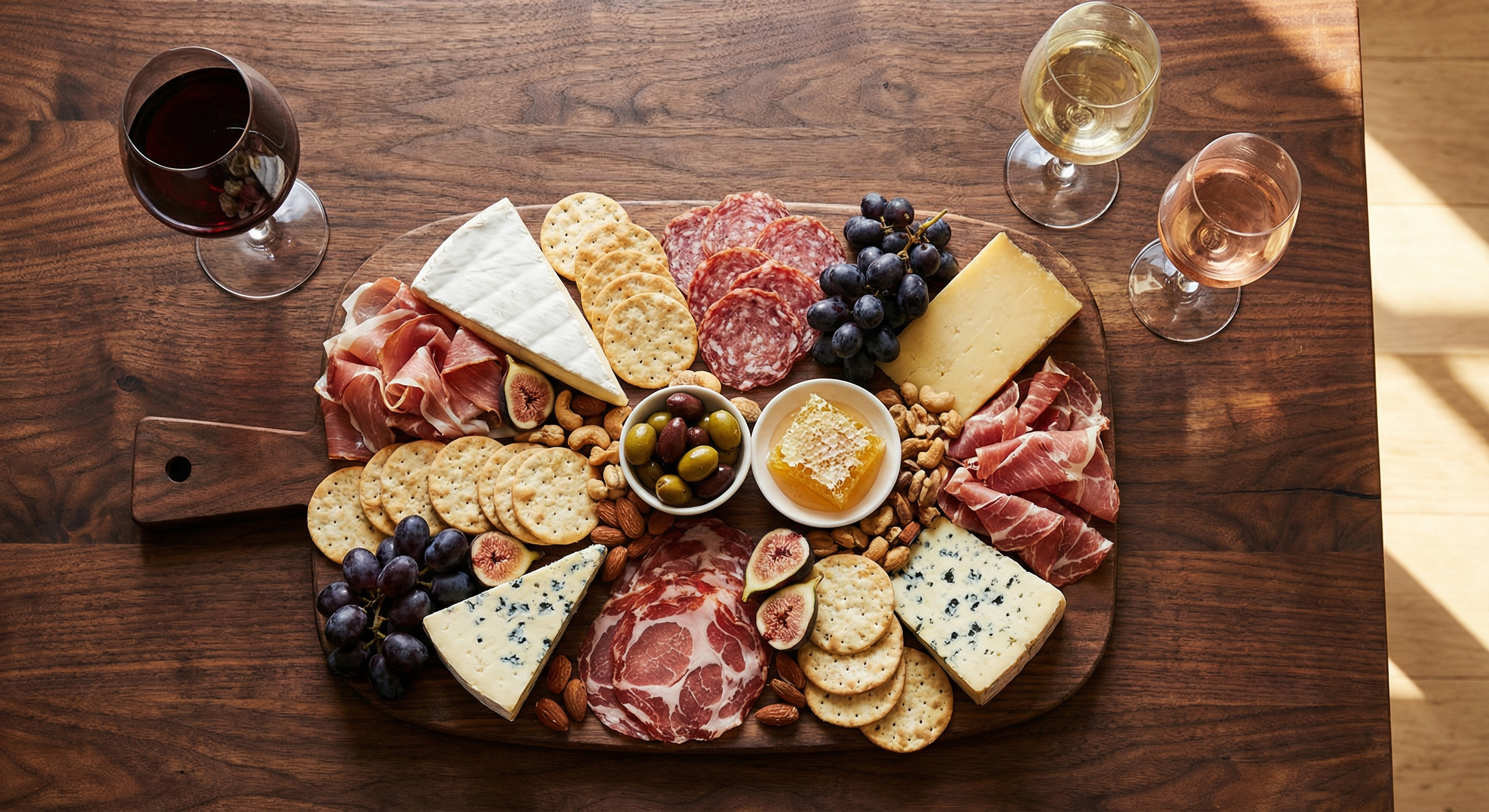
A charcuterie board is already impressive on its own. Add the right wine and it becomes something people talk about for weeks. The problem is that most pairing advice is vague—“red wine goes with meat”—which ignores the massive difference between a delicate prosciutto and a bold, garlicky soppressata.
This guide gets specific. Every cured meat, every cheese category, every accompaniment on your board has a wine that makes it sing. Here’s exactly how to match them.
The Core Principles of Charcuterie Wine Pairing
Before diving into specific matches, understand four principles that govern every great pairing:
1. Match Intensity to Intensity
Delicate meats need delicate wines. A paper-thin slice of bresaola disappears next to a heavy Cabernet Sauvignon. Conversely, a spicy ’nduja needs a wine with enough backbone to stand up to it. Think of it as volume—both the food and wine should be playing at the same level.
2. Fat Loves Acid
Rich, fatty meats like lardo, guanciale, and coppa are best cut by wines with bright acidity. The acid acts like a palate cleanser, slicing through the richness and making you want another bite. This is why Chianti and prosciutto is a classic—the Sangiovese’s acidity cuts the fat beautifully.
3. Salt Loves Sweetness (or Bubbles)
Cured meats are salty by nature. That salt amplifies bitterness and tannins in wine, which is why heavily tannic reds can taste harsh alongside a charcuterie board. Wines with a touch of residual sweetness or bright effervescence counterbalance salt perfectly. This explains why Champagne is one of the most versatile charcuterie wines.
4. Regional Pairings Rarely Fail
Foods and wines that grew up together tend to work together. Italian cured meats with Italian wines. Spanish chorizo with Spanish Tempranillo. French pâté with French Burgundy. Centuries of culinary evolution did the pairing work for you.
Wine Pairings for Cured Meats
Prosciutto
Prosciutto’s delicate sweetness and silky texture demand a wine that enhances rather than overpowers. The ideal match has moderate acidity, light-to-medium body, and minimal tannin.
- Top pick: Pinot Grigio from Friuli—crisp, mineral-driven, lets the ham shine
- Red option: Chianti Classico—Sangiovese’s cherry notes and bright acid are a textbook match
- Sparkling: Prosecco or Franciacorta—bubbles lift the salt, effervescence cleanses the palate
- Avoid: Heavy oaked Chardonnay or tannic Cabernet—both overwhelm the meat
Salami and Soppressata
These are bolder, spicier, and more intensely flavored than prosciutto. They can handle—and benefit from—wines with more structure.
- Top pick: Barbera d’Alba—high acid, low tannin, juicy dark fruit that matches the spice
- Bold option: Syrah/Shiraz—peppery notes echo the black pepper in many salamis
- White option: Gewürztraminer—aromatic, slightly sweet, tames the heat
- Avoid: Delicate Pinot Noir—gets bulldozed by garlic and spice
Coppa and Capicola
Rich, fatty, and deeply savory with gentle spice. The fat content is the key factor—you need acidity to cut through it.
- Top pick: Nero d’Avola—Sicilian red with plum fruit and enough acid to handle the fat
- Classic: Montepulciano d’Abruzzo—medium body, soft tannins, dark cherry
- White option: Vermentino—Mediterranean white with herbal notes and bright acidity
Bresaola
Lean, air-dried beef with a subtle, almost sweet flavor. The leanness means you don’t need acid to cut fat—instead, look for wines that complement its delicate earthiness.
- Top pick: Pinot Noir from Burgundy or Oregon—earthy, mushroom undertones mirror bresaola’s character
- Italian pick: Valpolicella Classico—light cherry, almond finish, beautiful with the beef
- White option: Rosé from Provence—enough body for beef, enough freshness for delicate flavors
’Nduja and Spicy Spreads
Intensely spicy and rich, ’nduja is the most challenging charcuterie to pair. Heat amplifies alcohol perception and clashes with tannin.
- Top pick: Off-dry Riesling—the residual sugar tames capsaicin heat
- Red option: Lambrusco—slightly sweet, fizzy, served chilled, it’s a revelation with spicy spreads
- Avoid: Anything over 14% ABV or heavily tannic—the heat will make it taste hot and bitter
Pancetta and Guanciale
Unsmoked, salt-cured pork belly (pancetta) and jowl (guanciale) are intensely fatty. They’re often cooked, but when served raw or lightly cured on a board, treat them like luxury fat.
- Top pick: Chablis (unoaked Chardonnay)—razor-sharp acidity, mineral backbone, cuts through fat like a knife
- Red option: Dolcetto d’Alba—bright, low tannin, juicy enough to refresh after each bite
- Sparkling: Cremant d’Alsace—bubbles plus acidity equals the ultimate fat-cutter
Wine Pairings for Cheeses on the Board
Most charcuterie boards feature three to five cheeses. Here’s how to match wine to each category:
Soft and Creamy (Brie, Camembert, Burrata)
- Best match: Champagne or sparkling wine—the acidity and bubbles cut the cream
- Still option: Chenin Blanc from Vouvray—honeyed, slightly sweet, beautiful contrast
- Red option: Beaujolais (Gamay)—light, fruity, won’t overpower the cheese
Semi-Firm (Manchego, Gruyère, Gouda)
- Best match: Tempranillo (Rioja Crianza)—nutty oak notes echo aged cheese flavors
- White option: Albariño—stone fruit and salinity pair beautifully with Manchego
Hard and Aged (Parmigiano-Reggiano, Pecorino, Aged Cheddar)
- Best match: Barolo or Barbaresco—the crystalline texture of aged Parm demands a wine with equal complexity
- Accessible option: Cabernet Sauvignon—tannins work here because the cheese’s fat and umami tame them
- Sweet option: Aged Tawny Port—nutty, caramelized, extraordinary with aged cheese
Blue Cheese (Gorgonzola, Roquefort, Stilton)
- Best match: Sauternes or late-harvest dessert wine—the classic sweet-salty contrast is electrifying
- Red option: Amarone della Valpolicella—dried-fruit richness handles blue cheese’s intensity
- Port: Ruby or Vintage Port—the traditional British pairing with Stilton exists for a reason
Fresh and Tangy (Chèvre, Ricotta, Fresh Mozzarella)
- Best match: Sauvignon Blanc from Sancerre—goat cheese and Loire Sauvignon Blanc is a pairing so perfect it feels like cheating
- Sparkling: Cava—bright, citrusy, affordable, and universally flattering
Wine Pairings for Common Accompaniments
Accompaniments bridge the gap between meats, cheeses, and wines. They’re not afterthoughts—they’re connectors.
Honey and Fig Jam
Sweet accompaniments pair with wines that have complementary sweetness or enough fruit to echo the flavors. Off-dry Riesling, Moscato d’Asti, or even a light Rosé work beautifully. Avoid bone-dry wines—honey makes them taste sour.
Olives and Cornichons
Briny, salty, tangy. These love minerally whites like Verdicchio, Assyrtiko, or dry Sherry (Fino or Manzanilla). The salinity in both creates a coastal harmony.
Nuts (Almonds, Walnuts, Marcona)
Nutty accompaniments bridge beautifully to oaked wines. Oaked Chardonnay, aged Rioja, or Amontillado Sherry all pick up on the toasty, nutty flavors.
Dried and Fresh Fruit
Dried apricots, fresh grapes, apple slices—these pair with wines that have similar fruit character. Viognier (stone fruit), Moscato (grape), and Riesling (apple/citrus) create harmonious echoes.
Building a Complete Wine Selection for Your Board
You don’t need a different bottle for every item. Here’s how to choose wines that cover the most ground:
The One-Bottle Solution
If you can only pick one wine, make it sparkling. Champagne, Crémant, Cava, or quality Prosecco. Bubbles pair with virtually everything on a charcuterie board. The acidity handles fat, the effervescence cuts salt, and the festive factor elevates the entire experience.
The Two-Bottle Setup
- Bottle 1: Sparkling wine (covers soft cheeses, prosciutto, fatty meats)
- Bottle 2: Medium-bodied red like Chianti or Barbera (covers salami, hard cheeses, bold flavors)
The Three-Bottle Spread (Ideal)
- Sparkling: Champagne, Crémant, or Cava
- White or Rosé: Sauvignon Blanc, Vermentino, or Provence Rosé
- Red: Chianti Classico, Barbera d’Alba, or Côtes du Rhône
This trio covers every flavor profile on even the most ambitious charcuterie board.
Common Wine Pairing Mistakes to Avoid
Going Too Big
The most common mistake is reaching for a massive Cabernet or Malbec. Heavy tannins clash with salt. High alcohol amplifies spice. Big oak flavors compete with delicate meats. Save the blockbusters for steak night.
Ignoring Temperature
White wines served too cold taste like nothing. Reds served too warm taste flabby and alcoholic. For charcuterie pairing, serve whites at 45–50°F (slightly warmer than fridge temp) and reds at 60–65°F (slightly cooler than room temp). Light reds like Beaujolais can even take a 15-minute chill.
Overthinking It
The best wine with your charcuterie board is the one you enjoy drinking. These guidelines will help you discover combinations you might not have tried, but there are no wrong answers when you’re sharing good food with good company.
Seasonal Wine Pairing Suggestions
Summer Boards
Lean into light, refreshing wines. Rosé, Vinho Verde, Albariño, and Prosecco. Pair with lighter meats like bresaola and prosciutto, fresh mozzarella, and stone fruit.
Fall and Winter Boards
Embrace richer wines. Barbera, Chianti, Nero d’Avola, and even a glass of Port alongside the blue cheese. Match with bolder salami, aged cheeses, honey, and nuts.
Holiday Boards
Go all out with Champagne. Nothing says celebration like bubbles alongside a beautifully composed charcuterie spread. Add a dessert wine for the cheese course and you’ve created a wine dinner disguised as casual entertaining.
Quick Reference Pairing Chart
Keep this cheat sheet handy next time you’re building a board:
- Prosciutto: Pinot Grigio, Chianti, Prosecco
- Salami/Soppressata: Barbera, Syrah, Gewürztraminer
- Coppa: Nero d’Avola, Montepulciano, Vermentino
- Bresaola: Pinot Noir, Valpolicella, Rosé
- ’Nduja: Off-dry Riesling, Lambrusco
- Brie/Camembert: Champagne, Chenin Blanc, Beaujolais
- Manchego/Gruyère: Tempranillo, Albariño
- Parmigiano/Pecorino: Barolo, Cabernet, Tawny Port
- Blue cheese: Sauternes, Amarone, Ruby Port
- Chèvre: Sancerre, Cava
The beauty of charcuterie and wine pairing is that it’s meant to be explored, not memorized. Use this guide as your starting point, then let your palate guide you. Every board is different, every gathering is unique, and the best pairings are the ones that make your guests reach for one more bite and one more sip.
More Charcuterie Guides
What Is Pink Curing Salt? Sodium Nitrite Explained for Home Charcuterie
Pink curing salt is the most essential — and most misunderstood — ingredient in meat curing. This guide explains what it is, why it's pink, how sodium nitrite prevents botulism, proper usage rates, and whether you can cure meat without it.
10 min readHow Long Does Charcuterie Last? Storage Guide for Cured Meats & Cheese
Understanding proper charcuterie storage ensures you enjoy it at peak quality while avoiding food safety risks.
10 min read