Easter Charcuterie Board: A Stunning Spring Spread for Your Celebration
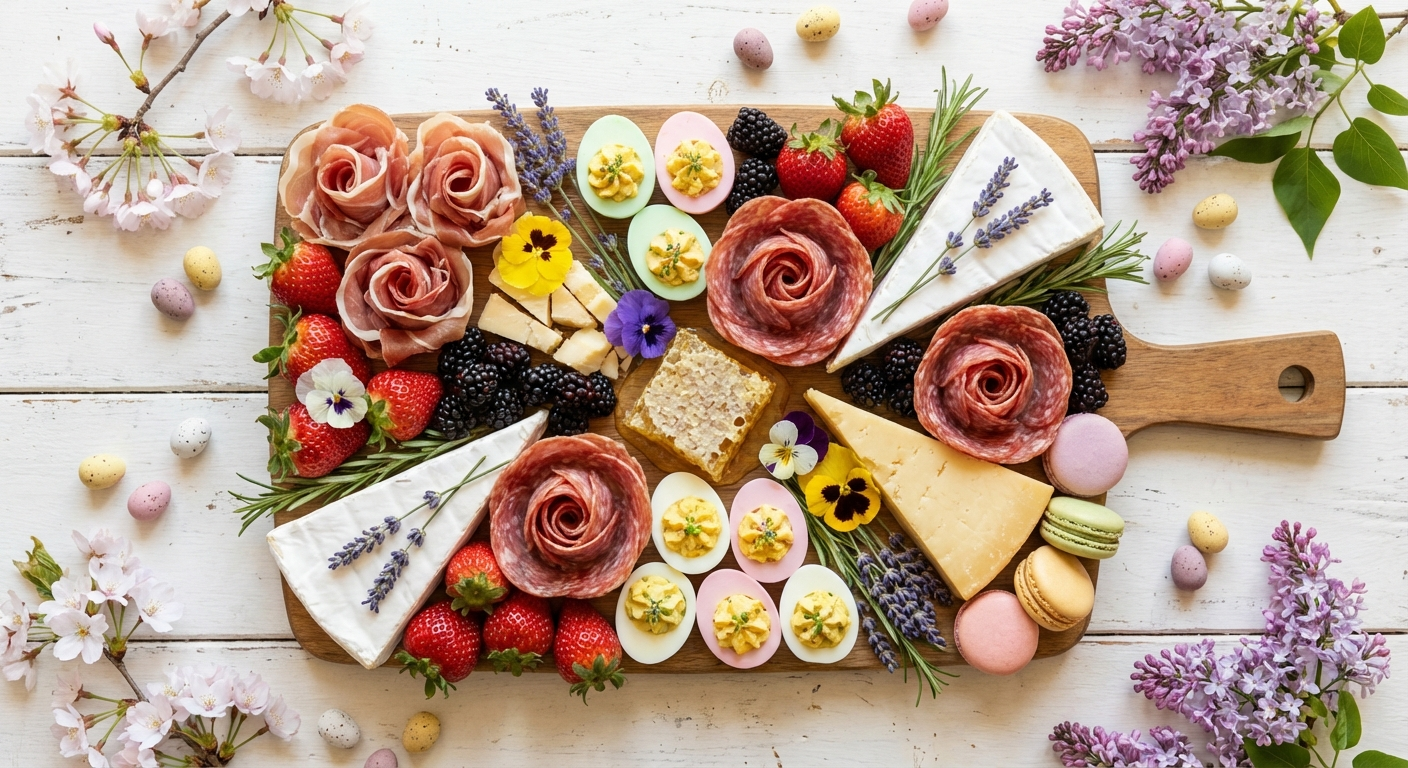
Easter is one of those holidays where the table matters as much as the food on it. A well-built Easter charcuterie board captures everything the season stands for — fresh flavors, bright colors, and the kind of effortless elegance that makes guests linger around the kitchen long after the ham is carved.
Unlike a standard charcuterie spread, an Easter board leans into spring. You swap heavy winter accompaniments for fresh berries, edible flowers, and pastel accents. The meats stay premium — prosciutto, coppa, and delicate bresaola — but the overall mood shifts lighter. Think garden party, not ski lodge.
Whether you are building a board for brunch before the egg hunt, an afternoon appetizer before dinner, or the centerpiece of a casual Easter gathering, this guide walks through every decision from board selection to final garnish.
Why a Charcuterie Board Works for Easter
Easter meals tend to have a gap. The ham or lamb takes hours. Guests arrive hungry. Kids are tearing through candy. A charcuterie board solves that gap perfectly — it is ready when guests walk in, requires zero cooking, and keeps everyone satisfied without ruining appetites for the main course.
An Easter board also does something that a cheese plate or vegetable tray cannot. It creates a focal point. People gather around it, try combinations, and talk about what they are tasting. It turns waiting into an experience. And when the board looks seasonal — spring colors, fresh herbs, edible flowers — it doubles as a decoration.
Selecting the Board and Surface
For Easter, the board itself sets the tone.
- White or light wood: A bleached wood, light maple, or whitewashed board reinforces the spring palette. Dark walnut works too, but lighter surfaces make pastels pop.
- Marble: A white marble slab looks stunning for Easter. It keeps cheese cool and the neutral surface lets colorful ingredients stand out.
- Size: Plan 14-18 inches for 6-8 people, 20-24 inches for 10-12. Easter boards tend to include more accompaniments (eggs, vegetables, flowers), so size up slightly from a standard spread.
If you do not have a dedicated board, a large wooden cutting board, a clean baking sheet lined with parchment, or even a slab of butcher paper on the table works beautifully.
The Meats: Light, Elegant, Spring-Forward
Easter calls for meats that are delicate rather than heavy. Skip the aggressive salamis and spicy nduja — lean into elegance.
Prosciutto (The Star)
Prosciutto is non-negotiable on an Easter board. Its delicate sweetness, silky texture, and blush-pink color are quintessentially spring. Fold it into roses for dramatic visual impact — overlap 5-6 thin slices in a line, then roll from one end to create a flower shape. Three or four prosciutto roses across the board create instant wow factor.
Prosciutto di Parma or San Daniele are the premium picks. Budget-friendly domestic prosciutto works in a pinch, but the difference in flavor is noticeable.
Coppa (The Bridge)
Coppa (capicola) brings beautiful marbling and a richer, more complex flavor than prosciutto. The fat ribbons through the lean meat, creating a visual pattern that photographs beautifully. Fold slices into halves or quarters and fan them along one section of the board.
Bresaola (The Elegant Surprise)
Bresaola is air-dried beef — lean, ruby-red, and sophisticated. Most guests have never tried it, which makes it a conversation starter. Its lean profile keeps the board feeling light and springlike. Arrange it flat in a single layer, slightly overlapping.
Mild Salami (The Crowd-Pleaser)
Include one mild salami — Genoa style or a finocchiona (fennel-seasoned Tuscan salami). The fennel notes in finocchiona pair exceptionally well with spring flavors. Fold slices into quarters and arrange in clusters.
Portion guide: 2-3 ounces of meat per person across all varieties. For 8 guests, plan 16-24 ounces total.
For premium charcuterie meats that elevate your Easter board, quality sourcing matters.
The Cheeses: A Spring Palette
Cheese selection for Easter follows the same principle as the meats — lighter, brighter, more approachable.
Soft and Creamy
Brie or Camembert: Cut the top rind off a small wheel and let it warm to room temperature so it becomes oozy and spreadable. Drizzle with honey and scatter a few edible flower petals on top for the ultimate Easter presentation.
Fresh goat cheese (chèvre): Roll a log of chèvre in crushed pistachios and dried cranberries for a spring-green and pink coating. Or form small balls and roll in fresh herbs — the green pops against the white cheese.
Semi-Firm
Manchego: Aged 3-6 months for a mild, nutty flavor that pairs with almost everything. Cut into thin triangles. The golden rind adds visual warmth.
Havarti with dill: The herb-flecked cheese reads spring and adds herbal complexity without requiring a separate condiment.
Hard and Aged
Aged white cheddar: Break into irregular chunks rather than slicing — the rustic appearance adds texture to the board. Look for aged cheddar with visible crystals for a flavor that stands up to cured meats.
Parmigiano-Reggiano: Use a cheese knife to break off small, craggy chunks. The crystalline crunch and umami intensity provide essential contrast to the milder cheeses.
Portion guide: 2-3 ounces of cheese per person. For 8 guests, plan 16-24 ounces across 3-4 varieties.
Spring Accompaniments: What Makes It Easter
This is where an Easter board diverges from a standard spread. The accompaniments bring seasonal color and flavor that transform generic charcuterie into a holiday celebration.
Fresh Fruit (The Color)
- Strawberries: Whole, with stems on. Possibly the most Easter fruit there is — red, fresh, and sweet enough to bridge cheese and meat.
- Blackberries and raspberries: Scatter these in clusters for deep purple and red accents.
- Green grapes: Snip into small clusters of 3-5 grapes. They fill gaps beautifully and provide a crisp, refreshing bite.
- Dried apricots: Their sunset-orange color adds warmth, and the sweet-tart flavor pairs perfectly with aged cheeses.
Vegetables (The Freshness)
- Sugar snap peas: Crisp, green, and perfect for scooping dips. They look garden-fresh on the board.
- Radishes: Halved or quartered, radishes add peppery bite and stunning pink-and-white color. They are an underrated charcuterie board ingredient.
- Cherry tomatoes: Tiny, sweet, and colorful — especially a mix of red, orange, and yellow varieties.
- Persian cucumbers: Sliced on the bias for elegant ovals that serve as cracker substitutes.
Easter-Specific Touches
- Deviled eggs: Mini deviled eggs are the bridge between charcuterie and Easter. Top with a sprinkle of paprika, chives, or everything bagel seasoning. Arrange 4-6 on the board.
- Hard-boiled eggs: Halved, with a sprinkle of flaky sea salt. Simple and thematic.
- Mini chocolate eggs: Scatter a handful of foil-wrapped chocolate eggs around the board for a playful Easter touch. They can double as takeaways for kids.
- Hot cross buns (sliced): If space allows, quartered hot cross buns serve as a bread component with a holiday twist.
Condiments and Spreads
- Honeycomb: A small piece of raw honeycomb is the single most photogenic element on any charcuterie board. It pairs beautifully with Brie, aged cheddar, and prosciutto.
- Fig or apricot jam: Sweet, fruity preserves in a small bowl. Apricot especially suits the spring palette.
- Whole grain mustard: The acidity and sharpness cut through rich meats and creamy cheeses.
- Herb butter: Whip softened butter with fresh chives and lemon zest for a spring-forward spread.
Crackers and Bread
- Water crackers: Neutral, thin, and crisp — they let the meats and cheeses shine.
- Seeded crackers: Flax, sesame, or everything-seasoned varieties add texture and visual interest.
- Crostini: Small slices of toasted baguette. Brush with olive oil before toasting for golden crunch.
Arrangement: Building the Easter Board Step by Step
A beautiful board is deliberate, not random. Here is the process I follow every time.
Step 1: Place the Anchors
Start with the largest elements. Put small bowls of honey, mustard, and jam at different points on the board — these become focal points around which you build. Place the Brie wheel near one anchor. These fixed elements create the architecture.
Step 2: Position the Cheeses
Distribute cheeses across the board so no two similar types sit next to each other. Pre-slice some, break others into chunks, and leave one (like Brie) whole for guests to cut. Variety in presentation keeps the eye moving.
Step 3: Add the Meats
This is the heart of the board. Create prosciutto roses first — they are the showstoppers. Place them at different positions for visual balance. Fan salami and coppa slices around the cheeses. Lay bresaola flat in an open area. The meats should flow around the cheeses, not pile on top of them.
Step 4: Fill with Fruit and Vegetables
Use fresh fruit to create color bursts between meats and cheeses. Strawberries, grape clusters, and berry piles fill gaps while adding visual punctuation. Tuck radishes, snap peas, and cucumber slices into remaining spaces.
Step 5: Add Crackers
Fan crackers along the edges and in gaps between other elements. Stand some on edge for height variation. If space is tight, serve crackers in a separate bowl or basket alongside the board.
Step 6: Easter Finishing Touches
This final step is what makes it an Easter board and not just a regular charcuterie spread:
- Scatter fresh herbs — rosemary sprigs, thyme, and fresh dill — around the board. They add color and aroma.
- Place edible flowers — pansies, nasturtiums, or lavender sprigs — between elements. They cost a few dollars at the farmers' market and transform the presentation.
- Tuck mini chocolate eggs into empty corners.
- Add deviled eggs last so they stay pristine.
Portion Planning by Group Size
| Guests | Total Meat | Total Cheese | Crackers | Fruit |
|---|---|---|---|---|
| 4-6 | 12-18 oz | 12-18 oz | 1 box (6 oz) | 2 cups |
| 8-10 | 24-30 oz | 24-30 oz | 2 boxes (12 oz) | 3-4 cups |
| 12-16 | 36-48 oz | 36-48 oz | 3 boxes (18 oz) | 5-6 cups |
Easter adjustment: Plan slightly less than a standalone appetizer board — most Easter gatherings have a main course coming. These portions assume the board is an appetizer, not the whole meal.
Wine and Drink Pairings for Easter
Easter boards pair beautifully with lighter, spring-appropriate wines.
- Rosé: The quintessential spring wine. A dry Provence rosé pairs with every element on the board — from prosciutto to strawberries to goat cheese. It is the safest universal pairing.
- Prosecco or Champagne: Bubbles cut through the richness of cured meats and creamy cheeses. The celebratory aspect suits the holiday.
- Sauvignon Blanc: Crisp, herbaceous, with citrus notes. Pairs especially well with goat cheese and fresh vegetables.
- Light Pinot Noir: For red wine drinkers, a lighter Pinot Noir (Oregon or Burgundy style) complements coppa and aged cheddar without overwhelming the delicate flavors.
- Non-alcoholic: Sparkling water with fresh mint and cucumber, or a lavender lemonade, keeps the spring vibe without alcohol.
Make-Ahead Timeline
One of the best things about a charcuterie board is that it is a no-cook solution. But timing still matters.
- 2-3 days before: Buy meats, cheeses, crackers, and condiments. Wash and dry berries and vegetables, store separately.
- 1 day before: Make deviled eggs. Prepare herb butter. Wash herbs and edible flowers, wrap in damp paper towels and refrigerate.
- 2 hours before: Set out cheeses to come to room temperature — cold cheese tastes muted. This is the most commonly skipped step, and it makes the biggest difference.
- 30-45 minutes before: Build the board. Start with anchors, add cheeses and meats, fill with accompaniments, finish with garnishes.
- 5 minutes before guests arrive: Final drizzle of honey on the Brie, scatter remaining herbs, and set out serving utensils.
Common Mistakes to Avoid
- Serving cheese cold: Cold cheese loses 50% of its flavor. Room temperature is non-negotiable — 30 minutes minimum out of the fridge for soft cheeses, 60 minutes for hard.
- Overcrowding the board: Leave breathing room. Negative space makes the board look intentional rather than chaotic. If everything is piled on top of everything else, the presentation suffers and guests cannot grab items without destroying the arrangement.
- Forgetting utensils: Provide small cheese knives, spreading tools for soft cheeses, and tongs or toothpicks for meats. Nobody wants to touch the prosciutto with their fingers.
- All one color: An Easter board needs color contrast. If you notice everything is brown and white, add berries, radishes, or herbs for visual relief.
- Too much of one thing: Variety over volume. Five types of salami is less interesting than one salami, one prosciutto, one coppa, and one bresaola.
Scaling for a Grazing Table
For larger Easter gatherings (16+ people), a single board is not enough. Build a grazing table instead:
- Use 3-4 boards of different sizes and materials, arranged down the center of a long table.
- Dedicate one board to meats and cheeses, one to fruits and vegetables, one to breads and crackers, and one to Easter-specific items (deviled eggs, chocolate eggs, hot cross buns).
- Connect the boards visually with scattered herbs, edible flowers, and small bowls of accompaniments placed between them.
- Keep backup supplies in the kitchen — replenish from the back as guests graze, so the table always looks full and fresh.
An Easter charcuterie board is proof that great food does not require great effort. Quality ingredients, thoughtful arrangement, and a few seasonal touches transform a simple spread into the kind of Easter memory people carry with them. Start with exceptional cured meats, add spring's best produce, and let the board do the talking.
Frequently Asked Questions
How far in advance can I make an Easter charcuterie board?
Build the board 30-45 minutes before serving. You can prep components 1-2 days ahead — make deviled eggs, wash produce, and buy meats and cheeses. Take cheese out of the fridge 30-60 minutes before building to bring it to room temperature, which is essential for flavor.
How much meat and cheese do I need for an Easter charcuterie board?
Plan 2-3 ounces of meat and 2-3 ounces of cheese per person. For 8 guests, that is about 24 ounces of meat (across 3-4 varieties) and 24 ounces of cheese (across 3-4 types). Since Easter usually includes a main course, you can lean toward the lower end.
What makes an Easter charcuterie board different from a regular one?
Spring touches: fresh berries, edible flowers, deviled eggs, pastel-colored accompaniments, lighter meats like bresaola and prosciutto, and seasonal elements like hot cross buns and mini chocolate eggs. The overall mood is lighter and more colorful than a standard board.
What wine pairs best with an Easter charcuterie board?
Dry rosé is the most versatile pairing — it complements every element on the board. Prosecco adds celebration, Sauvignon Blanc pairs well with goat cheese and vegetables, and a light Pinot Noir works for red wine drinkers. For non-alcoholic, try sparkling water with mint or lavender lemonade.
More Charcuterie Guides
What Is Pink Curing Salt? Sodium Nitrite Explained for Home Charcuterie
Pink curing salt is the most essential — and most misunderstood — ingredient in meat curing. This guide explains what it is, why it's pink, how sodium nitrite prevents botulism, proper usage rates, and whether you can cure meat without it.
10 min readHow Long Does Charcuterie Last? Storage Guide for Cured Meats & Cheese
Understanding proper charcuterie storage ensures you enjoy it at peak quality while avoiding food safety risks.
10 min read