How to Build a Stunning Dessert Charcuterie Board
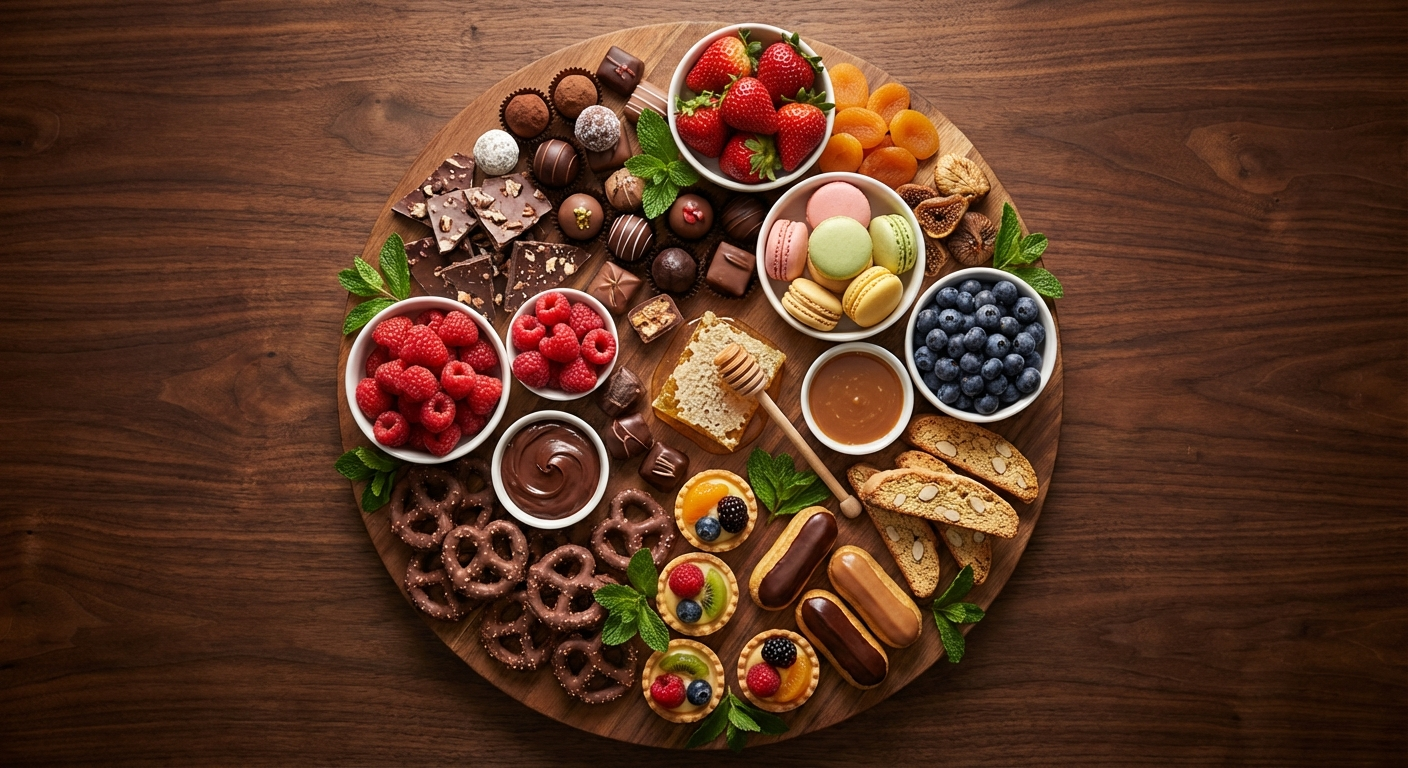
How to Build a Stunning Dessert Charcuterie Board
The dessert charcuterie board has officially transcended trend status. What started as a playful twist on the classic meat-and-cheese platter has become one of the most requested spreads at dinner parties, holiday gatherings, and even weddings. And the reason is simple: it combines the visual drama of a traditional charcuterie board with the universal appeal of sweets.
Unlike a standard dessert course where everyone gets the same slice of cake, a dessert board invites exploration. It is interactive, shareable, and endlessly customizable. A guest who loves dark chocolate can gravitate toward the truffles while someone who prefers fruit can load up on berries and dried mango. Everyone wins.
But here is the thing most people get wrong: they treat a dessert charcuterie board like a candy dish with better presentation. A truly great sweet board has the same principles as its savory counterpart—balance, contrast, and intention. You need variety in texture, flavor, and color. You need anchors and fillers. You need something unexpected that makes people say, "Wait, what is that?"
In this guide, we will walk through exactly how to build a dessert charcuterie board that looks like it belongs on the cover of a food magazine but takes under 30 minutes to assemble.
Why Dessert Charcuterie Boards Work
Before we dive into the build, it helps to understand why this format is so effective for entertaining. A dessert charcuterie board solves several problems at once.
First, it eliminates the "what should I make for dessert" decision paralysis. Instead of committing to one recipe that may or may not land with your guests, you curate a collection of options. It is a diversified portfolio of sweetness.
Second, most of the components are store-bought or minimally prepared. You are not baking a three-layer cake from scratch. You are arranging beautiful things on a board. The skill here is in selection and presentation, not pastry technique.
Third, dessert boards create conversation. People gather around them. They point, they ask questions, they share discoveries. "Have you tried the brie with the honeycomb?" becomes "Have you tried the dark chocolate with the candied ginger?" It is the same magic, just sweeter.
- No-bake simplicity: Most components are ready to eat straight from the package or market.
- Dietary flexibility: Easily accommodate gluten-free, vegan, or nut-free guests by swapping sections.
- Scalable: Works for an intimate dinner for two or a party of twenty. Just adjust the board size.
- Year-round appeal: Swap seasonal fruits and flavors to match any holiday or occasion.
The Five Pillars of a Dessert Charcuterie Board
Every great dessert charcuterie board is built on five categories. Think of these as your non-negotiable foundation. Within each category, you have infinite room to personalize.
1. Chocolate (The Anchor)
Chocolate is to a dessert board what cured meat is to a traditional charcuterie spread. It is the star, the thing people reach for first. But do not just dump a bag of chocolate chips on your board.
Aim for variety in type and format:
- Dark chocolate bark broken into irregular shards — dramatic and satisfying to snap.
- Artisan truffles in 2-3 flavors (sea salt caramel, espresso, raspberry).
- Chocolate-covered items: strawberries, pretzels, or almonds add textural contrast.
- A premium bar broken into pieces — look for single-origin or bean-to-bar makers for flavor complexity.
The key principle: include at least one dark, one milk, and one white chocolate element. This gives you a full flavor spectrum from bitter to sweet.
2. Fresh and Dried Fruit (The Brightness)
Fruit serves the same role on a dessert board as it does on a traditional charcuterie board: it provides freshness, acidity, and color that prevents the palate from getting overwhelmed by richness.
- Fresh berries: Strawberries (halved to show the red interior), raspberries, blueberries, and blackberries. These are your color workhorses.
- Stone fruit: In summer, sliced peaches or plums add a juicy, unexpected element.
- Tropical: Sliced kiwi, starfruit, or passion fruit halves for visual impact.
- Dried: Apricots, mango slices, candied citrus peel, or dried figs. These are shelf-stable and chewy, offering a different texture from fresh fruit.
Pro tip: toss fresh apple or pear slices in lemon juice immediately after cutting to prevent browning. Nobody wants oxidized fruit on their board.
3. Baked Goods and Pastries (The Architecture)
This is where you add structure and height to your board. Cookies, pastries, and baked goods also give people something to use as a vehicle for dips and spreads.
- Macarons: The Instagram darling of dessert boards. Their uniform shape and pastel colors are practically made for this format.
- Biscotti: Sturdy, crunchy, and perfect for dipping into chocolate fondue or Nutella.
- Shortbread cookies: Buttery and neutral enough to pair with everything.
- Mini cannoli: If you can find them fresh, they add an Italian flair that ties back to the charcuterie tradition.
- Waffle cone pieces: Break waffle cones into quarters for a fun, unexpected crunch element.
4. Sweet Dips and Spreads (The Sauce)
Every board needs something scoopable. Place dips in small ramekins or bowls to create visual anchors and give people a reason to interact with the board.
- Nutella or chocolate hazelnut spread: The universal crowd-pleaser.
- Fruit curd: Lemon curd, passion fruit curd, or raspberry curd adds tartness that balances all the sweetness.
- Whipped cream or mascarpone: Lightly sweetened with vanilla. Pipe it into a bowl for a polished look.
- Caramel sauce: Especially good alongside apple slices and pretzels.
- Honeycomb: Not technically a dip, but a whole honeycomb on the board is a showstopper. Guests love breaking off pieces.
5. The Unexpected Element (The Conversation Starter)
This is what separates a good dessert board from a great one. Include one or two items that surprise people.
- Candied bacon: The bridge between savory and sweet. If you have tried homemade bacon, a candied version with brown sugar and cayenne is transcendent.
- Edible flowers: Violets, pansies, or rose petals scattered across the board add color without flavor interference.
- Freeze-dried fruit: Crunchy, intensely flavored, and visually striking.
- Mochi: Soft, chewy, and unexpected on a Western-style board.
- Spiced nuts: Cinnamon-sugar pecans or chili-chocolate almonds add warmth and crunch.
- A wedge of brie with fig jam: Blur the line between savory and sweet. Cheese absolutely belongs on a dessert board — especially a triple-cream brie paired with the right accompaniments.
Step-by-Step Assembly
Now that you know what goes on a dessert charcuterie board, let us talk about how to put it together. Arrangement is everything — the same ingredients can look amateur or professional depending on placement.
Step 1: Choose Your Board
A round wooden board (14-16 inches) works beautifully for 4-6 guests. For larger parties, use a rectangular cutting board or even a clean marble slab. The board itself is part of the aesthetic, so choose something with character — natural wood grain, a slate surface, or a marble platter.
Step 2: Place the Bowls First
Set your ramekins of dips and spreads on the board before anything else. These are your anchors. Place them asymmetrically — one toward the upper left, another near the lower right. This creates visual flow and prevents the "bullseye" effect of centering everything.
Step 3: Add the Anchors
Place your largest items next: the honeycomb, any whole fruit, the chunk of chocolate bark, the brie wedge. These are your statement pieces. Space them around the board so each section has a focal point.
Step 4: Create Clusters
Group similar items together. Stack macarons in a small pyramid. Fan out biscotti in a row. Pile berries in cascading clusters. Grouping creates a sense of abundance and makes the board look intentional rather than scattered.
Step 5: Fill Every Gap
This is the most important step. A dessert board should have zero visible board surface when finished. Use smaller items — individual chocolates, dried fruit pieces, nuts, candy — to fill every crevice between your clusters. This is what gives the board that overflowing, luxurious look.
Step 6: Garnish and Finish
Scatter fresh mint leaves, a light dusting of powdered sugar, or edible flowers across the top. Drizzle a thin stream of chocolate sauce or caramel over the fruit. These finishing touches take 60 seconds but elevate the entire presentation.
Seasonal Dessert Board Ideas
One of the best things about a dessert charcuterie board is how easily it adapts to the calendar. Here are ideas for every season.
Spring
Lean into pastels and florals. Strawberries, lemon curd, lavender shortbread, white chocolate, macarons in pink and lilac, edible flowers. Perfect for Easter brunch or a baby shower.
Summer
Go tropical and bright. Sliced mango, pineapple, coconut macaroons, key lime curd, dark chocolate with sea salt, frozen grapes (a genius addition on hot days), and popsicle sticks of frozen yogurt bark.
Fall
Embrace warm spices and rich flavors. Caramel apples (sliced), pumpkin spice biscotti, pecan pralines, cinnamon-sugar churro bites, maple syrup for dipping, and dark chocolate with orange peel.
Winter and Holidays
Go decadent and festive. Peppermint bark, gingerbread cookies, cranberry white chocolate truffles, candied chestnuts, eggnog-flavored dip, pomegranate seeds for jewel-toned color, and hot chocolate bombs as a dramatic centerpiece.
Drink Pairings for Dessert Boards
A dessert board deserves its own beverage program. Do not just default to coffee (though coffee is always welcome).
- Dessert wine: A Moscato d'Asti or late-harvest Riesling. Light sweetness, gentle bubbles, perfect for chocolate and fruit.
- Port: Ruby port with dark chocolate is one of the all-time great pairings. The intensity matches.
- Champagne or Prosecco: The bubbles and acidity cut through sweetness beautifully. This is the best choice if your board leans very rich.
- Hot chocolate: For a winter board, offer a build-your-own hot chocolate station alongside the dessert spread. Guests can dip biscotti or marshmallows directly in their cup.
- Espresso: A shot of espresso alongside a dessert board is pure Italian elegance. The bitterness is the perfect counterpoint to sweet components.
Common Mistakes to Avoid
Even the best ingredients can result in a mediocre dessert charcuterie board if you fall into these traps.
- Too much of one flavor: If everything is chocolate, there is no contrast. Balance sweet with tart, rich with light.
- Forgetting texture: A board of all soft foods (marshmallows, whipped cream, fudge) feels one-dimensional. You need crunch — biscotti, nuts, pretzels, waffle cone pieces.
- Skipping the salt: This is the biggest mistake. Salt makes sweet things taste sweeter. Include salted caramel, chocolate-covered pretzels, or a bowl of flaky sea salt for sprinkling.
- Building too early: Assemble your board no more than 1-2 hours before serving. Chocolate melts, whipped cream deflates, and berries start to weep. If you must prep ahead, keep components refrigerated and assemble at the last minute.
- Ignoring temperature: Serve chocolate slightly cool (not cold, not warm). Serve fruit at room temperature for maximum flavor. Keep cream-based dips chilled until the last 15 minutes.
Scaling Your Board
The beauty of a dessert charcuterie board is its scalability. Here are rough guidelines for quantities per person.
- Chocolate: 2-3 oz per person (a mix of types).
- Fresh fruit: 1/2 cup per person.
- Cookies/pastries: 2-3 pieces per person.
- Dips/spreads: 1-2 tablespoons per person (total across all dips).
- Dried fruit and nuts: 1-2 oz per person.
For a board for two, you want about 8-10 different items in small quantities. For a party of eight, aim for 12-15 items and use a larger board or two smaller themed boards (one chocolate-focused, one fruit-forward).
Making It Your Own
The best dessert charcuterie boards reflect the builder's personality. Here are some theme ideas to spark your creativity.
- Around the World: Japanese mochi, French macarons, Italian biscotti, Belgian chocolate, Turkish delight, Mexican churro bites.
- Chocolate Lover's Paradise: Every form of chocolate — truffles, bark, sauce, covered fruits, fudge, cocoa-dusted almonds.
- Nostalgic: Childhood favorites elevated — gourmet versions of s'mores, PB&J, animal crackers, and gummy bears alongside artisan chocolates.
- Brunch Board: Combine dessert elements with brunch favorites — mini waffles, maple syrup, fresh berries, whipped cream, pastries, and mimosas on the side.
A dessert charcuterie board is proof that great entertaining does not require great cooking. It requires great taste, a good eye, and the willingness to curate rather than create. Arrange with intention, balance your flavors and textures, and let the ingredients do the talking. Your guests will be reaching for their phones before they reach for a bite — and that is how you know you have built something special.
More Charcuterie Guides
What Is Pink Curing Salt? Sodium Nitrite Explained for Home Charcuterie
Pink curing salt is the most essential — and most misunderstood — ingredient in meat curing. This guide explains what it is, why it's pink, how sodium nitrite prevents botulism, proper usage rates, and whether you can cure meat without it.
10 min readHow Long Does Charcuterie Last? Storage Guide for Cured Meats & Cheese
Understanding proper charcuterie storage ensures you enjoy it at peak quality while avoiding food safety risks.
10 min read