How to Make Pâté at Home: The Complete Country-Style Guide
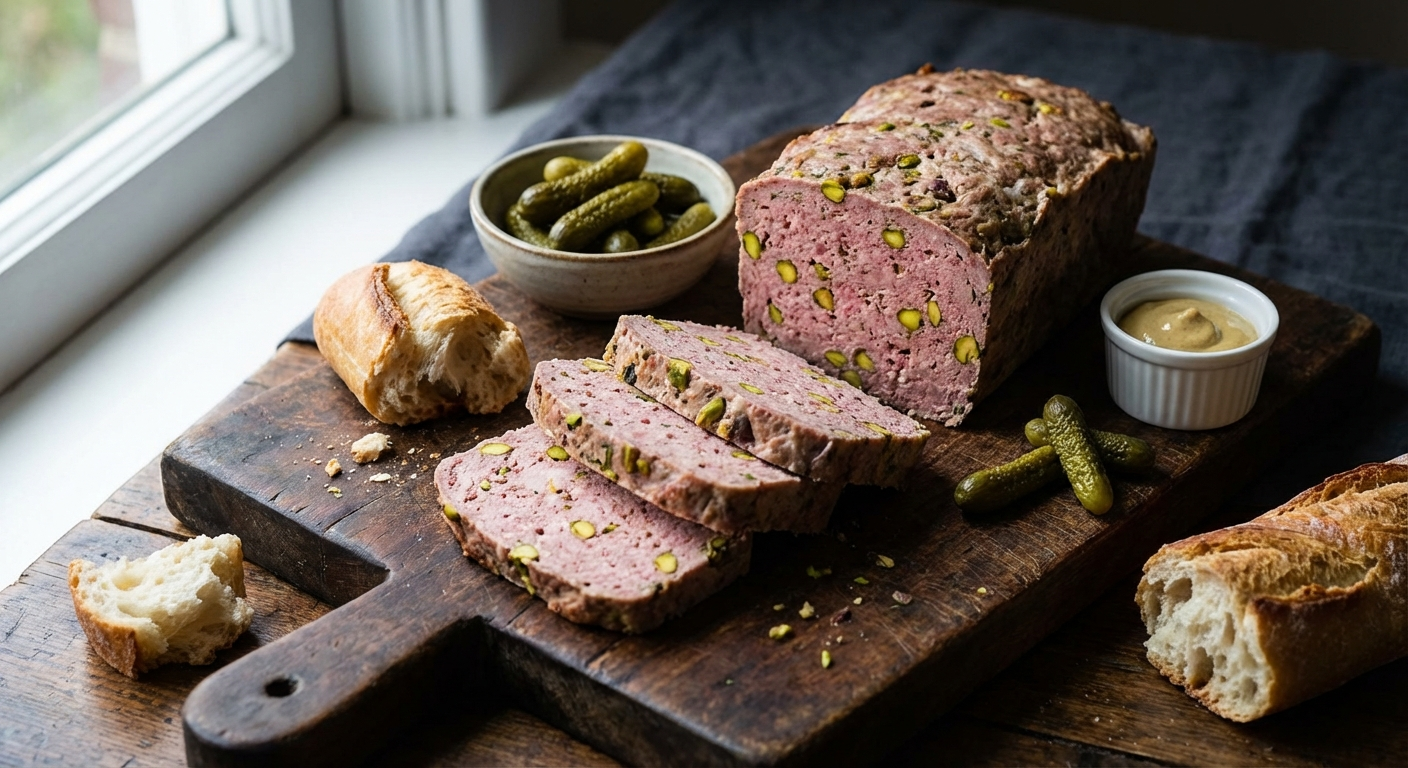
Walk into any bistro in France and there it is on the menu: pâté de campagne. Country pâté. A thick slab of coarsely ground pork and liver, studded with pistachios or herbs, served cold with cornichons, mustard, and crusty bread. It’s peasant food elevated to art — the kind of dish that looks humble but rewards you with layer after layer of flavor.
I’ve been making pâté for over 20 years, and it remains one of my favorite things to produce. Unlike most charcuterie projects that take weeks or months, pâté comes together in an afternoon and is ready to eat the next day. It’s the gateway drug of charcuterie — accessible enough for beginners, but with enough nuance to keep you tinkering for a lifetime.
If you can make meatloaf, you can make pâté. The technique is nearly identical — the difference is in the ingredients, the seasoning, and the respect you give the process. Let me show you how.
What Is Pâté, Exactly?
The word “pâté” comes from the Old French pasté, meaning “paste.” In the broadest sense, pâté is any ground or puréed meat mixture baked or cooked and served cold. But within that definition, there’s enormous variety:
- Pâté de campagne (country pâté): Coarsely ground pork and liver with herbs and spices. Rustic, chunky texture. This is what we’re making today.
- Pâté en croûte: Pâté baked inside a pastry crust. Beautiful but significantly more technical.
- Pâté de foie: Smooth, liver-forward pâté. Mousse-like texture, often enriched with cream and butter.
- Terrine: Technically, a terrine is just a pâté baked in a terrine mold (a rectangular ceramic or cast-iron dish). The terms are often used interchangeably.
Country pâté is where everyone should start. It’s forgiving, deeply flavorful, and doesn’t require specialized equipment beyond a loaf pan and a meat grinder (or a good butcher who’ll grind for you).
Ingredients: Building Flavor from the Ground Up
Great pâté starts with the right ratio of meat, fat, and liver. Get this balance wrong and you’ll end up with something dry, crumbly, or unpleasantly livery. Here’s my formula for a standard 2-pound terrine mold:
The Meat and Fat
- 1 lb (450g) pork shoulder — the workhorse. Shoulder has the right balance of lean meat and intramuscular fat. Don’t use tenderloin or loin — too lean, no flavor.
- 8 oz (225g) pork belly or back fat — pure fat for richness and moisture. Pâté without enough fat is dry pâté, and dry pâté goes in the trash. Target 30-35% fat in the total mixture.
- 6 oz (170g) chicken livers or pork liver — liver is what makes pâté taste like pâté. Chicken liver is milder and more accessible; pork liver is more traditional and assertive. Start with chicken if you’re new to this.
The Seasoning
- 15g fine sea salt — approximately 1.5% of total weight. This is a cured meat product served cold, so it needs assertive seasoning.
- 3g white pepper — traditional French choice. More subtle and floral than black pepper.
- 2g quatre épices — the classic French spice blend of white pepper, nutmeg, ginger, and cloves. If you don’t have it, use a pinch each of those four spices.
- 2 cloves garlic, minced
- 2 shallots, finely diced
- 2 tablespoons fresh thyme leaves
- 1 tablespoon fresh parsley, chopped
- 2 tablespoons brandy or Cognac — this is not optional. The alcohol cooks off but leaves behind an essential depth of flavor.
- 1 large egg — acts as a binder
- 3 tablespoons heavy cream — adds richness and helps emulsify the mixture
Optional Additions
- 1/4 cup shelled pistachios — the classic studding nut. Provides color contrast and texture.
- 2 oz diced ham — cut into 1/4-inch cubes, folded in for texture variation
- Curing salt #1 (Prague Powder #1): 3g — optional but recommended. Keeps the pâté a rosy pink instead of turning gray. Also provides an extra layer of food safety. See our curing salts guide for details.
For the Mold
- 8-10 strips of bacon — to line the terrine mold. Use thin-sliced, not thick-cut. The bacon forms a protective, flavorful jacket around the pâté.
- 2 bay leaves — laid on top for aroma and presentation
- A few sprigs of fresh thyme — for the top
Equipment You’ll Need
The beauty of pâté is that it doesn’t require exotic gear:
- Meat grinder with coarse (3/8-inch) and fine (3/16-inch) plates. A stand mixer grinder attachment works fine. If you don’t have a grinder, ask your butcher to grind the pork shoulder and belly through a coarse plate — many will do this happily.
- Terrine mold or loaf pan — a standard 9x5-inch loaf pan works perfectly. Cast iron, ceramic, or enameled terrine molds are traditional and beautiful but not necessary.
- Roasting pan — for the water bath (bain-marie)
- Instant-read thermometer
- Aluminum foil
Step-by-Step: Making Country Pâté
Step 1: Prep the Meat (Day Before or Morning Of)
Cut the pork shoulder and pork belly into 1-inch cubes. Trim the chicken livers of any green bile spots or connective tissue. Place everything on a sheet pan and freeze for 30 minutes. Cold meat grinds better — warm meat smears and the fat won’t distribute evenly.
While the meat chills, sauté the shallots in a tablespoon of butter over medium heat until soft and translucent, about 4 minutes. Add the garlic and cook 30 seconds more. Deglaze the pan with the brandy, let it reduce by half, and set aside to cool completely.
Step 2: Grind
Grind the pork shoulder and half the pork belly through the coarse plate (3/8-inch). Grind the remaining belly and the chicken livers through the fine plate (3/16-inch). This dual-texture grind is key to pâté’s character — you want some coarse chunks for rustic texture and some fine paste for binding and smoothness.
Combine both grinds in a large bowl.
Step 3: Season and Mix
Add the salt, white pepper, quatre épices, cooled shallot-garlic mixture, thyme, parsley, egg, cream, and curing salt (if using). Mix thoroughly with your hands — you need to work the mixture until it becomes slightly tacky and cohesive. This develops the proteins that bind the pâté together. Mix for a solid 2-3 minutes.
If adding pistachios or diced ham, fold them in gently at the end. You want them distributed evenly but not crushed.
Step 4: Test the Seasoning
This step separates good pâté makers from great ones. Take a small spoonful of the mixture, flatten it into a thin patty, and cook it in a skillet until done. Taste it. The seasoning should be assertive — remember, this will be served cold, and cold temperatures mute flavors. If it tastes perfectly seasoned hot, it’ll taste bland cold. Adjust salt, pepper, and spices as needed.
Step 5: Line the Mold
Line your terrine mold or loaf pan with the bacon strips, laying them crosswise so they drape over the sides. The strips should overlap slightly with no gaps — you want full coverage. Leave enough overhang to fold back over the top later.
Step 6: Fill and Shape
Pack the meat mixture firmly into the bacon-lined mold. Press down with your hands or a spatula to eliminate air pockets — trapped air creates gaps in the finished pâté. Smooth the top surface flat.
Fold the overhanging bacon strips back over the top. Place the bay leaves and thyme sprigs on top for garnish. Cover tightly with aluminum foil.
Step 7: Bake in a Water Bath
Preheat your oven to 325°F (165°C). Place the terrine mold in a roasting pan and pour hot water into the roasting pan until it reaches halfway up the sides of the mold. This water bath (bain-marie) ensures gentle, even cooking — without it, the exterior overcooks before the center is done.
Bake for 1.5 to 2 hours, until the internal temperature reaches 155°F (68°C) in the center. The pâté will continue to rise a few degrees from carryover heat. Don’t go above 160°F or the liver will develop a grainy texture.
Step 8: Press and Cool
Remove the terrine from the water bath. Remove the foil. Place a piece of cardboard cut to fit inside the mold, wrapped in plastic wrap, directly on the pâté surface. Set a weight on top — a couple of cans of beans or a brick wrapped in foil works perfectly. You want about 2 pounds of weight.
Pressing serves two purposes: it compacts the pâté for a denser, more sliceable texture, and it forces out excess liquid and fat that would otherwise make the pâté soggy. Let it cool at room temperature for an hour with the weight on, then transfer to the refrigerator — still weighted — and chill overnight.
Step 9: Unmold and Serve
The next day, remove the weight and run a thin knife around the edges of the mold. Invert the pâté onto a cutting board. The bacon lining should release cleanly. If it sticks, briefly dip the bottom of the mold in warm water.
Slice the pâté into 1/2-inch thick slabs with a sharp knife. The interior should be rosy pink (if you used curing salt) or gray-brown (without), with visible chunks of meat and flecks of herbs and pistachios.
Serving Country Pâté
The traditional French presentation is simple and perfect:
- Cornichons: Small, tart French pickles. Their acidity cuts through the richness beautifully.
- Dijon mustard: The sharpness of good Dijon is pâté’s ideal companion.
- Crusty bread or toast: A fresh baguette, sliced, is classic. Toasted brioche is a luxurious upgrade.
- Butter: Yes, more fat. A thin layer of good French butter on the bread, then a slab of pâté on top. Trust me.
Pâté also belongs on every charcuterie board. Place a half-terrine on the board with a spreading knife and let guests slice their own portions. It adds a completely different texture and flavor dimension alongside sliced cured meats like bresaola and salami.
Storage
Country pâté keeps remarkably well:
- Refrigerator: 7-10 days, wrapped tightly in plastic. The flavor actually improves over the first 2-3 days as the seasonings meld.
- Freezer: Up to 3 months. Wrap individual portions in plastic, then foil. Thaw in the refrigerator overnight before serving.
- Sealed in fat: Traditional preservation method — pour a layer of melted lard or clarified butter over the surface of the pâté in its mold. This fat seal keeps air out and extends fridge life to 2-3 weeks.
Variations to Explore
Once you’ve mastered the basic country pâté, experiment:
- Game pâté: Replace half the pork shoulder with venison, duck, or rabbit. Game meats add complexity but are leaner — maintain the fat ratio by increasing the pork belly.
- Pâté de canard (duck pâté): Use duck leg meat and duck liver. Add a splash of Armagnac instead of Cognac and fold in dried cherries.
- Pâté with green peppercorns: Fold in 2 tablespoons of brined green peppercorns (drained). They add gentle heat and a beautiful visual accent.
- Mushroom and thyme pâté: Sauté 8 oz of mixed mushrooms until dry, chop finely, and fold into the mixture. Earthy, autumnal, and perfect with a glass of Burgundy.
- Liver-forward pâté: Increase the liver to 40% of the total mixture and grind everything through the fine plate for a smoother, more mousse-like texture. This moves toward a true pâté de foie.
Troubleshooting Common Issues
Dry or Crumbly Texture
Cause: Not enough fat, overcooked, or insufficient mixing. Fat should be at least 30% of the total mixture, internal temperature should not exceed 160°F, and the mixture needs thorough mixing to develop binding proteins.
Too Livery
Cause: Liver proportion too high, or liver not trimmed of bile spots. Stick to 15-20% liver by weight for a balanced flavor. Always trim chicken livers carefully — any green spots will taste extremely bitter.
Grainy Liver Texture
Cause: Internal temperature went too high. Liver proteins seize and become granular above 160°F. Use a thermometer and pull the pâté at 155°F — carryover will bring it to the right doneness.
Air Pockets
Cause: Insufficient packing. When filling the mold, press the mixture down firmly in layers, tapping the mold on the counter between additions to release trapped air.
Excess Liquid on the Surface
Cause: Normal. Pressing with a weight forces out rendered fat and cooking juices. Drain off the liquid after unmolding and pat dry. Some recipes intentionally leave a thin layer of aspic (flavored gelatin) on top for presentation.
Why Pâté Deserves a Comeback
Pâté fell out of fashion in America during the low-fat craze of the 1990s. It’s time for it to come back. In an era where charcuterie boards dominate Instagram and people are rediscovering nose-to-tail eating, pâté is the original zero-waste charcuterie — turning humble cuts and organ meats into something elegant.
It’s also one of the most cost-effective things you can make. Pork shoulder, pork belly, and chicken livers are among the cheapest proteins at the butcher counter. A terrine that serves 8-10 people costs about what you’d pay for a single restaurant appetizer. And homemade pâté is dramatically better than anything you’ll find in a store.
Start with this basic country recipe, nail the technique, then branch out into the variations. Within a few batches, you’ll have a signature pâté that becomes your go-to contribution for dinner parties, holidays, and charcuterie spreads. And once your guests taste real homemade pâté alongside quality cured meats from The Meatery’s charcuterie collection, they’ll never go back to the supermarket stuff.
Frequently Asked Questions
Is pâté safe to make at home?
Yes. Country pâté is baked to an internal temperature of 155-160°F, which is well above the danger zone. Using curing salt #1 adds an extra layer of safety and keeps the color rosy. Standard kitchen hygiene and proper temperature monitoring are all you need.
What is the best liver for pâté?
Chicken liver is the most accessible and mildest option — ideal for beginners. Pork liver is more traditional and assertive. Duck liver makes an exceptionally rich pâté. For your first batch, use chicken liver at about 15-20% of the total mixture weight.
How long does homemade pâté last?
Properly made country pâté keeps 7-10 days in the refrigerator wrapped tightly. It freezes well for up to 3 months. The flavor actually improves over the first 2-3 days as the seasonings meld together. A traditional fat seal (melted lard on top) extends fridge life to 2-3 weeks.
Why did my pâté turn gray inside?
Without curing salt #1 (Prague Powder #1), cooked pork and liver naturally turn gray-brown. This is safe to eat — it just looks less appealing. Adding 0.15-0.25% curing salt by weight keeps the interior a rosy pink color.
Can I make pâté without a meat grinder?
Yes. Ask your butcher to grind the pork shoulder and belly through a coarse plate. For the liver, you can pulse it in a food processor until finely chopped. You can also make the entire recipe in a food processor — pulse the meat in batches for a more rustic texture.
More Charcuterie Guides
What Is Pink Curing Salt? Sodium Nitrite Explained for Home Charcuterie
Pink curing salt is the most essential — and most misunderstood — ingredient in meat curing. This guide explains what it is, why it's pink, how sodium nitrite prevents botulism, proper usage rates, and whether you can cure meat without it.
10 min readHow Long Does Charcuterie Last? Storage Guide for Cured Meats & Cheese
Understanding proper charcuterie storage ensures you enjoy it at peak quality while avoiding food safety risks.
10 min read