How to Make Bresaola at Home: A Complete Guide to Italian Air-Dried Beef
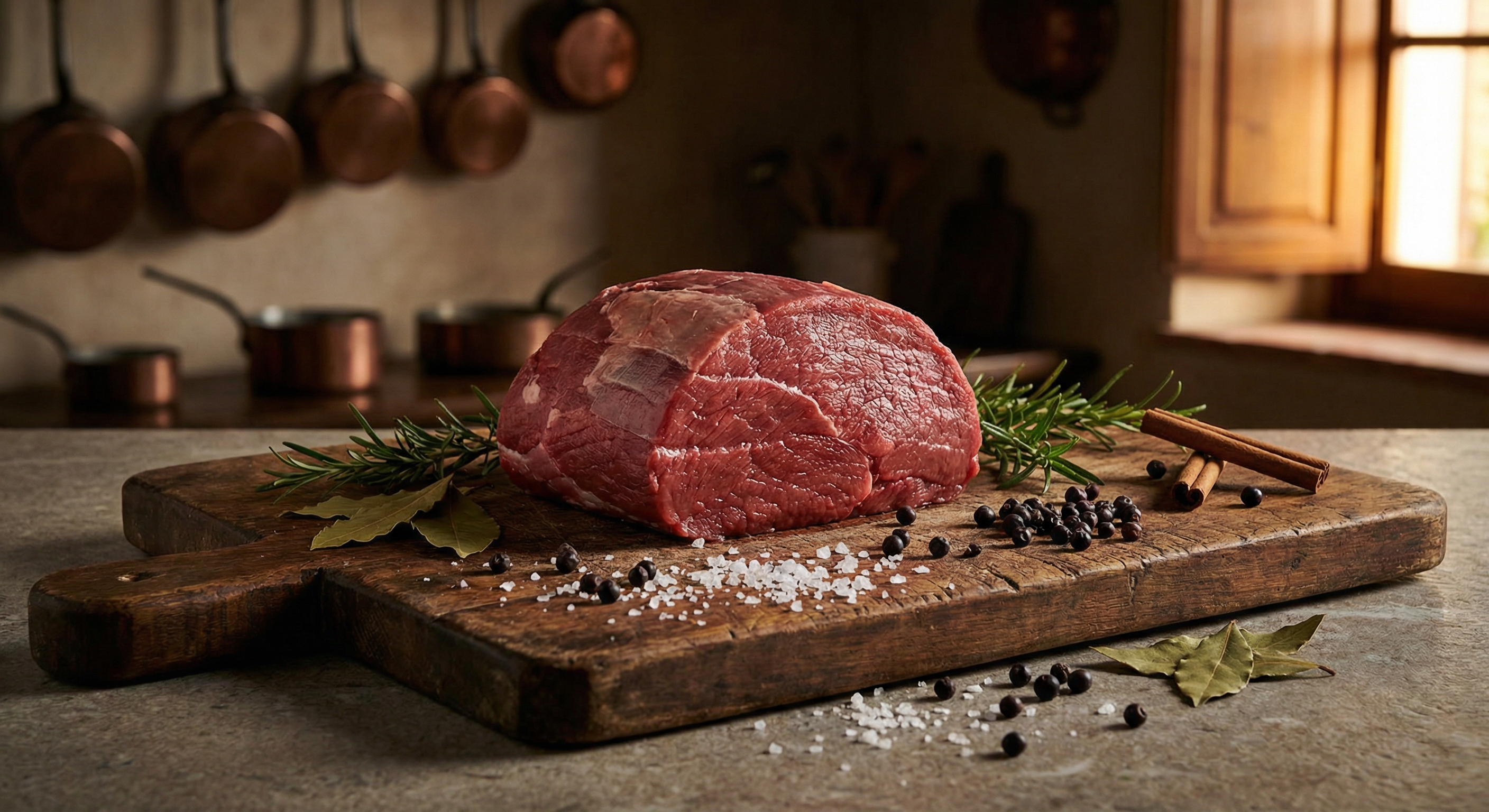
Bresaola is the charcuterie world’s best-kept secret. While prosciutto and salami get all the attention, this air-dried beef from the Valtellina valley in Lombardy, Italy, quietly delivers some of the most refined flavors in the entire cured meat canon. It’s lean, silky, deeply savory, and surprisingly straightforward to make at home.
Unlike salami, which requires grinding, stuffing, and fermentation, bresaola starts with a whole muscle. You cure it, season it, case it, and hang it. The process is more about patience than technique—which makes it an ideal project for someone who’s made a few basic cured meats and wants to level up without investing in new equipment.
This guide covers everything from selecting the right cut of beef to slicing your finished bresaola paper-thin and serving it the way they do in the trattorias of Sondrio.
What Is Bresaola?
Bresaola (pronounced breh-ZAO-lah) is a whole-muscle cured beef product from the Lombardy region of northern Italy. It holds IGP (Indicazione Geografica Protetta) status in the European Union, meaning authentic Bresaola della Valtellina must be produced in the Sondrio province using specific methods and cuts.
The defining characteristics:
- Lean: Unlike most cured meats, bresaola is made from very lean beef. The finished product typically contains less than 10% fat, making it one of the healthiest charcuterie options.
- Whole muscle: No grinding or stuffing into casings in the traditional sense. The whole muscle is cured intact, though it’s often encased in a beef bung or collagen casing for even drying.
- Air-dried: After curing, bresaola is hung in a cool, humid environment for 4–12 weeks until it loses approximately 30–40% of its original weight.
- Deep ruby color: When sliced thin, bresaola has a gorgeous deep red to burgundy color with minimal white fat marbling.
The flavor is complex—beefy and savory with warm spice notes from juniper, black pepper, and sometimes cinnamon or clove. It’s gentler than most cured pork products, with a clean finish that pairs beautifully with arugula, lemon, and olive oil.
Choosing Your Beef
The cut of beef matters enormously. Traditional Bresaola della Valtellina uses specific muscles from the hindquarter, but for home production, you have several excellent options.
Best Cuts for Bresaola
- Eye of round: This is the most common choice for home bresaola, and for good reason. It’s a uniform cylinder of lean muscle with very little internal fat or connective tissue. The consistent shape means even drying, and the size (typically 3–5 pounds) is manageable for home curing chambers. This is what I recommend for your first bresaola.
- Top round: Larger and slightly less uniform than eye of round, but it works well. You may need to trim it into a more cylindrical shape for even drying. The flavor is excellent—slightly more beefy than eye of round.
- Sirloin tip: Another good option with a bit more flavor complexity. Less uniform shape, so trim carefully.
- Tenderloin: If you want to splurge, beef tenderloin makes an incredibly tender bresaola. It’s not traditional, but the results are luxurious. The smaller diameter means faster curing and drying times.
Quality Matters
Buy the best beef you can afford. For bresaola, you actually don’t want heavy marbling—this is one of the few times USDA Select or low Choice is perfectly fine. What you do want is freshness and quality handling. Buy from a butcher you trust, and if possible, ask for a piece that hasn’t been previously frozen. Freezing damages cell structures and can affect the texture of your finished product.
Look for beef that’s deep red with a clean smell. Avoid anything with gray discoloration or an off odor. The muscle should be firm to the touch, not soft or mushy.
The Cure: Ingredients and Ratios
The cure is where the magic happens. Salt draws moisture out of the meat while curing salt (sodium nitrite) prevents bacterial growth and gives the bresaola its characteristic deep red color. Spices add the aromatic complexity that distinguishes bresaola from plain dried beef.
The Basic Cure Formula
For a 5-pound (2.27 kg) eye of round:
- Kosher salt: 3% of meat weight = 68 grams (about 4.5 tablespoons Diamond Crystal)
- Curing salt #2 (Prague Powder #2): 0.25% of meat weight = 5.7 grams. This is critical—bresaola is an air-dried product that never gets cooked, so you need the slow-release nitrate in cure #2, not the nitrite-only cure #1 used for cooked products.
- Black pepper, coarsely ground: 8 grams (about 1 tablespoon)
- Juniper berries, crushed: 6 grams (about 1 tablespoon)
- Brown sugar: 15 grams (about 1 tablespoon)
- Garlic, minced: 10 grams (about 3 cloves)
- Fresh rosemary, finely chopped: 5 grams (about 1 tablespoon)
- Bay leaves, crumbled: 2 leaves
- Dried thyme: 3 grams (about 1 teaspoon)
Optional Additions
- Cinnamon: A pinch (1–2 grams). Traditional in some Valtellina recipes. Adds a subtle warmth.
- Clove: Just a pinch—1 gram maximum. Clove is powerful and will dominate if you use too much.
- Red wine: Some recipes call for rubbing the meat with a good Italian red (Valtellina Superiore or Barolo) before applying the cure. This adds depth and acidity. Use about 60 ml (1/4 cup).
- Nutmeg: A light grating (1 gram). Adds complexity without being identifiable in the final product.
A Note on Curing Salt #2
This is non-negotiable. Bresaola is an air-dried product that’s eaten raw. Curing salt #2 contains both sodium nitrite (6.25%) and sodium nitrate (4%), and it’s specifically designed for long-cured products. The nitrate slowly converts to nitrite over weeks, providing ongoing protection against Clostridium botulinum throughout the extended drying period.
Do not substitute cure #1 (which contains only nitrite) for a product that will be dried for weeks or months. Cure #1 is for products that will be cooked or smoked within days. For bresaola, you need the sustained protection that cure #2 provides.
Measure your curing salt with a digital scale accurate to 0.1 grams. This is a safety issue, not a flavor preference. Too little won’t protect the meat. Too much can be harmful. The 0.25% ratio is well within safe parameters and has been used by charcutiers for generations.
Step-by-Step Curing Process
Step 1: Trim the Meat
Remove any surface fat, silver skin, and connective tissue from the eye of round. You want clean, exposed muscle on all surfaces so the cure can penetrate evenly. Pay special attention to any thick fat deposits on the ends—fat doesn’t cure the same way muscle does and can create pockets where the cure doesn’t fully penetrate.
If the muscle has an uneven shape, consider trimming it into a more uniform cylinder. Even thickness means even drying. A thin spot will over-dry while a thick spot stays under-cured.
Step 2: Mix and Apply the Cure
Combine all cure ingredients in a bowl and mix thoroughly. The salt and curing salt should be evenly distributed throughout the spice mixture.
If using wine, rub the meat with wine first, then apply the cure mixture. Press the cure firmly into all surfaces of the meat, making sure every square inch is covered. Don’t be gentle—you want good contact between the cure and the meat surface.
Step 3: Bag and Refrigerate
Place the cured meat in a vacuum bag and seal it, or place it in a zip-lock bag with as much air removed as possible. Set it on a tray in the refrigerator (36–40°F / 2–4°C).
Cure time: 14 days minimum for a standard eye of round. The general rule is 7 days per inch of thickness at the thickest point, with a minimum of 14 days regardless. During this time, flip the bag every other day and massage the meat briefly to redistribute the cure and any liquid that has formed.
You’ll notice the bag filling with liquid as the salt draws moisture from the meat. This is called the pellicle forming inside the bag—completely normal and expected. The meat will firm up noticeably over the two weeks.
Step 4: Rinse and Dry
After the curing period, remove the meat from the bag and rinse it thoroughly under cold running water. Pat it completely dry with paper towels. Some charcutiers soak the meat in cold water for 30 minutes before rinsing to remove excess surface salt, but I find this unnecessary if your salt ratio was correct.
Place the rinsed meat uncovered on a rack in the refrigerator for 12–24 hours to form a tacky surface called the pellicle. This dry, slightly sticky surface helps the casing adhere and promotes even drying.
Step 5: Case the Bresaola
While bresaola can technically be dried without a casing, I strongly recommend using one. A casing protects against case hardening (where the outside dries too fast and traps moisture inside), moderates the drying rate, and prevents unwanted mold from directly contacting the meat surface.
Your casing options:
- Beef bung cap: The traditional choice. Soak in warm water for 30 minutes, then slide it over the bresaola. Tie tightly at both ends and at intervals along the length with butcher’s twine. The bung is breathable and allows controlled moisture loss.
- Collagen casing (large diameter): Easier to work with than natural casings. Soak briefly, slide over the meat, and tie off. These work well for home production.
- Cheesecloth wrap: A simpler alternative. Wrap the meat tightly in several layers of cheesecloth and tie with twine. Less traditional but functional.
After casing, tie a loop of butcher’s twine at one end for hanging.
Step 6: Hang and Dry
This is where your curing chamber earns its keep. Hang the cased bresaola in an environment with:
- Temperature: 50–60°F (10–15°C). Cooler is better. Above 65°F, you risk bacterial growth and off-flavors.
- Humidity: 70–80% relative humidity. Too low and the surface dries too fast, causing case hardening. Too high and you get excessive mold growth and potential spoilage.
- Air circulation: Gentle airflow. Not a fan blowing directly on the meat, but enough movement to prevent stagnant air pockets. A small computer fan running intermittently works well in a converted mini-fridge setup.
If you don’t have a curing chamber, a cool basement or garage in winter can work if temperatures stay in the right range. Consistency matters more than precision—minor fluctuations are fine, but wild swings between 40°F and 70°F will cause problems.
Step 7: Monitor the Drying
Bresaola is ready when it has lost 30–40% of its original weight. For a 5-pound eye of round, that means your target finished weight is 3.0–3.5 pounds. Weigh it weekly and log the results.
Timeline expectations:
- Week 1–2: Rapid initial weight loss as surface moisture evaporates. You may see white mold developing on the casing—this is generally beneficial Penicillium mold and is desirable. If you see black, green, or fuzzy colored mold, wipe it off with a cloth dampened in a vinegar-water solution.
- Week 3–4: Weight loss slows. The interior is gradually equalizing with the drier surface. The bresaola will feel significantly firmer than when you hung it.
- Week 5–8: Final drying phase. The bresaola should feel firm throughout when squeezed—no soft spots in the center. Most eye of round bresaola reaches target weight in 6–8 weeks.
The squeeze test: Press the thickest part of the bresaola between your thumb and fingers. It should feel uniformly firm, like a ripe avocado or slightly firmer. If the center still feels noticeably softer than the edges, it needs more time.
Troubleshooting
Case Hardening
If the outside becomes rock-hard while the inside is still soft, your humidity is too low. The surface has dried and formed a barrier that traps moisture inside. Prevention is better than cure here: maintain 70–80% humidity from the start.
If you catch it early, you can wrap the bresaola in a damp towel for 24 hours to rehydrate the surface, then return it to a higher-humidity environment. Severe case hardening may be unrecoverable.
Excessive Mold
Some white mold is normal and even beneficial. Heavy mold growth, especially in colors other than white, indicates too much humidity or insufficient air circulation. Wipe down with vinegar solution (1:1 white vinegar and water), reduce humidity slightly, and improve airflow.
Off Odors
Fresh bresaola should smell pleasantly meaty and spiced, with perhaps a slight tang from beneficial mold. If it smells sour, putrid, or like ammonia, something has gone wrong. Sour smells can indicate bacterial growth from too-high temperatures. Ammonia smells sometimes come from Brevibacterium and will often dissipate—but a strong, persistent ammonia smell means the piece should be discarded.
Uneven Drying
If one side is drying faster than the other, rotate the bresaola 180 degrees every few days. This usually happens when airflow hits one side more than the other.
Slicing and Serving
Bresaola should be sliced as thin as physically possible. We’re talking prosciutto-thin—translucent when held up to light. A sharp knife helps, but a deli slicer is the real game-changer here. If you don’t have one, partially freezing the bresaola (30–45 minutes in the freezer) firms it up enough to slice very thin with a sharp carving knife.
Classic Bresaola della Valtellina Serving
The traditional way to serve bresaola is dead simple and absolutely perfect:
- Arrange paper-thin slices on a plate, slightly overlapping
- Top with a handful of fresh arugula (rocket)
- Shave Parmigiano-Reggiano over the top
- Drizzle with excellent extra virgin olive oil
- Squeeze fresh lemon juice over everything
- Crack fresh black pepper on top
That’s it. No bread, no crackers, no complicated sauce. The peppery arugula cuts through the richness of the beef, the Parmigiano adds salt and umami, and the lemon-olive oil dressing ties everything together. It’s one of the simplest and most elegant dishes in Italian cuisine.
Other Serving Ideas
- On a charcuterie board: Bresaola adds variety when most of the board is pork-based. Its lean, beefy flavor contrasts beautifully with fatty prosciutto and creamy cheeses.
- Wrapped around grissini: Classic Italian aperitivo. Wrap thin slices around breadsticks with a smear of cream cheese or mascarpone.
- In a carpaccio-style salad: Lay slices flat, top with shaved celery, capers, and a lemon-caper vinaigrette.
- On crostini: Top toasted bread with ricotta, bresaola, and a drizzle of truffle honey.
Storage
Once you cut into your bresaola, the clock starts ticking on the exposed surface. Here’s how to maximize shelf life:
- Whole, uncut: Keeps for months hanging in your curing chamber. It will continue to dry slowly, becoming firmer and more concentrated in flavor. If it gets too dry for your taste, vacuum seal it to stop further moisture loss.
- Cut piece: Wrap the cut face tightly in plastic wrap, then store in the refrigerator. Use within 2–3 weeks. The cut surface will darken slightly—this is oxidation and is harmless. Trim the dark layer before slicing.
- Sliced: Vacuum-sealed sliced bresaola keeps in the refrigerator for 4–6 weeks. Bring to room temperature before serving for the best flavor and texture.
- Frozen: Vacuum-sealed bresaola freezes well for up to 6 months. Thaw slowly in the refrigerator overnight.
Bresaola vs. Other Cured Beef Products
Bresaola sometimes gets confused with other cured beef products. Here’s how they differ:
- Bresaola vs. cecina: Cecina is a Spanish air-dried beef from León. It’s typically made from the hindleg (similar cuts) but is often lightly smoked, giving it a different flavor profile. Both are excellent.
- Bresaola vs. bündnerfleisch: This Swiss dried beef from the Graubünden canton is very similar to bresaola but is pressed into a rectangular shape during drying, giving it a denser texture. The spicing also differs—bündnerfleisch often features more alpine herbs.
- Bresaola vs. pastirma (pastrami’s ancestor): Turkish pastirma is coated in a thick layer of çemen (fenugreek paste) before drying, giving it a completely different flavor and appearance. Much more assertive than bresaola’s restrained elegance.
- Bresaola vs. carne seca: Brazilian carne seca is heavily salted and sun-dried, then typically rehydrated and cooked. It’s a preservation technique rather than a charcuterie tradition.
Scaling Up: Making Multiple Bresaola
Once you’ve nailed the process with one eye of round, there’s no reason not to make several at once. The curing chamber can hold multiple pieces as long as they’re not touching each other (allow at least 2 inches between pieces for air circulation).
Try different variations:
- Classic juniper and black pepper: The standard recipe above
- Wine-cured: Heavy on the red wine, lighter on the spice
- Smoked bresaola: Cold-smoke for 4–6 hours before hanging to dry. Not traditional but incredible
- Herb-crusted: Roll in cracked pepper and dried herbs after curing, before casing
Each variation teaches you something new about how flavors develop during the drying process. After a few batches, you’ll develop your own signature recipe—and that’s when home charcuterie gets truly addictive.
For the finest beef to start your bresaola journey, browse The Meatery’s premium beef selection—quality meat is the foundation of exceptional charcuterie.
Frequently Asked Questions
What cut of beef is best for bresaola?
Eye of round is the best choice for homemade bresaola. It's a uniform cylinder of lean muscle that cures and dries evenly. Top round and sirloin tip also work well. You want lean beef with minimal marbling—this is one of the rare cases where USDA Select is perfectly acceptable.
How long does it take to make bresaola at home?
The entire process takes approximately 8–10 weeks. The salt cure phase lasts 14 days in the refrigerator, followed by 6–8 weeks of air-drying in a curing chamber at 50–60°F and 70–80% humidity. The bresaola is ready when it has lost 30–40% of its original weight.
Do you need curing salt #2 for bresaola?
Yes, curing salt #2 (Prague Powder #2) is essential for bresaola. Since bresaola is eaten raw and dried over weeks, you need the slow-release sodium nitrate in cure #2 for sustained protection against Clostridium botulinum. Never substitute cure #1, which is designed for cooked or short-cured products.
What temperature and humidity do you need for drying bresaola?
Bresaola dries best at 50–60°F (10–15°C) with 70–80% relative humidity and gentle air circulation. A converted mini-fridge with a temperature controller and small humidifier is the most common home setup. Consistency matters more than exact numbers.
How do you serve bresaola?
The classic Italian preparation is paper-thin slices topped with fresh arugula, shaved Parmigiano-Reggiano, extra virgin olive oil, and fresh lemon juice. Bresaola also shines on charcuterie boards, wrapped around grissini with cream cheese, or on crostini with ricotta and truffle honey.
More Charcuterie Guides
What Is Pink Curing Salt? Sodium Nitrite Explained for Home Charcuterie
Pink curing salt is the most essential — and most misunderstood — ingredient in meat curing. This guide explains what it is, why it's pink, how sodium nitrite prevents botulism, proper usage rates, and whether you can cure meat without it.
10 min readHow Long Does Charcuterie Last? Storage Guide for Cured Meats & Cheese
Understanding proper charcuterie storage ensures you enjoy it at peak quality while avoiding food safety risks.
10 min read