How to Make Salami at Home: A Complete Step-by-Step Guide
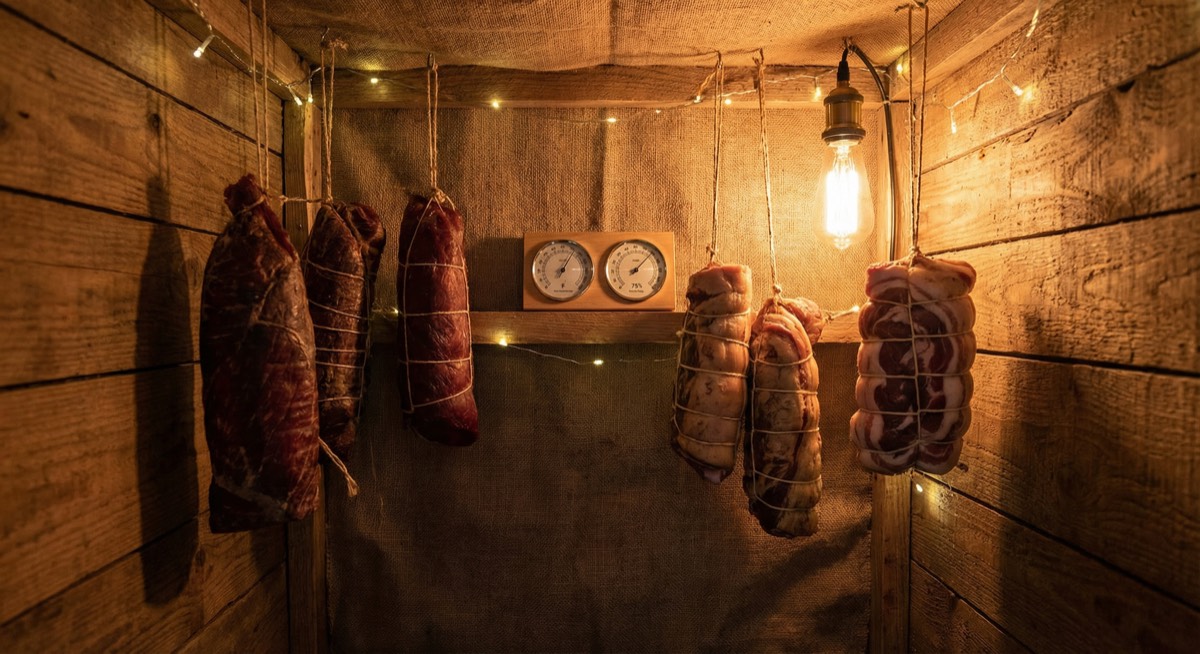
Making salami at home sounds intimidating until you actually do it. Then you realize it’s just ground meat, salt, spices, and patience. The process hasn’t changed much in thousands of years—humans have been dry-curing sausages since before recorded history. If they could do it in a Mediterranean cave, you can do it in your kitchen.
That said, there’s a difference between “simple” and “easy.” The ingredient list is short. The steps are straightforward. But the details matter—temperature, humidity, fat ratio, curing salt measurements. Get those right and you’ll produce salami that puts anything from the grocery store to shame. Get them wrong and you’ll end up with something inedible or, worse, unsafe.
This guide covers everything from start to finish. No shortcuts, no hand-waving over the hard parts.
Understanding Dry-Cured Salami
Dry-cured salami is fundamentally different from cooked sausage. When you make bratwurst or breakfast links, you’re making something that gets cooked before eating. Dry-cured salami is never cooked. Instead, it’s preserved through a combination of salt, curing agents, fermentation, and controlled dehydration.
Here’s what happens inside a salami during the curing process:
- Fermentation (days 1–3): Beneficial bacteria consume sugars and produce lactic acid, dropping the pH. This acidic environment inhibits harmful bacteria like Clostridium botulinum.
- Drying (weeks 2–8+): Moisture slowly evaporates from the sausage. As water activity drops below 0.90, most pathogens can no longer survive or multiply.
- Flavor development: Enzymes break down proteins and fats, creating the complex, tangy, funky flavors that define great salami.
The entire process typically takes 4–8 weeks depending on the diameter of your salami and your curing conditions. Thinner salamis cure faster. Fatter ones take longer. Patience is non-negotiable.
Essential Equipment
You don’t need a professional setup, but you do need a few specific tools. Here’s what’s actually required versus what’s nice to have.
Must-Have Equipment
- Meat grinder: A dedicated grinder or a grinder attachment for a stand mixer. Manual grinders work but are exhausting for large batches. You need both coarse (3/8”) and fine (3/16”) plates.
- Sausage stuffer: A vertical stuffer is ideal. The grinder attachment stuffers work in a pinch but compress the meat too much and create smearing.
- Digital scale: Accurate to 0.1 grams for measuring curing salts. This is not optional—eyeballing curing salt can be dangerous.
- Curing chamber or controlled environment: You need 55–65°F (13–18°C) and 70–80% relative humidity. A converted mini-fridge with a temperature controller and small humidifier is the most common DIY solution.
- Natural casings: Hog casings for thinner salami (32–35mm), beef middles for larger formats (55–65mm). Available online or from your local butcher.
- Butcher’s twine: For tying off links and creating hanging loops.
Nice to Have
- pH meter: Confirms fermentation is working. Look for a pH drop to 5.3 or below within 48–72 hours.
- Water activity meter: The gold standard for determining when salami is fully cured. Target: aw of 0.85–0.90.
- Hygrometer: Monitors humidity in your curing space. Cheap ones work fine.
- Vacuum sealer: For storing finished salami.
Ingredients: The Foundation
Great salami starts with great ingredients. This is not the place to cut corners.
The Meat
Use pork shoulder (also called Boston butt). It has the ideal lean-to-fat ratio of roughly 70/30 right out of the package. If you want more control, buy lean pork and hard back fat separately.
The fat ratio matters enormously. Too lean and your salami will be dry, crumbly, and chalky. Too fatty and it’ll be greasy and won’t bind properly. Aim for:
- 70–75% lean pork
- 25–30% hard back fat (not soft belly fat, which smears during grinding)
Temperature is critical: Keep your meat and fat partially frozen—around 28–32°F (−2 to 0°C)—when grinding. Warm fat smears instead of cutting cleanly, which creates a greasy, unappetizing texture in the finished product.
Curing Salts
For dry-cured salami, you use Cure #2 (also called Prague Powder #2 or Insta Cure #2). This contains both sodium nitrite and sodium nitrate. The nitrate slowly converts to nitrite over the long curing period, providing ongoing protection against C. botulinum.
Do NOT use Cure #1 for dry-cured salami. Cure #1 contains only sodium nitrite, which dissipates too quickly for a product that cures for weeks. Cure #1 is for cooked or smoked products.
Standard dosage: 0.25% of total meat weight (2.5 grams per kilogram of meat). Measure this on a precise digital scale. Every single time.
Salt
Use non-iodized sea salt or kosher salt. Iodine can interfere with fermentation cultures. Standard dosage is 2.5–3% of total meat weight.
Starter Culture
A bacterial starter culture (like Bactoferm F-RM-52 or T-SPX) kickstarts the fermentation process. These are freeze-dried lactic acid bacteria that you rehydrate in distilled water before mixing into the meat.
Can you make salami without a starter culture? Technically yes—traditional salamis relied on wild fermentation. But it’s riskier, less predictable, and not recommended for beginners. Starter cultures cost a few dollars and eliminate a major variable.
Dextrose (Sugar)
The bacteria in your starter culture need food. Dextrose is their preferred sugar. Use 0.3–0.5% of total meat weight. Regular table sugar works in a pinch, but dextrose ferments more predictably.
Spices
This is where you make the recipe your own. A classic Italian-style salami uses:
- Freshly ground black pepper: 3–4g per kg
- Garlic (fresh, minced or granulated): 3–5g per kg
- Red wine (dry): 25–30ml per kg
From there, you can add fennel seed (finocchiona style), red pepper flakes (for spicy salami), paprika, coriander, or whatever flavor profile you’re chasing.
The Basic Salami Recipe
This recipe makes approximately 5 lbs (2.25 kg) of salami—enough for 6–8 links depending on casing size.
Ingredients
- 1,575g (3.5 lbs) lean pork shoulder, cut into 1-inch cubes
- 675g (1.5 lbs) hard pork back fat, cut into 1-inch cubes
- 56g (2.5%) non-iodized salt
- 5.6g (0.25%) Cure #2
- 9g (0.4%) dextrose
- Starter culture per manufacturer’s instructions (typically one packet per 25–50 lbs, so use a fraction)
- 7g freshly ground black pepper
- 7g fresh garlic, minced
- 60ml dry red wine
Step-by-Step Process
Step 1: Prep and Freeze
Cut your pork and back fat into 1-inch cubes. Spread them on sheet pans in a single layer and place in the freezer for 30–45 minutes. You want the meat partially frozen—firm on the outside but not rock-solid. This prevents smearing during grinding.
While the meat freezes, place your grinder parts (blade, plates, housing) in the freezer too. Cold equipment = clean cuts.
Step 2: Prepare Your Casings
If using natural casings packed in salt, rinse them thoroughly under cold water, then soak in tepid water for 30 minutes. Run water through the inside of each casing to check for holes. Set aside in clean water until ready to stuff.
Step 3: Activate Your Starter Culture
Dissolve your measured starter culture in a small amount of distilled water according to the manufacturer’s directions. Let it rehydrate for 15–30 minutes. Do not use chlorinated tap water—chlorine kills the bacteria you’re trying to cultivate.
Step 4: Grind
Grind the partially frozen meat and fat through the coarse plate (3/8”). For a finer-textured salami, run a portion through the fine plate (3/16”) on a second pass. Many traditional recipes use a mix—some coarse, some fine—for textural interest.
Watch for smearing: If the meat starts looking pasty or the fat is spreading rather than staying in distinct pieces, stop. Re-freeze everything for 15 minutes and continue. Smearing is the most common beginner mistake and it ruins the texture of the finished product.
Step 5: Mix
Combine the ground meat with salt, Cure #2, dextrose, starter culture solution, spices, and wine in a large mixing bowl. Mix by hand (wear gloves) for 3–4 minutes until the mixture becomes sticky and cohesive. You should be able to press a handful against your palm and have it stick when you turn your hand upside down. This “primary bind” is essential—it means the proteins have been extracted enough to hold the salami together during curing.
Cover the mixture and refrigerate for 12–24 hours. This allows the cure to distribute evenly and the flavors to meld.
Step 6: Stuff
Load your sausage stuffer and thread on a casing. Stuff firmly but not so tight that the casing bursts. You want the meat packed without air pockets—air pockets become breeding grounds for bad mold inside the salami.
If you see air bubbles, prick them with a sterile sausage pricker or a clean pin. Every visible bubble should be popped.
Twist or tie off links at your desired length. Tie a loop of butcher’s twine at one end of each link for hanging.
Step 7: Ferment
This is the most critical phase. Hang your salami in an environment of 68–75°F (20–24°C) and 85–90% humidity for 48–72 hours. Many people use an oven with just the light on, or a small enclosed space with a bowl of warm water.
During fermentation, the starter culture produces lactic acid, dropping the pH of the meat from ~5.8 to below 5.3. This acidification is what makes the salami safe to eat without cooking. If you have a pH meter, check it at 48 hours. You should see 5.3 or lower.
Signs fermentation is working:
- The salami feels slightly firmer
- The color deepens to a richer red
- There may be a faint, tangy, yogurt-like aroma
Step 8: Cure (The Long Wait)
After fermentation, move your salami to the curing chamber: 55–60°F (13–15°C) and 70–80% relative humidity. This is where the magic happens—slowly, over weeks.
The salami will lose moisture at a rate of roughly 0.5–1% of its weight per day. You’re targeting a total weight loss of 30–35%. When a salami that started at 500g weighs 325–350g, it’s done.
The case hardening problem: If the outside of your salami dries faster than moisture can migrate from the center, you get “case hardening”—a dry, leathery exterior trapping moisture inside. This is the most common curing failure and is caused by:
- Humidity too low (below 65%)
- Too much airflow directly on the salami
- Temperature too high
If you notice the outside getting hard while the center still feels soft, wrap the salami in a damp towel for 24 hours to rehydrate the surface, then reduce airflow and increase humidity.
Step 9: Monitor for Mold
Mold on salami is normal and often desirable. Here’s your field guide:
- White mold: Good. Penicillium nalgiovense or similar beneficial molds. They protect against harmful molds and contribute to flavor. Many producers inoculate casings with white mold cultures deliberately.
- Green/blue-green mold: Usually harmless but not ideal. Wipe off with a cloth dampened in vinegar. If it keeps returning aggressively, your humidity may be too high.
- Black mold: Bad. Discard the salami. Black mold can produce mycotoxins and is not safe to simply wipe off.
- Pink/red mold: Bad. Discard. This is often Neurospora and spreads rapidly.
How to Know When Your Salami Is Done
There are three ways to check, in order of reliability:
- Weight loss (most reliable without special equipment): Weigh your salami before hanging and track the loss. At 30–35% weight loss, it’s done. Write the starting weight on a tag attached to each salami.
- Water activity meter (gold standard): Target aw of 0.85–0.90. Below 0.85 and it will be very firm and dry. Above 0.90 and it may not be fully shelf-stable.
- The squeeze test (least reliable): A finished salami should feel firm throughout, with slight give when squeezed—similar to a firm cheese. If the center feels noticeably softer than the edges, it needs more time.
Safety: The Non-Negotiable Rules
Dry-cured salami is a raw meat product. If you skip the safety steps, people can get seriously ill. These rules are not suggestions:
- Always use Cure #2. The nitrite/nitrate combination prevents botulism. There is no safe substitute for dry-cured products.
- Always use a digital scale for curing salts. Measuring by volume (teaspoons) is not accurate enough.
- Always use a starter culture (at least until you have significant experience with wild fermentation).
- Verify fermentation. If you have a pH meter, confirm pH ≤ 5.3 within 72 hours. If you don’t have a meter, follow the starter culture manufacturer’s time and temperature guidelines exactly.
- Monitor your curing environment. Temperature excursions above 70°F during curing can promote bacterial growth. Keep it consistent.
- When in doubt, throw it out. If something looks or smells wrong and you can’t identify it, don’t eat it. One batch of salami is not worth a trip to the hospital.
DIY Curing Chamber: The Budget Build
You don’t need a commercial walk-in. Here’s the standard DIY approach that most home charcuterie enthusiasts use:
- Small refrigerator or wine cooler (used is fine—check Craigslist or Facebook Marketplace)
- Inkbird ITC-308 temperature controller (~$35)—plugs into the fridge and cycles it on/off to maintain your target temp
- Small ultrasonic humidifier placed inside the fridge with a humidity controller (Inkbird IHC-200 works well)
- Small USB fan for gentle air circulation—prevents dead spots where mold accumulates
- Dowel rods or S-hooks mounted across the top for hanging salami
Total cost: $100–200 if you find a used fridge. This setup handles any curing project from salami to coppa to bresaola.
Common Mistakes and How to Avoid Them
Fat Smearing
The problem: Meat and fat weren’t cold enough during grinding. The fat smears into a paste instead of staying in distinct pieces.
The fix: Partially freeze everything. Freeze your grinder parts. Work fast. If things warm up, stop and re-freeze for 15 minutes.
Case Hardening
The problem: The outside dries faster than moisture can escape from the center, creating a hard shell.
The fix: Maintain 75–80% humidity, especially in the first two weeks. Avoid direct airflow on the salami.
Air Pockets
The problem: Air trapped inside the salami during stuffing becomes a pocket where unwanted mold can grow.
The fix: Stuff firmly and prick all visible air bubbles before hanging.
Over-Fermentation
The problem: Leaving salami at fermentation temperatures too long produces an excessively sour, tangy flavor.
The fix: Move to the curing chamber after 48–72 hours. If using a fast-fermentation culture (like F-RM-52), 36–48 hours may be sufficient.
Using Cure #1 Instead of Cure #2
The problem: Cure #1 doesn’t provide long-term protection for dry-cured products.
The fix: Always use Cure #2 for any product that will cure for more than a few days. This is a safety issue, not a preference.
Storing Your Finished Salami
Once your salami has reached its target weight loss, you have options:
- Vacuum seal and refrigerate: Stops further drying. Lasts 2–3 months in the fridge, 6+ months in the freezer.
- Leave it hanging: It will continue to dry and get firmer. Some people prefer a drier, harder salami. Just keep it in your curing chamber or a cool, dry place.
- Wrap in butcher paper: Allows some airflow while slowing dehydration. Good for short-term counter storage in cool environments.
Once cut, wrap the cut end tightly in plastic wrap and refrigerate. Exposed surfaces dry out quickly.
Your First Batch: Keep It Simple
For your first attempt, I’d recommend making a basic pork salami with just black pepper and garlic. Don’t get fancy with exotic spice blends or mixed-meat recipes until you’ve successfully completed one batch. You need to learn what the process looks and feels like before adding complexity.
Use hog casings (32–35mm) for your first batch—they cure faster than larger beef middles, giving you results in 3–4 weeks instead of 6–8. Faster feedback loops mean faster learning.
And weigh everything. Seriously. Buy a $20 digital scale if you don’t have one. Charcuterie is one of the few areas of cooking where precision actually matters for safety, not just taste.
Once you pull your first successful salami out of the curing chamber, slice it thin, and taste something you made entirely from scratch—something that took weeks of patience—you’ll understand why people get obsessed with this craft. There’s nothing else like it.
More Charcuterie Guides
What Is Pink Curing Salt? Sodium Nitrite Explained for Home Charcuterie
Pink curing salt is the most essential — and most misunderstood — ingredient in meat curing. This guide explains what it is, why it's pink, how sodium nitrite prevents botulism, proper usage rates, and whether you can cure meat without it.
10 min readHow Long Does Charcuterie Last? Storage Guide for Cured Meats & Cheese
Understanding proper charcuterie storage ensures you enjoy it at peak quality while avoiding food safety risks.
10 min read