Best Meats for a Charcuterie Board: The Definitive Guide to Cured Meat Selection
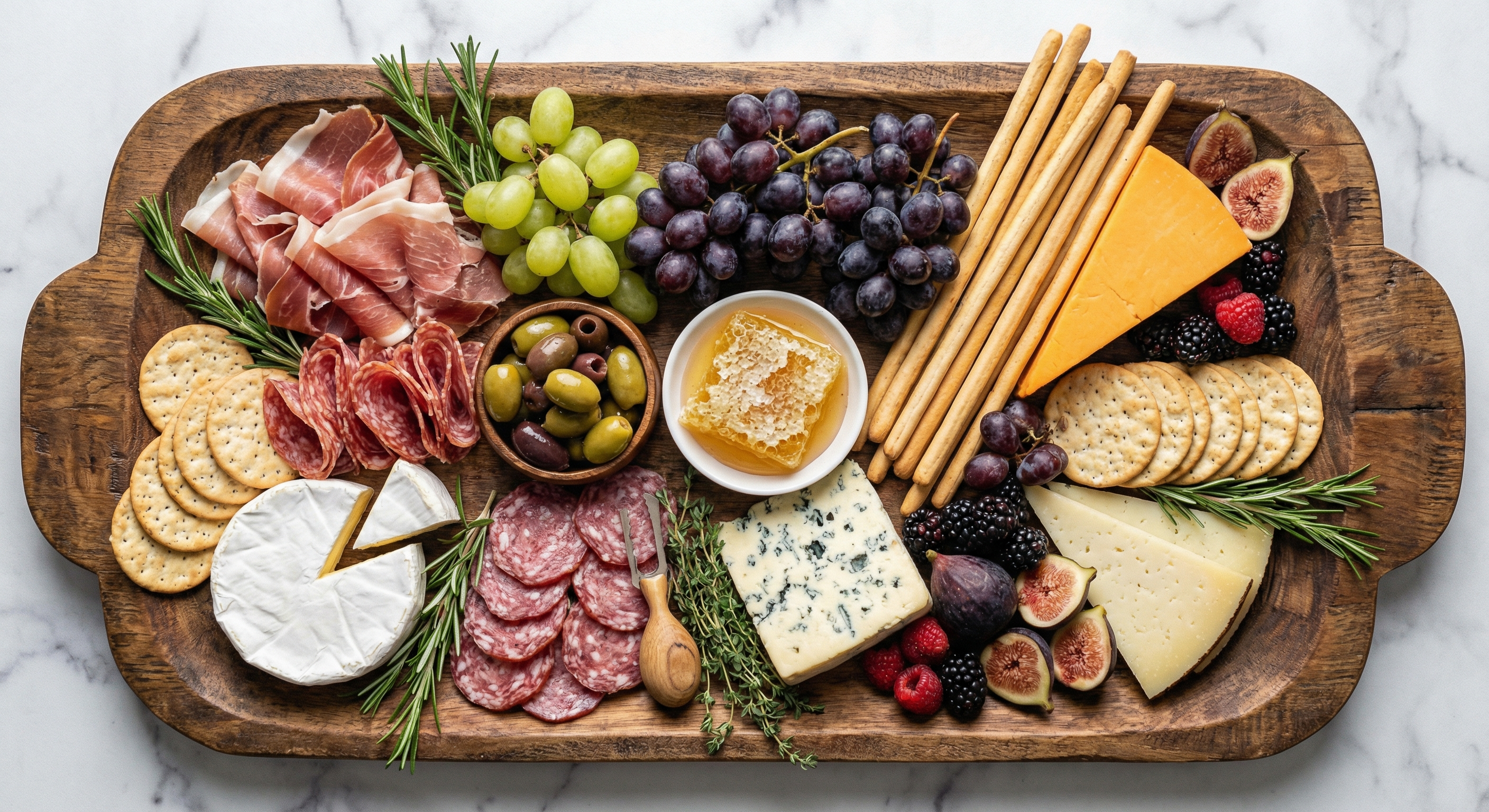
A charcuterie board is only as good as the meat on it. You can have the most stunning arrangement, the finest cheese, the most photogenic garnishes—but if you’re working with mediocre deli meat, it shows. The right cured meats aren’t just ingredients. They’re the foundation your entire board is built on.
Choosing well means understanding flavor profiles, textures, fat content, and how different meats interact with cheese, bread, and accompaniments. This guide covers the best meats for a charcuterie board, organized by category, with pairing notes and practical tips for slicing and presentation.
The Three Categories of Charcuterie Meats
Great boards balance three types of cured meat:
- Whole-muscle cured meats — Prosciutto, bresaola, coppa, lonza. These are intact muscles that have been salt-cured and air-dried.
- Ground and cased meats — Salami, soppressata, ‘nduja, chorizo. Ground meat mixed with fat, spices, and curing salts, stuffed into casings and fermented.
- Cooked and spreadable preparations — Pâté, rillettes, mortadella, terrine. Heat-treated or emulsified products with rich, complex textures.
A well-built board includes at least one from each category. This creates variety in texture, flavor intensity, and visual appeal—which is what separates a memorable board from a plate of cold cuts.
Whole-Muscle Cured Meats
Prosciutto
The undisputed king of charcuterie boards, and for good reason. Prosciutto (specifically prosciutto crudo) is a whole hind leg of pork, salt-cured and air-dried for 12 to 36 months.
Flavor profile: Sweet, nutty, buttery with a delicate saltiness. The fat melts on the tongue and delivers a richness that lingers.
What to look for:
- Prosciutto di Parma — Made in the Emilia-Romagna region. Minimum 12 months aging. Sweet, gentle flavor.
- Prosciutto di San Daniele — From Friuli. Slightly sweeter, often pressed flat during aging. Darker color.
- American prosciutto — Domestic producers like La Quercia make excellent versions. Often more accessible and still high quality.
Board tip: Drape prosciutto in loose folds or ribbons. Never lay it flat—the folds create air pockets that make the slices easier to pick up and more visually dramatic.
Pairs with: Fresh mozzarella, melon, figs, Parmigiano-Reggiano, grissini, honey.
Coppa (Capicola)
Coppa comes from the pork neck and shoulder—a heavily marbled muscle that produces one of the most flavorful whole-muscle charcuterie products. It’s cured with salt, pepper, and sometimes paprika or wine, then air-dried for 3 to 6 months.
Flavor profile: Rich, porky, with generous fat marbling. More assertive than prosciutto, with spice notes that vary by producer.
Why it belongs on every board: Coppa bridges the gap between the delicacy of prosciutto and the boldness of salami. It’s the versatile middle player your board needs.
Pairs with: Aged provolone, roasted peppers, Manchego, crusty bread, olive tapenade.
Bresaola
The lean outlier. Bresaola is air-dried beef from northern Italy’s Valtellina valley. With less than 10% fat, it brings a completely different texture and flavor to the board.
Flavor profile: Clean, beefy, with warm spice notes (juniper, black pepper, cinnamon). Elegant and restrained.
Why include it: Bresaola adds color contrast (deep ruby red) and appeals to guests who prefer lighter flavors or want a break from pork.
Pairs with: Arugula, lemon juice, shaved Parmigiano, olive oil, capers.
Lonza (Lomo)
The underrated gem. Lonza is cured pork loin—lean, tender, and subtly flavored. In Spanish tradition, it’s called lomo and often includes pimentón (smoked paprika).
Flavor profile: Mild, slightly sweet, with a fine-grained texture. Spanish lomo adds smokiness.
Board tip: Slice lonza thin and fan it out. Its uniform round shape makes for clean, attractive presentation.
Pairs with: Manchego, membrillo (quince paste), marcona almonds, crusty bread.
Ground and Cased Meats (Salumi)
Genoa Salami
The most familiar salami in America and a reliable board staple. Made from pork (sometimes with a little beef or veal), seasoned with garlic, black pepper, and red wine.
Flavor profile: Garlicky, tangy from fermentation, moderately spiced. Medium fat content.
Board tip: Fold slices into quarters or make salami roses by draping slices around the rim of a small cup, then inverting. It’s the easiest way to elevate basic salami presentation.
Pairs with: Provolone, cornichons, olives, mustard, crackers.
Soppressata
A coarser-ground Italian salami with visible fat chunks and a more rustic character. Comes in both sweet (dolce) and hot (piccante) varieties.
Flavor profile: Bold, peppery, with a chunkier texture than Genoa. The hot version packs serious heat from Calabrian chili flakes.
Why it matters: Soppressata adds textural contrast to your salami selection. The irregular grind looks different from uniform commercial salamis and signals quality.
Pairs with: Fresh mozzarella, roasted red peppers, aged cheddar, honey, crusty bread.
Finocchiona
A Tuscan salami flavored with fennel seeds and sometimes wild fennel pollen. It’s the dark horse of charcuterie boards—unexpected, distinctive, and almost always a conversation starter.
Flavor profile: Anise-forward, sweet, aromatic. The fennel transforms what could be a standard salami into something memorable.
Board tip: Place finocchiona near mild cheeses and fruit. The fennel plays beautifully off sweet elements.
Pairs with: Pecorino, fresh pears, walnuts, honey, dried apricots.
Chorizo (Spanish-Style)
Spanish chorizo—not the fresh Mexican variety—is a dry-cured sausage flavored with pimentón (smoked paprika). It brings a completely different flavor profile to the board: smoky, earthy, and distinctly Iberian.
Flavor profile: Smoky, moderately spicy, with a firm texture. The paprika gives it a deep red color that stands out visually.
Why include it: Chorizo breaks the Italian monopoly on most charcuterie boards and adds a smoky dimension nothing else provides.
Pairs with: Manchego, membrillo, marcona almonds, olives, Padrón peppers.
‘Nduja
A spreadable, spicy salami from Calabria. ‘Nduja (en-DOO-yah) is soft enough to spread on bread, which makes it fundamentally different from every other meat on your board.
Flavor profile: Intensely spicy, smoky, and rich. It coats the palate with chili heat and pork fat.
Board tip: Serve ‘nduja in a small bowl with a spreader or beside crostini. It’s an interactive element—guests love spreading it themselves.
Pairs with: Burrata, crostini, honey (the sweetness tames the heat), roasted garlic, fresh bread.
Cooked and Spreadable Preparations
Mortadella
Italy’s most misunderstood cured meat. Real mortadella (Mortadella di Bologna IGP) is nothing like American bologna. It’s a finely emulsified pork sausage studded with cubes of fat, pistachios, and sometimes black pepper.
Flavor profile: Delicate, silky, mildly spiced. The fat cubes provide bursts of richness, and the pistachios add crunch.
Board tip: Cut mortadella into thick cubes rather than thin slices. The cubes showcase the fat and pistachio inclusions and create a different texture experience from sliced meats.
Pairs with: Provolone, pickled vegetables, crusty bread, whole-grain mustard.
Pâté
Pâté de campagne (country-style pâté) or mousse-style liver pâté adds a French dimension to your board. It’s rich, spreadable, and brings an entirely different set of flavors to the table.
Flavor profile: Rich, earthy, sometimes gamey (especially with duck or rabbit). Mousse versions are lighter; country-style is chunkier and more robust.
Why include it: Pâté is the one charcuterie item that most home boards lack, and it’s often the thing guests remember most. It signals effort and sophistication.
Pairs with: Cornichons, Dijon mustard, baguette, fruit preserves, capers.
Duck Rillettes
Slow-cooked duck shredded and preserved in its own fat. Rillettes are the ultimate spread—rich, unctuous, and deeply savory.
Flavor profile: Intense duck flavor, silky texture, subtle herbs (thyme, bay). Less livery than pâté, more accessible.
Board tip: Serve in a ramekin with a small spoon. Rillettes benefit from coming to room temperature—take them out of the fridge 30 minutes before serving.
Pairs with: Toasted baguette, whole-grain mustard, cornichons, pickled onions.
Building a Balanced Meat Selection
The ideal charcuterie board includes 3 to 5 meats that cover a range of flavors, textures, and fat levels. Here are three proven combinations:
The Classic Italian Board
- Prosciutto di Parma (delicate, sweet)
- Soppressata piccante (bold, spicy)
- Mortadella (smooth, mild)
- Coppa (rich, marbled)
The Mediterranean Mix
- Prosciutto (Italian elegance)
- Spanish chorizo (smoky heat)
- Bresaola (lean, beefy)
- ‘Nduja (spreadable fire)
The French-Leaning Board
- Saucisson sec (French dry-cured salami)
- Pâté de campagne (rustic, earthy)
- Duck rillettes (rich, unctuous)
- Coppa (marbled, versatile)
How Much Meat Per Person?
Plan for 2 to 3 ounces of meat per person if the board is an appetizer, or 4 to 5 ounces if it’s the main event. For a board serving 6 to 8 people as a starter:
- 1/4 lb prosciutto
- 1/4 lb salami or soppressata
- 1/4 lb coppa or bresaola
- Small portion of pâté or ‘nduja (3–4 oz)
Total: roughly 1 to 1.25 pounds. You want just enough that the board looks abundant without resulting in leftover meat that’s dried out by end of night.
Slicing and Presentation Tips
How you slice and arrange meat matters almost as much as what you choose.
Slicing Rules
- Prosciutto and coppa: Paper-thin. If you can’t read a newspaper through it, it’s too thick. Have your butcher or deli counter slice these.
- Salami and soppressata: Slightly thicker—about 1/8 inch. Thin enough to fold, thick enough to have some chew.
- Mortadella: Thick cubes (1/2 inch) or thick slices folded into quarters.
- Chorizo: Thin coins, about 1/8 inch. The small diameter makes them perfect bite-size pieces.
Arrangement Techniques
- Prosciutto ribbons: Gather each slice at one end and let it drape naturally.
- Salami roses: Layer slices around the rim of a glass, invert onto the board.
- Coppa folds: Fold each slice in half, then in half again. Stack in a row.
- Chorizo coins: Overlap in a line or fan pattern.
Sourcing Quality Charcuterie
The difference between supermarket deli meat and quality charcuterie is enormous. Here’s where to look:
- Specialty meat shops — Your best bet for freshly sliced, high-quality products. The Meatery carries premium charcuterie including imported Italian and domestic artisan options.
- Italian delis — Often import directly and have knowledgeable staff.
- Whole Foods / specialty grocers — Carry good mid-range options. Look for DOP/IGP labels on Italian products.
- Farmer’s markets — Local charcuterie producers often sell at markets. The quality can be exceptional.
What to avoid: Pre-sliced, vacuum-packed grocery store packages labeled “charcuterie.” These are typically mass-produced, over-processed, and lack the complexity of properly aged products. If the ingredient list reads more like a chemistry textbook than a recipe, skip it.
Storage and Temperature
Cured meats taste best at room temperature. Take them out of the fridge 30 to 45 minutes before serving. The fat softens, the flavors open up, and the texture becomes more appealing.
Leftover sliced meats should be wrapped tightly in plastic wrap or placed in an airtight container. They’ll keep for 3 to 5 days in the refrigerator. Whole, unsliced pieces last much longer—weeks to months depending on the product.
Frequently Asked Questions
What are the best meats for a charcuterie board?
The best meats include prosciutto, coppa, soppressata, Genoa salami, Spanish chorizo, mortadella, and a spreadable option like 'nduja or pâté. Aim for 3 to 5 varieties covering different textures, flavors, and fat levels for a balanced board.
How much meat do I need per person for a charcuterie board?
Plan for 2 to 3 ounces of meat per person for an appetizer board, or 4 to 5 ounces if the board is the main course. For 6 to 8 guests as a starter, about 1 to 1.25 pounds total across all varieties is ideal.
What is the difference between salami and soppressata?
Genoa salami has a fine, uniform grind with garlic and wine flavors. Soppressata has a coarser grind with visible fat chunks, giving it a more rustic texture. Soppressata also comes in hot (piccante) varieties with Calabrian chili.
Should charcuterie meat be served cold or at room temperature?
Room temperature. Take cured meats out of the refrigerator 30 to 45 minutes before serving. The fat softens, flavors intensify, and the texture becomes much more pleasant to eat.
Can I use deli meat on a charcuterie board?
While you can use deli meat in a pinch, quality cured meats make a significant difference. Look for DOP or IGP labels on Italian products, shop at specialty meat counters, and avoid pre-packaged options with long ingredient lists.
More Charcuterie Guides
What Is Pink Curing Salt? Sodium Nitrite Explained for Home Charcuterie
Pink curing salt is the most essential — and most misunderstood — ingredient in meat curing. This guide explains what it is, why it's pink, how sodium nitrite prevents botulism, proper usage rates, and whether you can cure meat without it.
10 min readHow Long Does Charcuterie Last? Storage Guide for Cured Meats & Cheese
Understanding proper charcuterie storage ensures you enjoy it at peak quality while avoiding food safety risks.
10 min read