Smoking Wood Types & Flavor: A Pitmaster’s Complete Guide
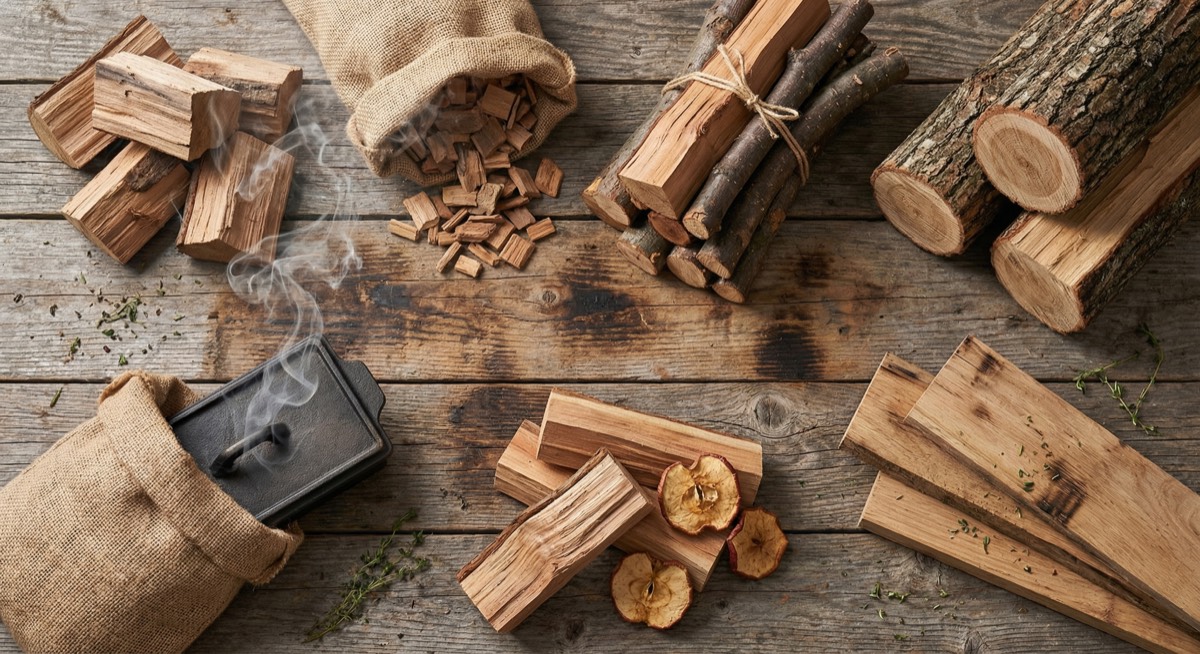
I’ve been tending smokers for over two decades, and if there’s one thing I’ve learned, it’s this: the wood you choose matters more than your rub, your sauce, or even your smoker. You can nail the temperature, wrap at exactly the right time, and still end up with mediocre barbecue if you’re burning the wrong wood. Smoking wood types and their flavor profiles are the foundation of great smoked meat—period.
This guide is everything I wish someone had handed me when I started. We’ll cover every major wood species, the flavors they produce, and exactly how to match them to the protein on your grate. No guesswork, no vague advice—just hard-earned knowledge from thousands of cooks.
Why Wood Choice Matters More Than You Think
Smoke isn’t just heat delivery. When wood combusts, it releases a complex cocktail of compounds—phenols, carbonyls, organic acids—that physically bond with the surface of your meat. Those compounds are responsible for the smoke ring, the bark color, and most importantly, the flavor.
Different wood species contain different ratios of lignin, cellulose, and hemicellulose. Lignin is the big one for flavor. Hardwoods with higher lignin content produce sweeter, more complex smoke. Woods with more cellulose tend to burn hotter and contribute sharper, sometimes acrid notes if you’re not careful.
The practical takeaway? Choosing the right smoking wood type isn’t a style preference—it’s a science. The wrong wood can overpower a delicate piece of fish or leave a premium brisket tasting like a campfire ashtray. The right wood elevates everything.
Hardwood vs. Softwood: The First Rule
Before we get into specific species, let’s establish the single most important rule in smoking: only burn hardwood. Softwoods—pine, spruce, cedar, fir—are loaded with resin and sap. When they burn, they produce thick, black, acrid smoke packed with creosote. That’s the tar-like substance that coats the inside of chimneys, and it’ll coat the inside of your mouth too. It’s bitter, potentially harmful, and will ruin any piece of meat it touches.
Hardwoods come from deciduous trees—the ones that drop their leaves. They burn cleaner, produce thinner blue smoke, and deliver the pleasant flavors we associate with great barbecue. Every wood discussed in this guide is a hardwood. If someone hands you a bag of wood and you’re not sure what species it is, don’t burn it. That’s not caution—that’s common sense.
The one partial exception is cedar planking for salmon, but that’s a grilling technique, not a smoking technique. The plank smolders under the fish—you’re not using it as your combustion fuel.
The Major Smoking Wood Types and Their Flavors
Let’s break down the eight woods you’re most likely to encounter and use. I’ve ranked them roughly from strongest to mildest flavor intensity.
Mesquite
Mesquite is the strongest smoking wood available, and it’s the one most people misuse. It burns extremely hot, produces an intense, earthy, almost aggressive smoke flavor with a distinct sharpness. In Texas, mesquite is tradition for direct-heat grilling—think fajitas over a mesquite fire—but for low-and-slow smoking, you need to be careful.
Used as a primary smoke source for a 12-hour brisket cook, mesquite will almost certainly overpower the meat. It’s best used in small quantities as an accent wood, mixed with something milder like oak. If you’re smoking hot and fast (275°F+), mesquite becomes more manageable because the cook time is shorter and the meat absorbs less smoke.
Flavor profile: Bold, earthy, sharp, slightly sweet
Intensity: 10/10
Best for: Beef (short cooks), Tex-Mex cuts, game meats
Hickory
Hickory is the backbone of American barbecue. It’s strong, savory, and unmistakably “smoky”—when most people picture the taste of smoked meat, they’re imagining hickory. It produces a robust, bacon-like flavor that pairs beautifully with pork and beef.
That said, hickory can turn bitter if you overdo it. Too much hickory smoke, especially dirty smoke from smoldering chunks, produces an astringent flavor that sits on the back of your tongue. The key is clean combustion—thin, blue smoke, not billowing white clouds. A few chunks of hickory in an offset smoker is all you need for a full pork shoulder cook.
Flavor profile: Strong, savory, bacon-like, nutty
Intensity: 8/10
Best for: Pork ribs, pork shoulder, bacon, beef brisket
Oak
If I could only smoke with one wood for the rest of my life, it would be oak. Specifically, post oak—the wood that defines Central Texas barbecue. Oak delivers a medium-strong, clean smoke flavor that never overpowers. It’s versatile enough for any protein and forgiving enough for beginners.
Red oak is slightly stronger than white oak, and post oak sits right in the sweet spot between them. Oak burns long and steady, making it an excellent primary fuel wood for offset smokers. Many competition pitmasters use oak as their base and add fruit woods for complexity.
Flavor profile: Medium, clean, slightly sweet, earthy
Intensity: 6/10
Best for: Brisket, beef ribs, virtually anything
Pecan
Pecan is hickory’s refined cousin. They’re in the same botanical family, and the flavor profile is similar—but pecan is milder, nuttier, and sweeter. It’s an outstanding all-around smoking wood that gives you that classic smoky taste without the risk of going bitter.
Pecan is particularly popular in the South, where the trees grow abundantly. It’s my go-to recommendation for people who love hickory flavor but keep overdoing it. You can burn more pecan than hickory before the smoke becomes overbearing, which makes it very forgiving.
Flavor profile: Nutty, sweet, mildly smoky
Intensity: 5/10
Best for: Pork, poultry, beef, brisket, sausages
Cherry
Cherry is where we cross into fruit wood territory. It produces a mild, sweet, slightly tart smoke that adds a gorgeous mahogany color to the bark of whatever you’re cooking. Aesthetically, cherry smoke produces some of the most beautiful-looking barbecue you’ll ever see.
On its own, cherry can be a bit too subtle for beef, but it’s outstanding mixed with hickory or oak. A 50/50 blend of cherry and hickory on pork ribs is one of my all-time favorite combinations—you get the savory backbone from the hickory and a sweet finish from the cherry.
Flavor profile: Sweet, fruity, slightly tart
Intensity: 4/10
Best for: Pork, poultry, duck, ham, game birds
Apple
Apple produces the mildest, sweetest smoke of the commonly available fruit woods. It’s gentle, almost delicate—which makes it perfect for poultry and lighter cuts of pork where you don’t want the smoke to be the dominant flavor.
The trade-off is that apple wood takes longer to impart noticeable flavor. On a quick two-hour chicken cook, you might barely taste it. For longer cooks like pork shoulder, the sweetness builds gradually into something really special. Apple-smoked pulled pork has a subtle sweetness that makes people ask what your secret ingredient is.
Flavor profile: Mild, sweet, fruity, delicate
Intensity: 3/10
Best for: Poultry, pork, ham, sausages, cheese
Maple
Maple is similar to apple in intensity but with a distinctly different character. It produces a sweet, slightly smoky flavor with almost a caramelized quality. Think of how maple syrup tastes compared to apple juice—that’s roughly the difference between these two woods as smoke sources.
Maple pairs exceptionally well with poultry and pork, and it’s one of the best woods for smoking cheese and vegetables. It’s not as widely available as hickory or oak in many regions, but if you can get your hands on it, it’s worth trying—especially for holiday hams and turkey.
Flavor profile: Sweet, mild, slightly caramelized
Intensity: 3/10
Best for: Poultry, pork, ham, vegetables, cheese
Alder
Alder is the traditional smoking wood of the Pacific Northwest, where it’s been used to smoke salmon for centuries. It produces the lightest, most delicate smoke flavor of any commonly used wood—subtle enough to complement fish without overwhelming it.
Outside of seafood, alder works well with poultry and can be interesting with pork. It doesn’t have enough presence for beef. If you’re smoking any type of fish—salmon, trout, whitefish—alder should be your first choice. There’s a reason an entire regional tradition was built around this pairing.
Flavor profile: Very mild, slightly sweet, delicate
Intensity: 2/10
Best for: Salmon, trout, seafood, poultry
Matching Wood to Meat: The Practical Guide
Here’s where all that wood knowledge becomes actionable. Different proteins have different flavor intensities, and you want to match your wood accordingly. The golden rule: strong meats can handle strong woods; delicate meats need gentle woods.
Beef
Beef—especially fatty cuts like brisket and beef ribs—has enough flavor to stand up to stronger woods. Oak is the classic choice and my personal recommendation. Hickory works beautifully, and small amounts of mesquite can add complexity. Fruit woods alone tend to get lost on beef, but they’re excellent as blending partners.
Top picks: Post oak, hickory, pecan, mesquite (sparingly)
Blends: Oak + cherry, hickory + apple
Pork
Pork is the most versatile protein for smoking because it occupies the middle ground in flavor intensity. It can handle hickory’s boldness on ribs and shoulder, but it also shines with fruit woods on lighter cuts. Pecan is arguably the single best all-around wood for pork—it has enough presence for ribs but won’t overpower a tenderloin.
For traditional cured pork products—bacon, ham, Canadian bacon—hickory and apple are the standards for good reason. That hickory-smoked bacon flavor is iconic, and apple-smoked ham has a sweetness that works perfectly with the cure.
Top picks: Hickory, pecan, cherry, apple
Blends: Hickory + cherry, pecan + apple, oak + pecan
Poultry
Chicken and turkey are more delicate than red meat and can be overwhelmed by aggressive smoke. Fruit woods—apple, cherry, maple—are your best options. Pecan also works well. I’d avoid mesquite entirely on poultry, and use hickory only in small amounts or as part of a blend.
One thing to remember: poultry cooks faster than brisket or pork shoulder, so it spends less time absorbing smoke. That’s actually an advantage with stronger woods—a chicken smoked over oak for three hours won’t be overpowered the way one smoked for twelve hours would be.
Top picks: Apple, cherry, maple, pecan
Blends: Apple + cherry, pecan + maple
Fish & Seafood
Fish requires the lightest touch of all. Alder is the undisputed champion here—it’s been paired with salmon for centuries and the combination is basically perfect. Apple and cherry can also work, particularly on fattier fish like salmon or mackerel.
Never use mesquite, hickory, or even oak as a primary wood for fish. The smoke will completely overpower the delicate flavor of the seafood. If all you have is a stronger wood, use just one or two small chunks and keep the cook time short.
Top picks: Alder, apple, cherry, maple
Blends: Alder + cherry (sparingly)
Mixing Woods: Building Flavor Complexity
Some of the best barbecue I’ve ever produced came from wood blends, not single species. Mixing woods lets you build layers of flavor—a strong base note from one wood with sweet or fruity accents from another.
The formula is straightforward: start with a base wood (oak, hickory, or pecan) that provides the backbone, then add a complement wood (cherry, apple, or maple) for nuance. A good starting ratio is 70/30 base to complement, then adjust to your taste over multiple cooks.
Some proven combinations worth trying:
- Oak + cherry — The competition standard. Clean smoke with a sweet finish and gorgeous color.
- Hickory + apple — Savory meets sweet. Outstanding on pork shoulder.
- Pecan + cherry — Nutty and fruity. Works on nearly everything.
- Oak + mesquite (90/10) — Just a kiss of mesquite intensity without the bitterness risk.
- Hickory + pecan — Double the nutty, smoky character. Great for ribs.
Avoid mixing more than two or three woods at once. The flavors start to muddy together and you lose the distinct character of each species. Keep it simple and intentional.
Chunks vs. Chips vs. Pellets: Form Factor Matters
The species of wood matters most, but the form factor affects how that wood burns and how much smoke it produces. Here’s what you need to know about each option.
Wood Chunks
Chunks are fist-sized pieces of split hardwood, and they’re what I use 90% of the time. They smolder slowly, produce smoke for 30–60 minutes per chunk, and are ideal for offset smokers, kettle grills, and kamado cookers. Chunks give you the most control and the cleanest smoke flavor.
Buy chunks that are seasoned (dried)—not green (freshly cut). Green wood has too much moisture, produces excessive white smoke, and can give your meat a bitter, creosote-heavy taste. Good chunks should feel light for their size and make a hollow “clunk” when you knock two together.
Wood Chips
Chips are small, thin pieces that ignite quickly and burn out fast—usually within 15–20 minutes. They’re designed for gas grills and electric smokers where you can’t use larger pieces. Some people soak chips in water to extend their burn time, but I’m not a fan—the water has to evaporate before the wood can combust, so you’re just delaying the smoke and creating steam.
If chips are your only option, use a smoker box or foil pouch with holes punched in the top. This restricts airflow and makes the chips smolder instead of flaming up, which produces better-quality smoke.
Wood Pellets
Pellets are compressed sawdust formed into small cylinders. They’re the fuel source for pellet grills (like Traeger, RecTeq, and Camp Chef), and they burn very cleanly and efficiently. The trade-off is that pellets produce a lighter smoke flavor compared to chunks or even chips.
One thing to watch with pellets: check the ingredient list. Many “hickory” or “mesquite” pellets are actually a blend of the named wood with a high percentage of filler—usually oak or alder. This isn’t necessarily bad (oak is a great base), but know what you’re buying. Look for 100% single-species pellets if you want a true flavor representation.
Common Mistakes That Ruin Your Smoke
After years of teaching people to smoke meat, I see the same mistakes over and over. Avoid these and you’re already ahead of most backyard cooks.
1. Using Too Much Wood
This is the number one mistake. More smoke does not mean more flavor—it means bitter, acrid, over-smoked meat. For most cooks, two to four chunks of wood is plenty. The meat stops absorbing significant smoke after the first few hours anyway, so adding wood throughout a 14-hour cook is pointless and counterproductive.
2. Burning Dirty Smoke
Clean smoke is thin and blue—almost invisible. Dirty smoke is thick, white, and billowing. Dirty smoke is full of creosote and particulates that make your meat taste harsh. If you see heavy white smoke, your fire needs more oxygen. Open your vents, let the fire breathe, and wait for the smoke to clean up before putting meat in the cooker.
3. Using Green or Wet Wood
Freshly cut wood contains up to 50% moisture. Burning it produces excessive steam and dirty smoke. Always use wood that’s been seasoned for at least six months—a year is better. Kiln-dried wood from reputable suppliers is a reliable option if you don’t have space to season your own.
4. Smoking with Treated or Painted Wood
This should be obvious, but I’ve seen it happen: never burn construction lumber, painted wood, plywood, or pressure-treated wood. These materials contain chemicals—arsenic, chromium, formaldehyde—that are genuinely dangerous when combusted. Only burn natural, untreated hardwood.
5. Ignoring the Wood-to-Meat Match
Mesquite on salmon. Hickory-heavy smoke on chicken thighs. I see it all the time. Respect the intensity spectrum. Match your wood to your protein, and when in doubt, go milder. You can always add smoke flavor with a finishing sauce or smoky seasoning, but you can’t take away over-smoking.
6. Not Preheating the Smoker
When you first light your fire, the initial smoke is the dirtiest—full of volatiles and impurities from the ignition process. Let your smoker come up to temperature and the smoke clean up before adding your meat. This usually takes 20–30 minutes with a properly built fire.
Final Thoughts
Understanding smoking wood types and their flavors is one of those skills that separates good barbecue from great barbecue. It’s not complicated—there are only about eight woods you really need to know—but the details matter. Buy quality wood, keep it dry, match it to your protein, and burn it clean. Do those four things and your smoke game will be better than 90% of the people firing up their smokers this weekend.
Start with oak or pecan if you’re new to this. They’re forgiving, versatile, and consistently produce excellent results. As you gain experience, experiment with blends and stronger woods. Keep notes on what you burn and what you think of the results. Over time, you’ll develop your own preferences and signature combinations—and that’s when smoking really gets fun.
Frequently Asked Questions
What is the best smoking wood for beginners?
Oak and pecan are the best smoking woods for beginners. Both produce a clean, medium-intensity smoke that works well with virtually any meat. They’re forgiving enough that you won’t easily over-smoke your food, and they’re widely available at most barbecue supply stores.
Can you mix different types of smoking wood together?
Yes, mixing woods is a great way to build complex flavor. Start with a base wood like oak or hickory (about 70%) and add a complement wood like cherry or apple (about 30%). Avoid mixing more than two or three species at once, as the flavors can become muddled.
Why should you never use softwood for smoking meat?
Softwoods like pine, spruce, and fir contain high levels of resin and sap. When burned, they produce thick, acrid smoke loaded with creosote, which creates a bitter taste and can leave harmful residue on your food. Always use hardwood from deciduous trees for smoking.
What wood is best for smoking brisket?
Post oak is the traditional and arguably best wood for smoking brisket. It delivers a clean, medium-strong smoke flavor that complements beef without overpowering it. Hickory and pecan are also excellent choices, and many pitmasters use an oak-cherry blend for added sweetness and color.
Do you need to soak wood chips before smoking?
Soaking wood chips is generally unnecessary. The water only penetrates the surface and must evaporate before the wood can combust, which delays smoke production and creates steam rather than smoke. Use dry chips in a smoker box or foil pouch for better results.
How much smoking wood should you use?
For most cooks, two to four fist-sized wood chunks are sufficient. Meat stops absorbing significant smoke after the first few hours, so adding wood throughout a long cook is unnecessary and can lead to bitter, over-smoked results. Start with less and adjust based on your taste preferences.
More Charcuterie Guides
What Is Pink Curing Salt? Sodium Nitrite Explained for Home Charcuterie
Pink curing salt is the most essential — and most misunderstood — ingredient in meat curing. This guide explains what it is, why it's pink, how sodium nitrite prevents botulism, proper usage rates, and whether you can cure meat without it.
10 min readHow Long Does Charcuterie Last? Storage Guide for Cured Meats & Cheese
Understanding proper charcuterie storage ensures you enjoy it at peak quality while avoiding food safety risks.
10 min read