Wood Selection Science: Matching Smoke to Meat
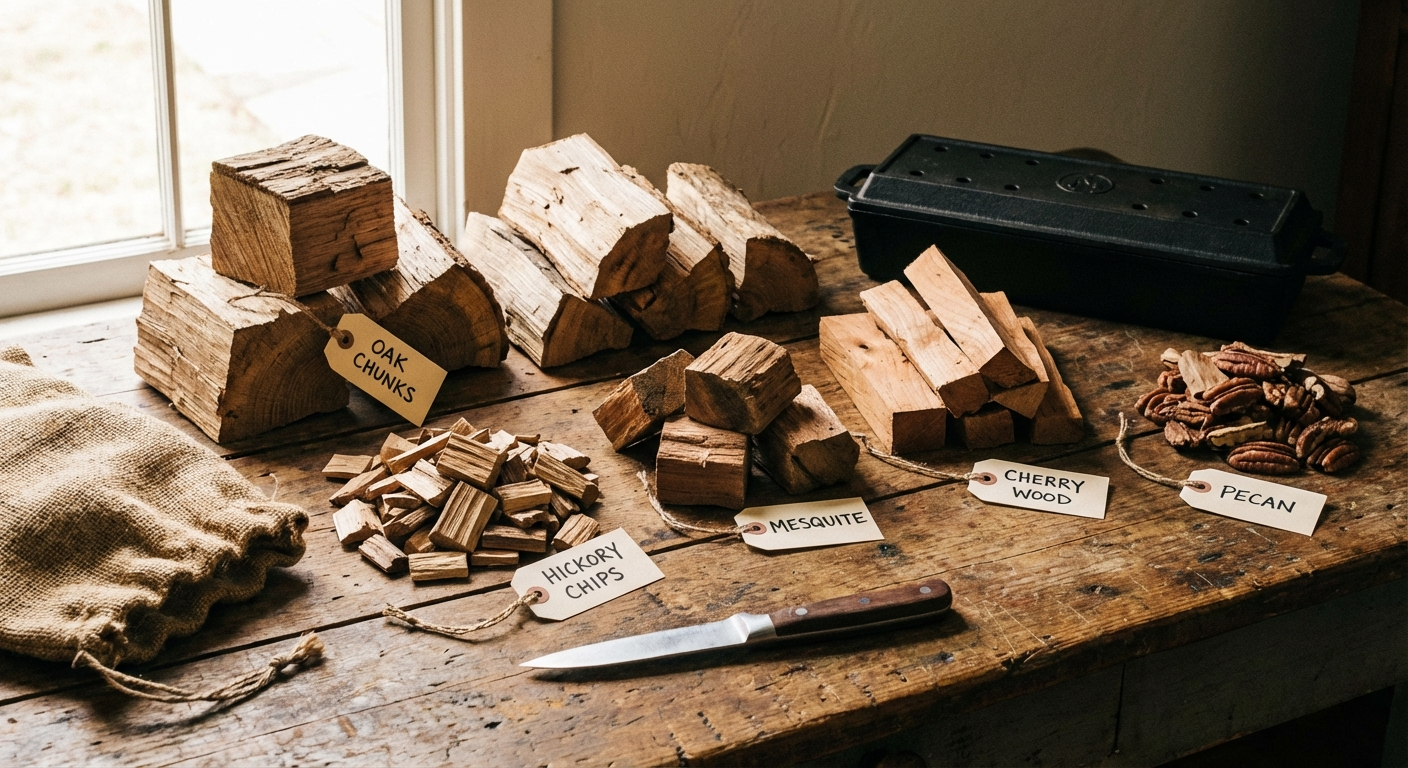
If there's one thing that separates a good backyard cook from a great one, it's understanding wood. I've spent 30 years studying how different species affect flavor, and I learned most of it from an old-timer in East Texas named Cecil who could identify a wood species by the smell of the split. Cecil used to say, "The meat is the canvas, the wood is the paint." He wasn't wrong.
Most people treat wood as an afterthought — they grab whatever bag of chips is on sale at the hardware store and toss them on. That's like spending $80 on a Prime brisket and seasoning it with packet salt. The wood you choose, how it's seasoned, and how you manage it in the fire has an enormous impact on your finished product.
The Science of Smoke Flavor
When wood burns, it releases hundreds of different compounds. The ones that matter most for flavor are:
- Syringol and guaiacol: These are the primary compounds that give smoked food its characteristic smoky taste. They come from the lignin in the wood breaking down during combustion.
- Cellulose breakdown products: When cellulose burns, it produces carbonyls that contribute sweet, caramel-like notes.
- Hemicellulose compounds: These add nutty, toasted flavors.
Different wood species have different ratios of lignin, cellulose, and hemicellulose, which is why they taste different when burned. Hardwoods generally have higher lignin content than softwoods, which is why we use hardwoods exclusively for smoking — they produce more of those desirable flavor compounds and burn cleaner.
The Major Smoking Woods
Post Oak
Post oak is the backbone of Central Texas BBQ. It's what they burn at Franklin, Kreuz Market, and Louie Mueller Barbecue. My family has burned post oak at Delgado's since my grandfather opened the doors in 1962.
Post oak delivers a medium-strength smoke flavor — assertive enough to stand up to beef but not so strong that it overwhelms. The flavor profile is warm, slightly sweet, and clean. It pairs with everything but is particularly exceptional with brisket and beef ribs.
Best for: Brisket, beef ribs, beef sausage, pork shoulder
Strength: Medium
Burn characteristics: Long, steady burn with excellent coal production. Post oak is a dream for fire management — it's consistent and predictable.
Hickory
Hickory is the most widely used smoking wood in America, and for good reason. It's available everywhere, burns well, and produces a strong, distinctive smoke flavor that most people immediately associate with BBQ.
The flavor is assertive — bacon-like, robust, with a slight sweetness. It's stronger than oak and can turn bitter if you over-smoke, so monitor your smoke output carefully. I use hickory primarily for pork — it pairs beautifully with shoulder, ribs, and ham.
Best for: Pork shoulder, ribs, ham, bacon, poultry
Strength: Strong
Burn characteristics: Burns hotter than oak, produces less coal. Keep splits smaller to maintain temperature control.
Mesquite
Mesquite is the strongest of the common smoking woods and the most misunderstood. Used correctly, mesquite produces an intense, earthy, slightly sweet flavor that's incredible with grilled steaks and short cooks. Used incorrectly — like burning it for 14 hours on a brisket — it'll make your food taste like an ashtray.
The key with mesquite is hot, fast cooks. It's perfect for grilling steaks, burgers, and fajitas. For low-and-slow smoking, use it sparingly as a blend — maybe 20% mesquite, 80% oak. My grandfather used mesquite exclusively because that's what grew wild in South Texas, but he knew how to manage it. Most people don't.
Best for: Grilled steaks, fajita meat, short smokes, blending with milder woods
Strength: Very strong
Caution: Burns extremely hot. Can overpower and turn bitter during long cooks.
Cherry
Cherry is my favorite fruit wood. It produces a mild, sweet smoke with a subtle fruity note and — here's the bonus — it gives the meat a gorgeous reddish mahogany color on the surface. If you want competition-quality appearance, mix cherry into your wood rotation.
Best for: Pork ribs, poultry, duck, pork loin, blending with stronger woods
Strength: Mild to medium
Burn characteristics: Burns fast, lower heat output. Better as chunks on a charcoal fire than as primary fuel in an offset.
Apple
Apple is the mildest of the common smoking woods. The flavor is delicate — lightly sweet, almost floral. It won't stand up to beef brisket, but it's beautiful with poultry, pork chops, and fish.
Best for: Poultry, pork chops, fish, cheese (cold smoking)
Strength: Mild
Burn characteristics: Similar to cherry — fast burn, lower heat.
Pecan
Pecan is oak's sweeter cousin. It's technically in the hickory family but milder, with a rich, nutty sweetness that works with almost everything. If I could only use two woods for the rest of my life, they'd be post oak and pecan.
Best for: Everything — it's the most versatile smoking wood. Particularly good with poultry, pork, and as a blend with oak for brisket.
Strength: Medium
Burn characteristics: Good heat output, excellent coals.
Maple
Maple delivers a very mild, subtly sweet smoke. It's not common in Texas, but it's popular in the Northeast and Canada for smoking bacon, ham, and salmon. The flavor is gentle — you'd never overpower anything with maple.
Best for: Bacon, ham, salmon, vegetables, poultry
Strength: Mild
Wood Seasoning: Why It Matters
Green wood — freshly cut — contains 40-60% moisture. Burning green wood produces excessive white smoke, inconsistent heat, and off-flavors that taste like creosote. The water in the wood absorbs heat energy that should be going into combustion, resulting in incomplete burn and all those nasty compounds you don't want on your food.
Properly seasoned wood has been air-dried to 15-20% moisture content. This typically takes 6-12 months depending on the species, climate, and how the wood is stored. Seasoned wood ignites faster, burns cleaner, and produces that thin blue smoke that's the hallmark of good BBQ.
How to Tell if Wood is Seasoned
- Check the ends: Seasoned wood has cracks (checks) radiating from the center of the cut end. Green wood is smooth.
- Weight: Seasoned wood is noticeably lighter than green wood of the same species and size.
- Sound: Knock two pieces together. Seasoned wood makes a hollow, ringing sound. Green wood sounds dull and thuddy.
- Color: The cut surface dulls from white/cream to gray as it seasons.
- Smell: Green wood smells like sap and fresh timber. Seasoned wood has a more subtle, woody smell.
Chunks vs. Chips vs. Splits
The form of your wood depends on your smoker type:
- Chunks (fist-sized): Best for charcoal smokers (Weber Smokey Mountain, kamados, kettles). Place 3-4 chunks directly on the charcoal. They'll smolder slowly and produce smoke for hours.
- Chips (small pieces): Work for gas grills and electric smokers where you need quick smoke production. They burn out fast, so you'll need to replenish. I'd always choose chunks over chips if your setup allows it.
- Splits (log-sized pieces): For offset smokers where wood is your primary fuel source. Splits should be 12-18 inches long and 4-6 inches in diameter. This is how traditional BBQ joints cook.
Wood Pairing Cheat Sheet
| Meat | Best Wood | Good Alternates | Avoid |
|---|---|---|---|
| Beef Brisket | Post Oak | Hickory, Oak/Cherry blend | Mesquite (long cooks), Apple |
| Pork Shoulder | Hickory | Oak, Pecan, Cherry | Mesquite |
| Pork Ribs | Cherry/Hickory blend | Apple, Pecan, Oak | Mesquite |
| Chicken | Cherry or Apple | Pecan, Maple | Mesquite, Hickory (heavy) |
| Turkey | Pecan | Cherry, Apple, Maple | Mesquite, Heavy Hickory |
| Salmon/Fish | Alder | Apple, Maple, Cherry | Hickory, Mesquite, Oak |
| Sausage | Post Oak | Hickory, Pecan | Fruit woods (too mild) |
What to Never Burn
This is important. Some woods are toxic or produce terrible flavors:
- Softwoods (pine, spruce, cedar, fir): High resin content produces thick, acrid smoke and deposits soot and creosote on your food. Never use these.
- Treated or painted wood: Contains chemicals that are genuinely dangerous when burned. Pressure-treated lumber, pallets, painted wood — none of it belongs anywhere near food.
- Green wood: While not toxic, it produces dirty smoke with off-flavors. Always use seasoned wood.
- Moldy wood: If it's got mold on it, toss it. Mold produces compounds you don't want in your smoke.
My Personal Wood Strategy
After 30 years, here's what I actually burn day to day:
- Brisket: 100% post oak. No blends, no experiments. Post oak and beef is a perfect marriage.
- Pork ribs: 70% hickory, 30% cherry. The hickory provides backbone, the cherry adds sweetness and color.
- Pork shoulder: Straight hickory or a pecan/hickory blend.
- Chicken and turkey: Pecan with a couple chunks of cherry mixed in.
- Competition turns: Post oak for brisket, cherry/hickory for ribs, pecan for chicken. Same as my regular rotation — I don't change my approach for judges.
The biggest mistake I see with wood is overthinking it. Pick a good hardwood species that pairs with your protein, make sure it's properly seasoned, and maintain a clean fire. That's 95% of the game right there. The other 5%? Start with quality meat from a trusted source and let the smoke do the rest.
Frequently Asked Questions
What is the best wood for smoking brisket?
Post oak is the traditional and best choice for brisket. It delivers a medium smoke flavor that complements beef without overpowering it. Hickory is a good second choice. Avoid mesquite for long brisket cooks — it burns too hot and can turn bitter over 12+ hours.
How long should smoking wood be seasoned?
Smoking wood should be air-dried (seasoned) for 6-12 months until it reaches 15-20% moisture content. You can check by looking for cracks on the cut ends, lighter weight, and a hollow sound when pieces are knocked together. Green wood produces dirty smoke with off-flavors.
Can you mix different woods when smoking?
Absolutely. Blending woods is a great way to create complex flavor profiles. My go-to blend for ribs is 70% hickory and 30% cherry — the hickory provides strong smoky backbone while the cherry adds sweetness and a beautiful mahogany color.
What's the difference between wood chunks and chips?
Chunks are fist-sized pieces that burn slowly and are ideal for charcoal smokers. Chips are small pieces that burn out quickly — they work for gas grills but need frequent replenishing. Splits are log-sized for offset smokers. I always prefer chunks over chips when possible.
Is mesquite good for smoking?
Mesquite is excellent for grilling steaks and short, hot cooks where its intense flavor shines. For low-and-slow smoking, use it sparingly — 20% mesquite blended with 80% oak at most. Burning mesquite for 12+ hours will make your food taste bitter and harsh.
More Charcuterie Guides
What Is Pink Curing Salt? Sodium Nitrite Explained for Home Charcuterie
Pink curing salt is the most essential — and most misunderstood — ingredient in meat curing. This guide explains what it is, why it's pink, how sodium nitrite prevents botulism, proper usage rates, and whether you can cure meat without it.
10 min readHow Long Does Charcuterie Last? Storage Guide for Cured Meats & Cheese
Understanding proper charcuterie storage ensures you enjoy it at peak quality while avoiding food safety risks.
10 min read