Types of Cured Meats: A Complete Guide to Every Variety Worth Knowing
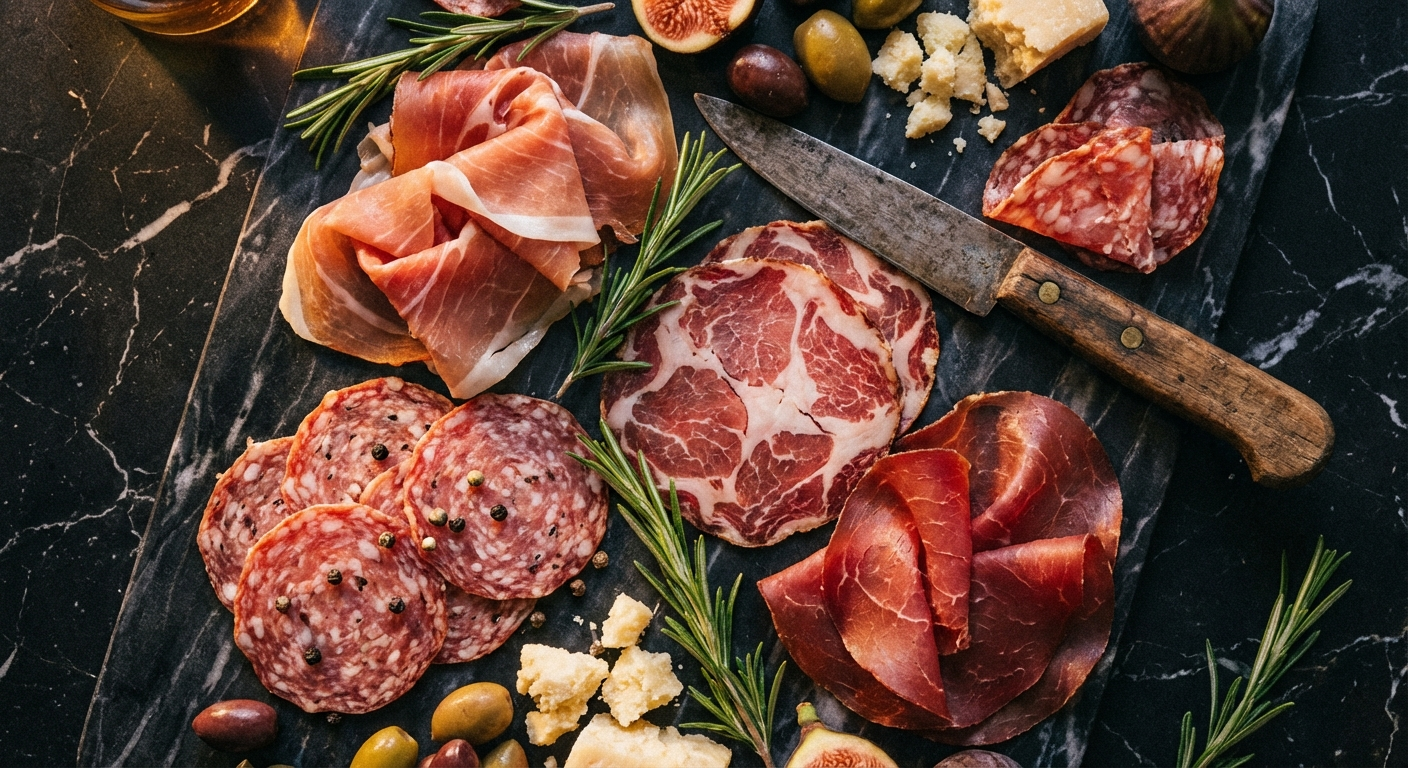
Types of Cured Meats: A Complete Guide to Every Variety Worth Knowing
Walk into any Italian salumeria and the sheer variety behind the counter can feel overwhelming. Dozens of cured meats hang from the ceiling, each with a different shape, texture, and origin story stretching back centuries. Understanding the differences isn't just for food nerds — it changes how you build charcuterie boards, cook Italian dishes, and appreciate one of humanity's oldest preservation techniques.
This guide breaks down every major type of cured meat you'll encounter, organized by how they're made. By the end, you'll know exactly what separates prosciutto from bresaola, why salami and soppressata aren't the same thing, and which cured meats deserve a spot in your kitchen.
How Cured Meats Are Categorized
All cured meats fall into a few broad categories based on their production method:
- Whole-muscle dry-cured — A single cut of meat, salted and air-dried (prosciutto, bresaola, coppa)
- Ground and fermented — Meat ground, mixed with salt and cultures, stuffed into casings, and aged (salami, soppressata, nduja)
- Salt-cured and cooked — Cured with salt then cooked or smoked (ham, mortadella, some bacons)
- Smoked — Cured and then exposed to wood smoke for flavor and preservation (speck, some pancetta)
The method determines everything: texture, shelf life, flavor intensity, and how you should serve it.
Whole-Muscle Dry-Cured Meats
These are the aristocrats of the cured meat world. A single piece of high-quality meat, treated with salt and spices, then hung to dry for weeks or months. No grinding, no casings — just patience.
Prosciutto
Prosciutto is the most recognized cured meat on earth, and for good reason. Made from a whole pork hind leg, it's salted and air-dried for 12 to 36 months depending on the producer and designation.
Two types you need to know:
- Prosciutto di Parma — Made in Parma, Italy under strict PDO regulations. Fed on whey from Parmigiano-Reggiano production. Only salt is used — no nitrates, no spices. Minimum 12 months aging. Buttery, sweet, melt-in-your-mouth.
- Prosciutto di San Daniele — From Friuli-Venezia Giulia. Pressed flat during aging (giving it a distinctive guitar shape). Slightly sweeter and darker than Parma.
Flavor: Delicate, sweet, nutty, with a silky fat cap that dissolves on the tongue.
Best uses: Eaten raw in paper-thin slices. Wrapped around melon or figs. Draped over pizza after baking. Layered into sandwiches where it won't be cooked.
Bresaola
Where prosciutto is pork, bresaola is beef — specifically the eye of round, salt-cured and air-dried for two to three months. It originates from Valtellina in the Lombardy region of northern Italy.
Flavor: Lean, delicate, slightly sweet with a deep ruby color. Much less fatty than pork-based cured meats. The texture is firm but tender when sliced thin.
Best uses: Sliced thin and drizzled with olive oil and lemon juice. Topped with arugula and shaved Parmigiano. The classic bresaola della Valtellina appetizer is one of Italy's simplest and most elegant dishes.
Coppa (Capocollo)
Coppa is made from the pork neck and shoulder muscle — a cut with beautiful marbling that sits between the lean intensity of bresaola and the rich fattiness of prosciutto. It's rubbed with spices (typically black pepper, nutmeg, and sometimes red pepper flakes), then stuffed into a natural casing and dry-cured for three to six months.
Flavor: Rich, porky, and complex. The intramuscular fat creates a buttery texture with more depth than prosciutto. Spicier versions from southern Italy (called capocollo piccante) add chili heat.
Best uses: Sliced thin for charcuterie boards. Excellent in Italian subs and panini. One of the best cured meats to pair with aged cheeses.
Lonza (Lomo)
Lonza is the cured pork loin — the same cut you'd roast for Sunday dinner, but salt-cured and air-dried instead. It's leaner than coppa but more flavorful than most people expect from a loin cut.
Flavor: Mild, clean pork flavor with a firm, almost silky texture. Subtle spicing — usually just salt, pepper, and garlic.
Best uses: Sliced thin for antipasto. A good entry point for people new to cured meats because the flavor is approachable without being overwhelming.
Guanciale
Guanciale is cured pork jowl (cheek). It's the secret weapon of Roman cuisine and arguably the most flavorful cured pork product in existence. The jowl has a unique fat composition — more unsaturated fat than belly or back fat, which means it renders differently and tastes richer.
Flavor: Intensely porky, slightly sweet, with a melt-in-your-mouth fat that's completely different from bacon. Seasoned with black pepper and sometimes rosemary during curing.
Best uses: This is a cooking meat, not a slicing meat. Essential for authentic carbonara, amatriciana, and gricia. Cut into thick strips and render slowly — the fat becomes liquid gold while the meat crisps.
Lardo
Lardo is pure cured pork back fat — no meat at all. Before you dismiss it, know that Lardo di Colonnata (from marble caves in Tuscany) is one of Italy's most prized delicacies. The fat is layered with herbs and spices in marble basins and cured for six months or more.
Flavor: Creamy, herbal, almost sweet. It dissolves on warm bread or toast, coating your palate with clean pork richness. Nothing like the rubbery fat you're imagining.
Best uses: Draped over warm crostini. Wrapped around lean meats before roasting (the original larding technique). Melted into risotto or pasta for richness.
Ground and Fermented Cured Meats (Salumi)
These are meats that have been ground or minced, mixed with salt, spices, and beneficial bacterial cultures, stuffed into casings, and aged. Fermentation creates lactic acid, which preserves the meat and develops tangy, complex flavors.
Salami (Genoa Style)
Salami is a broad category, but Genoa salami is the version most Americans know — a soft, garlicky salami made from pork (sometimes with a small percentage of veal), flavored with garlic, black pepper, and red wine.
Flavor: Garlicky, mildly tangy, soft and spreadable when young, firmer when aged longer.
Best uses: Sandwiches, charcuterie boards, pizza. The workhorse of Italian cured meats.
Soppressata
Soppressata is a coarser-ground salami, typically pressed flat during aging (hence the name — soppressata means "pressed"). It comes in two main styles:
- Southern Italian (Calabrese) — Spicy, with hot pepper flakes and a rustic, chunky texture
- Northern Italian — Milder, more refined, often with wine and whole peppercorns
Flavor: More complex than standard salami. The coarser grind means you taste individual pieces of meat and fat rather than a uniform blend.
Best uses: Sliced thick for rustic boards. The spicy version is incredible on pizza or in pasta.
Finocchiona
A Tuscan salami flavored heavily with fennel seeds (finocchio means fennel in Italian). The fennel gives it an immediately recognizable anise-like sweetness that divides opinions — people either love it or find it overwhelming.
Flavor: Sweet, herbaceous, with a soft texture. The fennel perfume hits your nose before it hits your tongue.
Best uses: Paired with Pecorino Toscano cheese and Tuscan bread. Excellent with honey on a board.
Nduja
Nduja (pronounced en-DOO-ya) is a spreadable, fiery salami from Calabria in southern Italy. It's made from pork, Calabrian chili peppers, and fat, ground extremely fine and fermented until it becomes a soft, spicy paste.
Flavor: Intensely spicy, smoky, porky. It's not a slicing salami — it's a spread or a cooking ingredient. The heat builds gradually and the pork flavor is deep and complex.
Best uses: Spread on toast or pizza dough before baking. Stirred into pasta sauce for instant depth. Mixed into burger patties. Melted into scrambled eggs. Nduja is one of the most versatile ingredients in the cured meat world.
Chorizo (Spanish Cured)
Spanish chorizo (not to be confused with Mexican fresh chorizo) is a dry-cured, fermented sausage made with pork and smoked paprika (pimentón). The paprika gives it a deep red color and smoky sweetness.
Flavor: Smoky, sweet, slightly tangy with a firm, sliceable texture. Spicy versions (chorizo picante) use hot pimentón.
Best uses: Sliced for tapas and boards. Diced into stews, paella, and bean dishes. Pairs brilliantly with Manchego cheese.
Salt-Cured and Cooked Meats
These meats are cured with salt but then cooked (by heat, smoke, or steam) rather than purely air-dried. They're generally milder and more accessible.
Mortadella
Mortadella is the original "bologna" — a massive, smooth-textured cooked sausage from Bologna, Italy. Made from finely ground pork studded with cubes of pork fat, pistachios, and black peppercorns, then slow-cooked in giant ovens.
Flavor: Delicate, porky, with a silky-smooth texture that's nothing like the cheap bologna it inspired. The fat cubes and pistachios add visual appeal and textural interest.
Best uses: Sliced thick for sandwiches (the Italian mortadella panino is transcendent). Cubed for antipasto. Diced into pasta fillings.
Pancetta
Pancetta is Italian cured pork belly — the same cut as American bacon, but treated differently. It's salt-cured with pepper, garlic, and sometimes juniper or fennel, then either rolled into a tight cylinder (pancetta arrotolata) or left flat (pancetta tesa).
Flavor: Rich, savory, slightly sweet. Less smoky than American bacon because traditional pancetta isn't smoked (though some versions are).
Best uses: Diced and rendered for pasta (it's the traditional choice for many Italian pasta sauces). Sliced thin and eaten raw when properly aged. Wrapped around vegetables or fish before roasting.
Speck
Speck comes from the Alto Adige/South Tyrol region of northern Italy — a place where Italian and Austrian food traditions collide. It's a boneless pork leg that's dry-cured, lightly smoked with beechwood, then air-dried for about five months.
Flavor: A hybrid between prosciutto and smoked ham. The smoke is subtle — not aggressive like American smoked meats. Juniper and bay leaf aromatics come through clearly.
Best uses: Sliced thin for boards and appetizers. Excellent in German and Austrian-influenced dishes like spaetzle or dumplings. Works beautifully with mountain cheeses.
Smoked and Specialty Cured Meats
Duck Prosciutto
One of the easiest cured meats to make at home, duck prosciutto is a salt-cured, air-dried duck breast. The curing process concentrates the duck's rich, gamy flavor while the thick fat cap becomes silky and translucent.
Flavor: Intensely ducky, with an almost sweet richness. More complex than pork prosciutto and pairs exceptionally well with fruit.
Best uses: Sliced paper-thin for elegant appetizers. Fanned on salads with figs or pears. A showstopper on any charcuterie board.
Biltong
South Africa's answer to cured meat. Biltong is made from whole strips of beef (sometimes game meats like ostrich or kudu), marinated in vinegar and spices (coriander, black pepper, salt), then air-dried. Unlike jerky, biltong is never cooked or smoked — it's purely air-dried.
Flavor: Meaty, tangy from the vinegar, with a tender texture that's nothing like commercial jerky. Good biltong should be slightly moist and pull apart in satisfying strips.
Best uses: Eaten as a snack. Sliced thin for boards that need something different. Increasingly popular in the US and UK as a high-protein alternative to jerky.
Pastirma (Basturma)
Turkey and the Middle East's contribution to the cured meat canon. Pastirma is air-dried beef coated in çemen — a paste of fenugreek, paprika, garlic, and cumin. The spice coating is distinctive and aromatic.
Flavor: Intensely spiced, garlicky, with the fenugreek giving it a unique curry-like warmth that's immediately recognizable.
Best uses: Sliced thin and eaten with bread. Added to eggs (a classic Middle Eastern breakfast). Used in flatbreads and wraps.
How to Build a Cured Meat Selection
When choosing cured meats — whether for a charcuterie board, a recipe, or just stocking your fridge — follow this framework:
- Vary the animal — Don't just pick five pork products. Mix in bresaola (beef), duck prosciutto, or something unexpected.
- Vary the texture — Combine silky (prosciutto), firm (coppa), spreadable (nduja), and crumbly (aged salami).
- Vary the fat content — Balance rich (guanciale, lardo) with lean (bresaola, lonza).
- Vary the flavor intensity — Start mild (mortadella, lonza), build to medium (coppa, prosciutto), finish bold (soppressata, nduja).
- Include at least one surprise — Duck prosciutto, biltong, or pastirma gives guests something they haven't tried before.
Storing Cured Meats
- Whole pieces — Wrap in butcher paper or cheesecloth and refrigerate. They'll last weeks to months depending on the type.
- Sliced — Wrap tightly in plastic or vacuum seal. Consume within a week for best flavor.
- Never freeze whole-muscle cured meats — Freezing destroys the delicate texture that months of aging created.
- Bring to room temperature before serving — Cold cured meat tastes muted. Pull it out 20-30 minutes before eating for the best flavor and texture.
Frequently Asked Questions
What is the most popular type of cured meat?
Prosciutto is the most widely consumed and recognized cured meat globally, particularly Prosciutto di Parma from Italy. Salami runs a close second due to its versatility and long shelf life.
What is the difference between salami and salumi?
Salumi is the Italian umbrella term for all cured meats — prosciutto, bresaola, coppa, pancetta, and salami all fall under salumi. Salami specifically refers to ground, fermented, and cased sausages. All salami is salumi, but not all salumi is salami.
Are cured meats safe to eat without cooking?
Yes. Properly cured meats are preserved through salt, dehydration, and fermentation — processes that inhibit harmful bacteria. Whole-muscle cured meats like prosciutto and bresaola, and fermented products like salami, are designed to be eaten raw.
How long do cured meats last?
Whole, uncut cured meats can last months in the refrigerator. Once sliced, consume within 5-7 days for optimal freshness. Vacuum-sealed sliced cured meats can last 2-3 weeks.
What cured meats are best for cooking?
Guanciale (for carbonara and amatriciana), pancetta (for soups and pasta), nduja (for sauces and spreads), and chorizo (for stews and rice dishes) are the top cooking-oriented cured meats.
More Charcuterie Guides
What Is Pink Curing Salt? Sodium Nitrite Explained for Home Charcuterie
Pink curing salt is the most essential — and most misunderstood — ingredient in meat curing. This guide explains what it is, why it's pink, how sodium nitrite prevents botulism, proper usage rates, and whether you can cure meat without it.
10 min readHow Long Does Charcuterie Last? Storage Guide for Cured Meats & Cheese
Understanding proper charcuterie storage ensures you enjoy it at peak quality while avoiding food safety risks.
10 min read