Smoking Temperatures & Times: The Complete Reference Chart
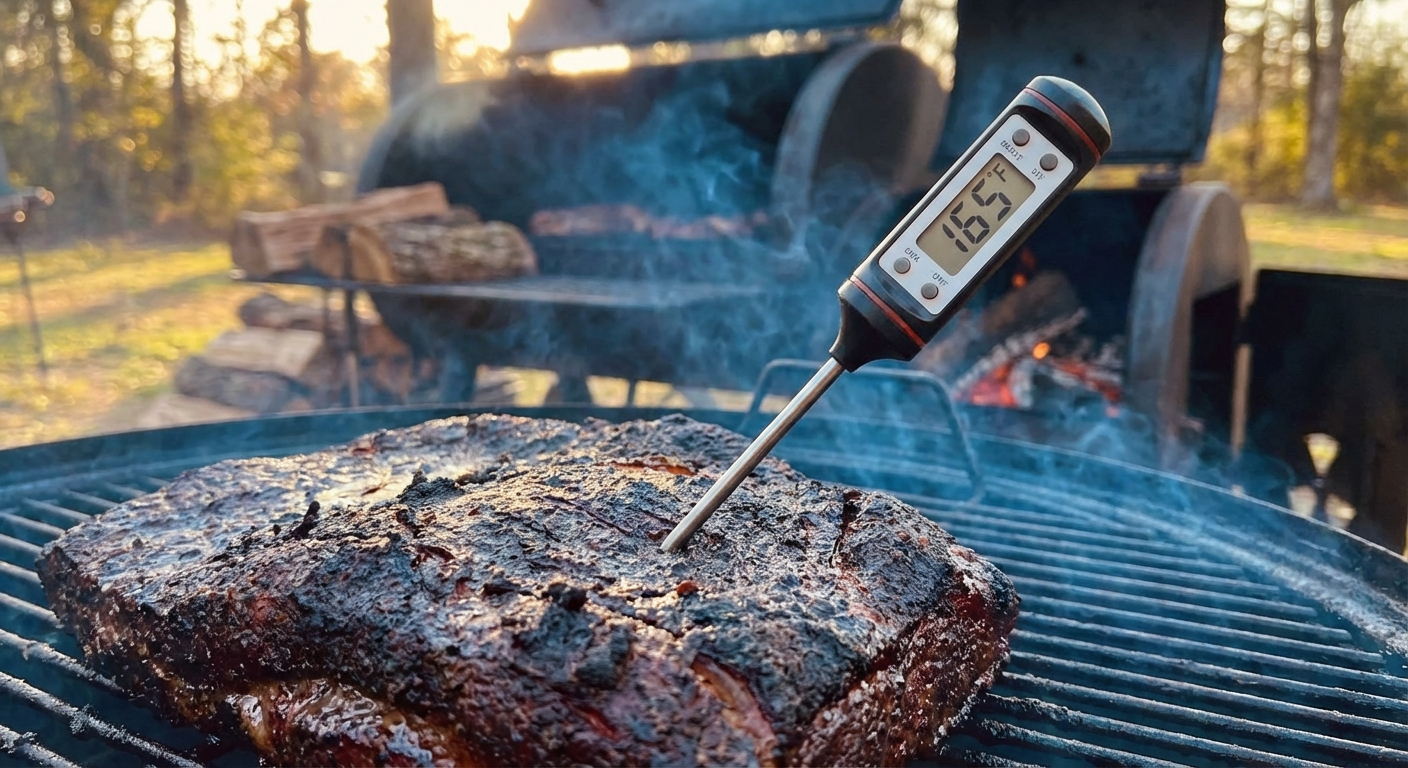
I get more questions about temperatures and times than anything else. "What temp do I smoke ribs at?" "How long does a 12-pound brisket take?" "What internal temp for pulled pork?" I've answered these questions thousands of times over the years, so I'm putting it all in one place.
A couple of important disclaimers before we get to the charts:
- Cook by temperature, not time. Every piece of meat is different. A 14-pound brisket might take 10 hours or 16 hours depending on the specific animal, the grade, your smoker, the weather, and a dozen other factors. Time estimates are guidelines, not rules. Always go by internal temperature and probe tenderness.
- These times assume 250°F smoker temperature unless otherwise noted. If you cook hotter, times will be shorter. If you cook lower, longer.
- Rest times are minimums. More rest is almost always better, up to a point. Brisket and pork shoulder can rest 4-6 hours in an insulated cooler and actually improve.
Beef
| Cut | Smoker Temp | Target Internal | Est. Time | Rest Time |
|---|---|---|---|---|
| Whole Packer Brisket | 250°F | 200-205°F (probe tender) | 1-1.5 hr/lb | 2-6 hours |
| Brisket Flat Only | 250°F | 195-200°F (probe tender) | 1-1.5 hr/lb | 2-4 hours |
| Beef Ribs (Plate/Short) | 250-275°F | 200-210°F (probe tender) | 6-8 hours | 30-60 min |
| Beef Chuck Roast | 250°F | 200-205°F | 5-8 hours | 30-60 min |
| Tri-Tip | 225-250°F → sear | 130°F (medium-rare) | 1.5-2.5 hours | 10-15 min |
| Beef Tenderloin | 225°F | 125-130°F (medium-rare) | 1.5-2 hours | 15-20 min |
| Prime Rib | 225-250°F | 125°F (med-rare) to 135°F (medium) | 3.5-5 hours | 20-30 min |
Pork
| Cut | Smoker Temp | Target Internal | Est. Time | Rest Time |
|---|---|---|---|---|
| Pork Shoulder (Boston Butt) | 250°F | 200-205°F (probe tender) | 1.5 hr/lb | 1-4 hours |
| Spare Ribs (St. Louis) | 250°F | 195-203°F | 5-6 hours | 15-20 min |
| Baby Back Ribs | 250°F | 195-200°F | 3.5-4.5 hours | 15-20 min |
| Pork Belly (Burnt Ends) | 250°F | 200°F | 3-4 hours | 10 min |
| Pork Loin | 225-250°F | 145°F | 2-3 hours | 10-15 min |
| Pork Chops (thick-cut) | 225°F → sear | 140-145°F | 1-1.5 hours | 5-10 min |
| Whole Hog | 225-250°F | 195-205°F (shoulder) | 12-18+ hours | 1-2 hours |
Poultry
| Cut | Smoker Temp | Target Internal | Est. Time | Rest Time |
|---|---|---|---|---|
| Whole Chicken | 275-325°F | 165°F (breast), 175°F (thigh) | 2-3 hours | 15-20 min |
| Chicken Thighs | 275-325°F | 175-180°F | 1.5-2 hours | 10 min |
| Chicken Wings | 275-325°F | 175-180°F | 1.5-2 hours | 5 min |
| Whole Turkey | 275-300°F | 165°F (breast), 175°F (thigh) | 3-5 hours (12-14 lb) | 30-45 min |
| Turkey Breast | 275°F | 160-165°F | 2.5-3.5 hours | 20-30 min |
Note on poultry: I smoke poultry at higher temperatures (275-325°F) than beef or pork. Low-and-slow poultry (225°F) produces rubbery, chewy skin that nobody enjoys. Higher heat renders the fat under the skin and crisps it up.
Other
| Item | Smoker Temp | Target | Est. Time | Notes |
|---|---|---|---|---|
| Salmon Fillet | 225°F | 145°F | 1-2 hours | Alder or apple wood |
| Sausage (fresh) | 225-250°F | 160°F | 2-3 hours | Don't pierce the casing |
| Mac & Cheese | 225-250°F | Bubbling/browned | 45-60 min | Great use of cooker space |
| Baked Beans | 250°F | Bubbling | 2-3 hours | Stir occasionally |
| Cheese (cold smoke) | 70-85°F | N/A | 2-4 hours | Mild wood, age 2 weeks after |
Understanding the Stall
For large cuts (brisket, pork shoulder, beef ribs), expect the stall between 150-170°F internal. The temperature plateaus for 2-4 hours as evaporative cooling offsets the heat input. Your options:
- Wait it out: Keep cooking. The stall breaks eventually. More bark development.
- Wrap (Texas Crutch): Wrap in butcher paper or foil at 165°F to push through faster. Foil is faster but softens bark. Paper is slower but preserves bark.
The Probe Test — More Important Than Temperature
For brisket, pork shoulder, and beef ribs, the probe test matters more than any specific temperature number. Slide a thermometer probe or thin skewer into the thickest part of the meat. If it slides in with no resistance — like poking warm butter — the meat is done regardless of what the thermometer reads. I've pulled perfect briskets at 197°F and 208°F. The probe test told me both were done.
Carryover and Rest
When you pull meat from the smoker, the internal temperature continues to rise 5-10°F from carryover cooking (residual heat in the outer layers migrating inward). Account for this:
- For medium-rare beef (target 135°F), pull at 125-130°F
- For large cuts going into a rest, the carryover is less dramatic because you're wrapping/insulating, but be aware it exists
Resting lets the muscle fibers relax and reabsorb moisture. Cut into a steak immediately and juice pours out. Rest it 10 minutes and the juice stays in the meat where it belongs. For large cuts like brisket, rest is even more critical — minimum 2 hours.
Weather and Altitude Adjustments
A few factors that affect cook time and aren't on any chart:
- Cold weather: Adds 15-25% to cook time on an offset smoker. The cold steel bleeds heat. Insulate your cooker if possible, or plan for longer cooks.
- Wind: Creates heat loss through air convection, especially on thin-steel smokers. Position the smoker to block prevailing wind.
- Rain: Evaporation from rain hitting the cooker sucks heat away. Plan accordingly.
- Altitude: Water boils at lower temperatures at high altitude, which affects evaporative cooling and can change stall dynamics. Minor effect for most people, but worth noting if you're above 5,000 feet.
Print this guide, stick it on your fridge, and reference it until the numbers become second nature. After a few dozen cooks, you won't need the chart anymore — you'll know by feel. That's when the fun really starts. And when you're ready to upgrade the protein, American wagyu from The Meatery is the next level for any smoking enthusiast.
Frequently Asked Questions
What temperature do you smoke brisket at?
I smoke brisket at 250°F measured at the grate. This produces better bark than 225°F while remaining forgiving enough for beginners. Target internal temperature is 200-205°F, but the probe test (slides in like butter) matters more than any specific number.
How long per pound for smoking?
Rough estimates at 250°F: brisket 1-1.5 hours/lb, pork shoulder 1.5 hours/lb. But always cook to internal temperature and probe tenderness, not time. A 14-lb brisket could take 10 hours or 16 hours depending on the individual animal, your smoker, and conditions.
What temperature should I smoke chicken at?
Smoke poultry at 275-325°F — higher than beef or pork. Low-and-slow (225°F) makes poultry skin rubbery and chewy. Higher heat renders the fat under the skin and crisps it. Target 165°F breast, 175°F thigh. A whole chicken takes about 2-3 hours.
Do I need to rest smoked meat?
Yes, always. Resting lets muscle fibers relax and reabsorb moisture. For steaks and chops, 10-15 minutes. For ribs, 15-20 minutes. For brisket and pork shoulder, 1-2 hours minimum (up to 6 hours in an insulated cooler). Skipping the rest means losing juice on the cutting board.
More Charcuterie Guides
What Is Pink Curing Salt? Sodium Nitrite Explained for Home Charcuterie
Pink curing salt is the most essential — and most misunderstood — ingredient in meat curing. This guide explains what it is, why it's pink, how sodium nitrite prevents botulism, proper usage rates, and whether you can cure meat without it.
10 min readHow Long Does Charcuterie Last? Storage Guide for Cured Meats & Cheese
Understanding proper charcuterie storage ensures you enjoy it at peak quality while avoiding food safety risks.
10 min read