Offset Smoker Mastery: Setup, Fire Management & Technique
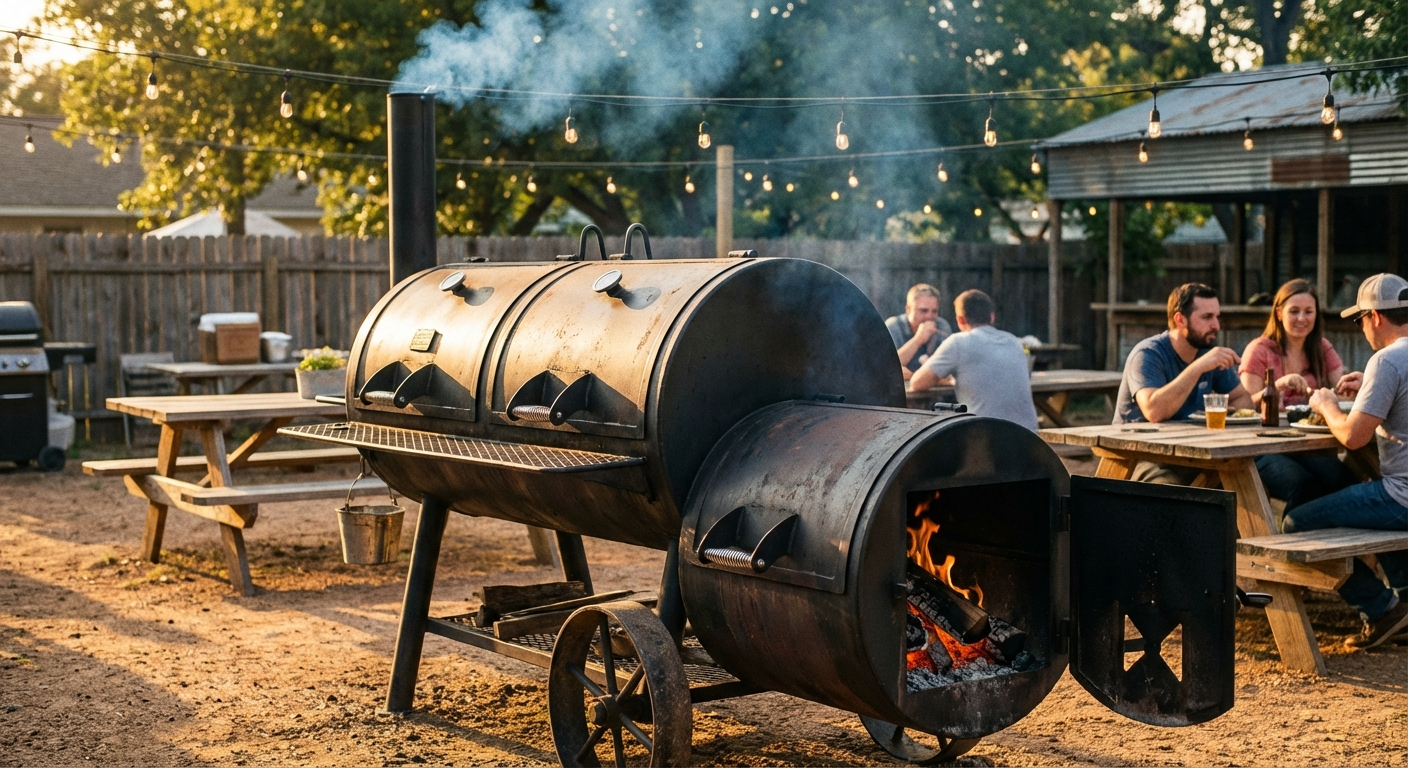
There's nothing in the world of BBQ that sounds quite like an offset smoker at 3 AM — the gentle crackle of post oak burning down to coals, the quiet whoosh of draft through the firebox, the occasional pop of a fat split catching flame. I've spent more nights of my life sitting next to an offset than I have in my own bed, and I wouldn't trade any of them.
The offset smoker is the original American pit design — a horizontal cook chamber with a firebox mounted to one side. Heat and smoke travel from the firebox across the meat and out the chimney on the opposite end. It's simple in concept, but mastering one takes hundreds of hours of practice. The reward is flavor that no other cooker type can match.
Understanding Your Offset
Anatomy of an Offset Smoker
- Firebox: Where you build and maintain your fire. Connected to the cook chamber by an opening (sometimes with a baffle plate).
- Cook chamber: The large horizontal barrel where your meat sits on grates.
- Chimney/smokestack: Mounted on the opposite end from the firebox. Controls draft and exhaust.
- Intake damper: On the firebox. Controls how much oxygen feeds the fire.
- Exhaust damper: On the chimney. Most pitmasters leave this wide open.
Standard vs. Reverse Flow
A standard offset sends heat directly across the cook chamber — the firebox side runs hotter than the chimney side. This creates a temperature gradient, sometimes 50-75°F difference from end to end on cheaper smokers.
A reverse flow offset has a steel plate that forces heat under the cooking grates to the chimney end, then back over the meat. This evens out temperatures significantly. My competition rig is a reverse flow — it gives me consistent temps across the entire cooking surface, which matters when I'm loading it with 8 briskets for a turn-in.
Choosing an Offset Smoker
I'll be straight with you: most cheap offsets are garbage. The thin steel doesn't retain heat, the welds leak air, and the temperature swings will make you want to throw the thing in a ditch. You don't need to spend $5,000, but don't expect a $200 hardware store offset to perform like a proper pit.
What to Look For
- Steel thickness: Minimum 1/4-inch for the cook chamber. Thicker steel retains heat better and reduces temperature swings. My Yoder is 3/8-inch and it holds temps like a tank.
- Sealed construction: Check all seams, doors, and the firebox-to-chamber connection. Air leaks mean you can't control your fire. If you can see daylight through the seams, you'll need to seal them.
- Firebox size: Should be proportional to the cook chamber. Too small and you can't build a proper fire. Too large and you waste fuel.
- Grate height: Adjustable grates are ideal. Being able to raise or lower the cooking surface gives you more temperature control.
Good Brands at Various Price Points
- Entry level ($500-$800): Oklahoma Joe Highland or Longhorn. Decent steel, needs some sealing and modifications but workable.
- Mid-range ($1,000-$2,500): Lone Star Grillz, Old Country BBQ Pits. Solid construction, minimal modification needed.
- Competition/Premium ($2,500+): Yoder, Jambo, Moberg. These are the real deal. Thick steel, precise engineering, and they'll last longer than you will.
Starting Your Fire
This is where most new offset owners struggle. You don't just pile wood in the firebox and light it. That produces terrible smoke and wild temperature swings. Here's my method:
The Charcoal Base Method
- Build a charcoal base: Fill a chimney starter with lump charcoal (not briquettes) and light it. While it's getting going, place 3-4 unlit chunks of lump charcoal in the firebox.
- Dump the lit charcoal: When the chimney is fully lit (15-20 minutes), dump it over the unlit charcoal in the firebox. This gives you a solid bed of hot coals.
- Add your first split: Once the charcoal is settled and burning (about 10 minutes), add one split of seasoned wood right on top of the coals. Close the firebox door.
- Preheat the cooker: Wait for the wood to catch and the cook chamber temperature to stabilize. This takes 20-30 minutes. Don't put meat on until the temperature has been stable for at least 15 minutes.
Managing the Dampers
Here's the rule I teach every student: exhaust wide open, always. Control your temperature with the intake damper on the firebox. The exhaust needs to stay open so smoke flows freely across the meat and out the chimney. If you choke the exhaust, smoke stagnates in the cook chamber and you get that bitter, creosote-heavy flavor nobody wants.
The intake damper is your throttle. Open it up to add oxygen and raise temperature. Close it down to restrict airflow and lower temperature. Make small adjustments — a quarter-inch change can shift your temp 10-15°F.
Fire Management During the Cook
Fire management is the single most important skill in offset smoking. Everything else — wood selection, seasoning, wrapping — is secondary to maintaining a clean, consistent fire.
The Clean Fire
A clean fire produces thin blue smoke — you can barely see it against a light background, but you can smell it. This is complete combustion. The wood is burning efficiently, producing the desirable flavor compounds without the harsh, acrid byproducts of incomplete combustion.
A dirty fire produces thick white or gray smoke. This means the wood isn't burning completely — there's not enough heat or oxygen. Dirty smoke deposits creosote and soot on your meat. If you see billowing white smoke, open your intake damper to add more oxygen. If the wood just isn't catching properly, you need a hotter coal bed before adding the next split.
Adding Wood: The Split Timing
This is where experience really counts. You need to add a new split before your current one burns down too far, but not so early that you smother the fire with unburned wood. Here's my rhythm:
- Add a split when the current one has burned down to about 50-60% of its original size.
- Place the new split directly on top of the hottest part of the coal bed.
- The new split will smoke heavily for 3-5 minutes as it heats up. This is normal — it's the moisture in the wood evaporating.
- Once the split catches and starts producing thin blue smoke, you're good until the next one.
- On my smoker, this cycle runs about every 45 minutes to an hour. Your timing will vary based on wood type, split size, and smoker design.
Temperature Recovery
Your temperature will dip every time you add a split — the cool wood absorbs heat from the coal bed. A good coal bed minimizes this dip. If your temperature drops more than 15-20°F when you add a split, your coal bed is too thin. Build it up with smaller pieces of wood before adding a full split.
Also, don't open the cook chamber door when you add wood to the firebox. The two chambers are separate for a reason. Adding wood to the firebox doesn't require exposing your meat to cold air.
Troubleshooting Common Problems
Temperature Won't Come Up
- Check your coal bed — it might be too thin. Add smaller pieces of wood and let them burn down to coals before adding a full split.
- Open your intake damper wider.
- Make sure your wood is properly seasoned. Green wood absorbs heat instead of contributing it.
- In cold or windy weather, you need a larger fire. The cooker loses heat faster to the environment.
Temperature Running Too Hot
- Close your intake damper partially. Small adjustments.
- You may have too much fuel in the firebox. Let it burn down before adding more.
- Consider using smaller splits so each addition is less fuel.
Billowing White Smoke
- Your fire needs more oxygen. Open the intake damper.
- The wood may be too large for your coal bed to ignite properly. Use smaller splits.
- Ensure the wood is seasoned, not green.
- Don't place the split on top of ash — put it on the hottest coals.
Bitter or Creosote Flavor
- You've been running dirty smoke. Clean your fire management — thin blue smoke only.
- Make sure the exhaust is fully open. Stagnant smoke deposits creosote.
- Check that you're not using green or overly smoky wood species.
My Offset Routine
Here's what a typical brisket cook looks like on my offset, from start to finish:
- 10 PM (night before): Season the brisket. Light the charcoal chimney.
- 10:30 PM: Charcoal base established. First split of post oak on the fire. Preheat the smoker.
- 11 PM: Smoker stable at 250°F. Brisket goes on, fat cap down, point toward the firebox.
- 11 PM - 5 AM: Add a split every 45-60 minutes. Set a timer. Maintain 250°F at the grate. Try to sleep between splits (you won't sleep well, but you'll manage).
- 5 AM: Bark is set, internal temp around 165°F. Wrap in butcher paper.
- 5 AM - 9 AM: Continue feeding the fire. The wrapped brisket pushes through the stall.
- 9-11 AM: Brisket probes tender around 203°F. Pull and rest in a cambro.
- 12 PM - 1 PM: Slice and serve after 1-2 hours of rest.
That's 12-14 hours of tending fire. It's work. It's tiring. And it produces the best-tasting brisket you'll ever eat. There's no shortcut, and that's part of what makes it special. Pair a quality offset with premium beef from The Meatery and you've got everything you need for pitmaster-level results.
Frequently Asked Questions
How thick should the steel be on an offset smoker?
Minimum 1/4-inch for the cook chamber. Thicker steel (3/8-inch or more) retains heat better and reduces temperature swings, making fire management much easier. Thin-gauge steel on cheap offsets loses heat quickly and creates frustrating temperature fluctuations.
Should I leave the exhaust damper open or closed?
Always leave the exhaust (chimney) damper wide open. Control temperature using only the intake damper on the firebox. If you choke the exhaust, smoke stagnates in the cook chamber, depositing bitter creosote on your meat.
How often do you add wood to an offset smoker?
I add a new split every 45-60 minutes, when the current one has burned down to about 50-60% of its original size. Your timing will vary based on split size, wood species, and smoker design. The key is maintaining a consistent coal bed.
What causes bitter flavor from an offset smoker?
Bitter flavor comes from creosote — a byproduct of incomplete combustion (dirty smoke). Causes include: running with the exhaust damper partially closed, burning green/unseasoned wood, insufficient airflow to the fire, or smothering the coal bed with too much wood at once.
More Charcuterie Guides
What Is Pink Curing Salt? Sodium Nitrite Explained for Home Charcuterie
Pink curing salt is the most essential — and most misunderstood — ingredient in meat curing. This guide explains what it is, why it's pink, how sodium nitrite prevents botulism, proper usage rates, and whether you can cure meat without it.
10 min readHow Long Does Charcuterie Last? Storage Guide for Cured Meats & Cheese
Understanding proper charcuterie storage ensures you enjoy it at peak quality while avoiding food safety risks.
10 min read