How to Make a Charcuterie Board: The Complete Guide for Beginners
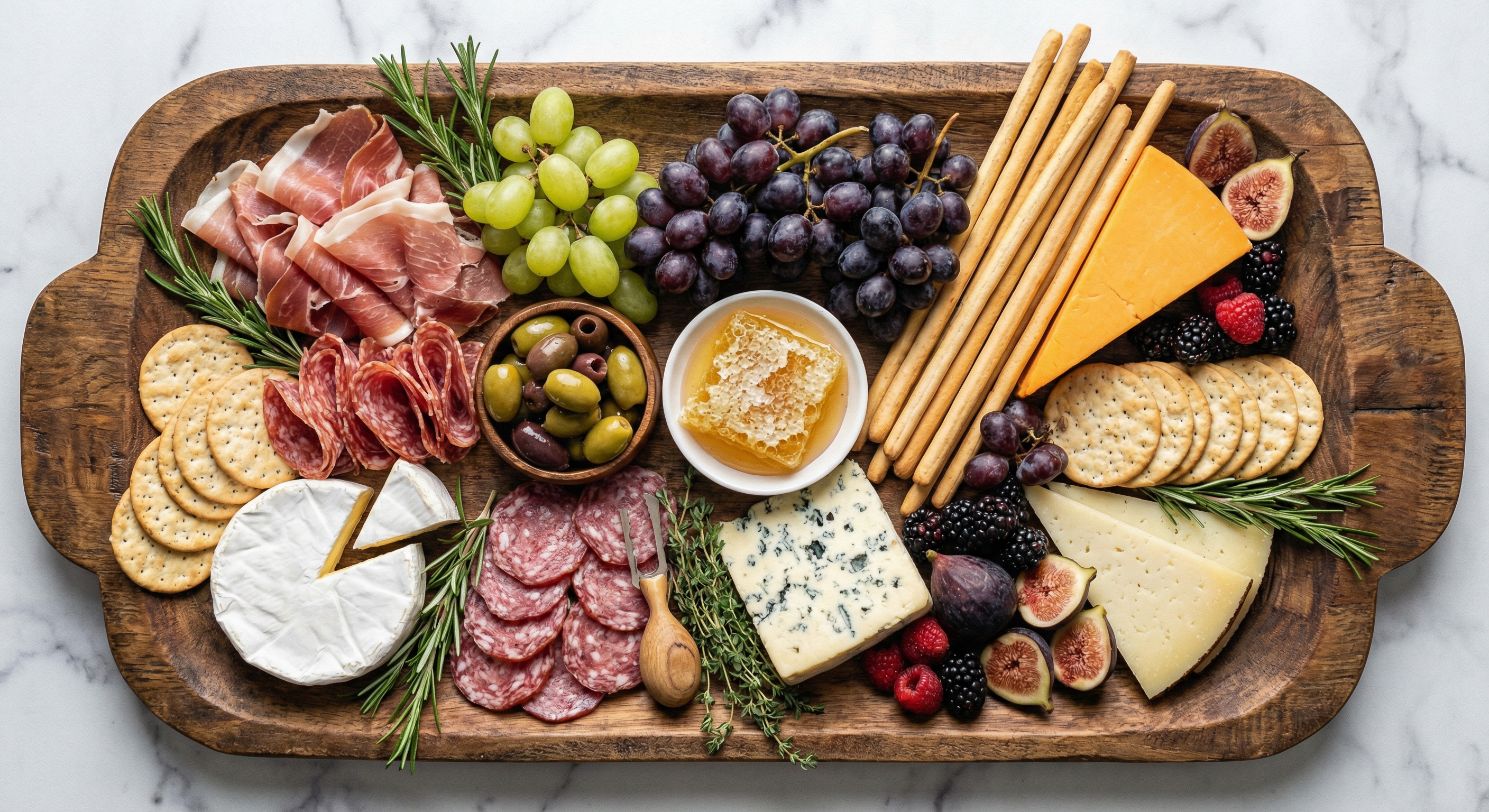
A well-crafted charcuterie board is more than food—it's a centerpiece. It's the first thing guests reach for and the last thing they stop talking about.
What You Need: The Essential Components
Every great charcuterie board has five categories:
- Cured Meats (the star)
- Cheeses (the supporting cast)
- Crackers & Bread (the vehicle)
- Fruits & Vegetables (the freshness)
- Accoutrements (the finishing touches)
1. Cured Meats
Essential Selections:
- Prosciutto — Silky, mildly sweet Italian ham
- Salami — Bold, garlicky, and firm
- Soppressata — Coarser grind, often spicy
- Coppa — Cured pork shoulder, rich and marbled
Pro tip: Include at least 3 meat varieties with different textures. Shop quality charcuterie meats here.
2. Cheeses
Pair cheeses that contrast in texture and flavor:
- 1 Soft cheese: Brie, Camembert, goat cheese
- 1 Semi-hard cheese: Manchego, Gouda, Gruyère
- 1 Hard/aged cheese: Parmigiano-Reggiano, aged cheddar
Step-by-Step: Building Your Board
Step 1: Choose Your Board
Wood boards (classic), slate (modern), or marble (elegant). Plan 2-3 square inches per guest.
Step 2: Place Your Anchors
Start with the largest items—cheese blocks and small bowls for olives, honey, mustard.
Step 3: Fan Out the Meats
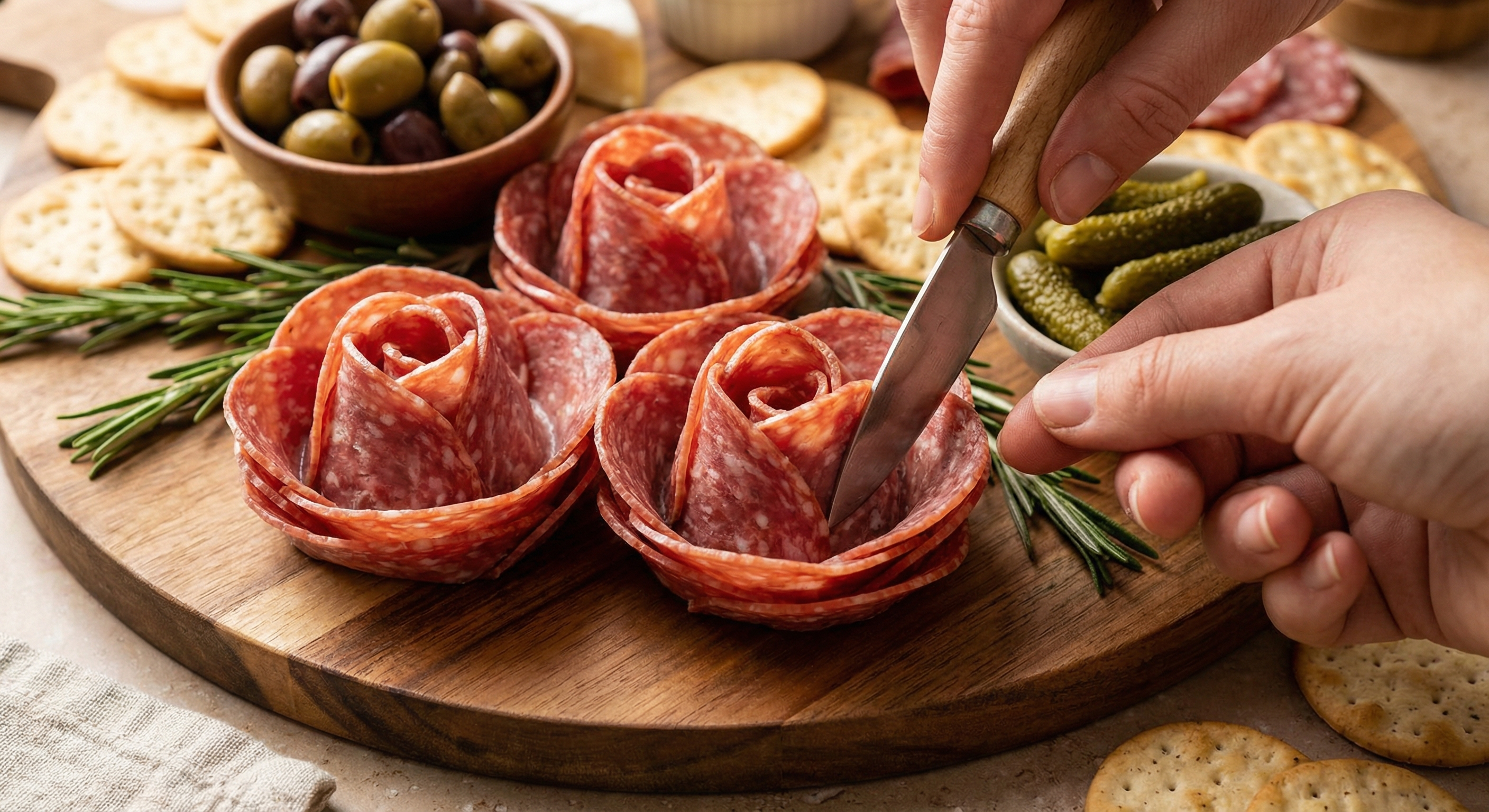
Techniques: Prosciutto folds, salami roses, ribbons, stacks.
Step 4: Fill the Gaps
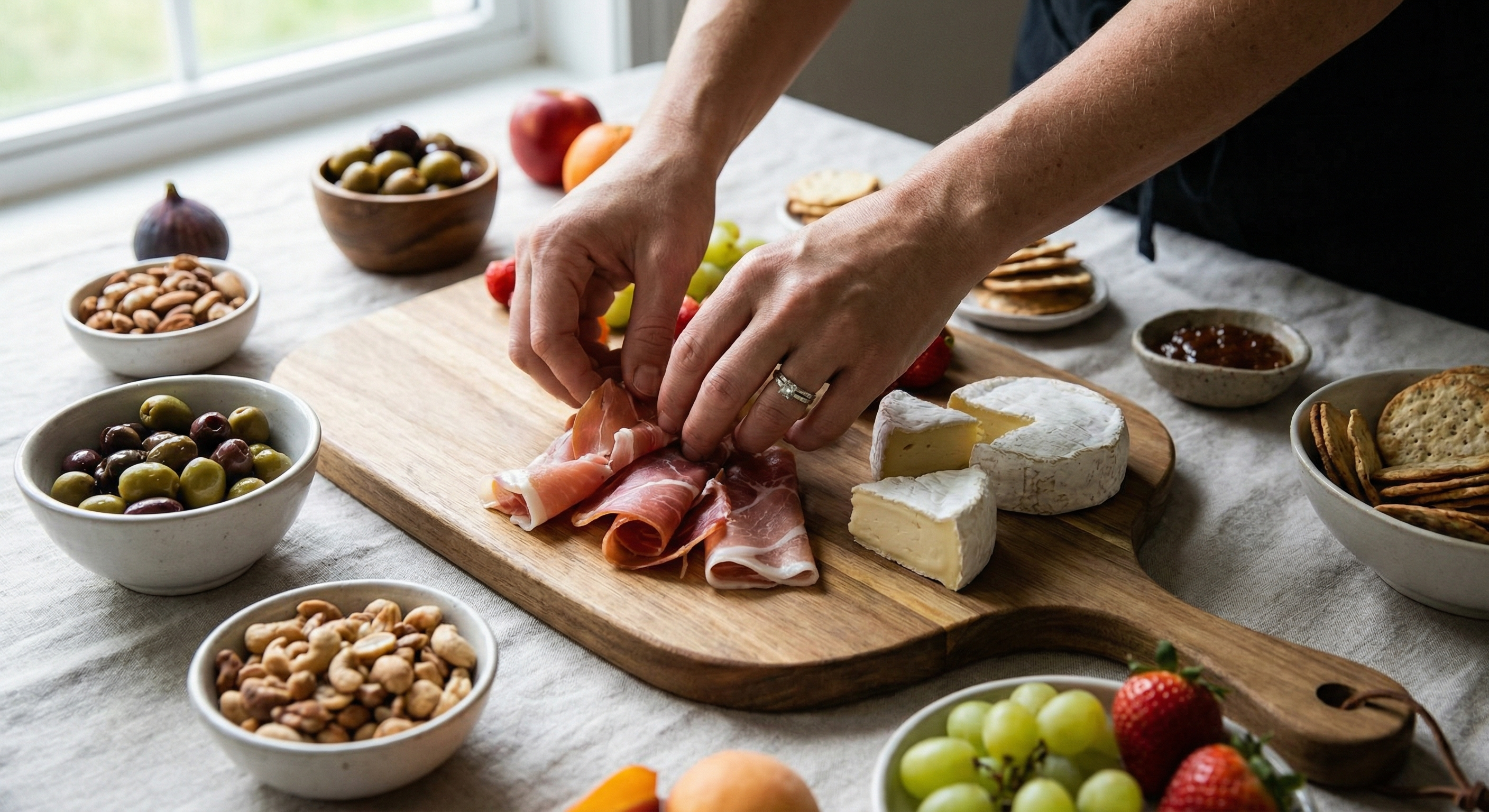
Add crackers, fruits, vegetables, and nuts to fill spaces.
Step 5: Garnish
Tuck fresh rosemary or thyme sprigs around the board.
Portion Planning
| Group Size | Meat (oz) | Cheese (oz) | Crackers |
|---|---|---|---|
| 4 guests | 6-8 oz | 8-10 oz | 40-50 |
| 8 guests | 12-16 oz | 16-20 oz | 80-100 |
| 12 guests | 18-24 oz | 24-30 oz | 120-150 |
Common Mistakes
- Overcrowding: Leave negative space
- Serving Cold Cheese: Remove 30-60 min before serving
- Forgetting Utensils: Provide tongs, cheese knives, toothpicks
Quality cured meats make or break a charcuterie board. For your next board, consider our charcuterie collection.
More Charcuterie Guides
What Is Pink Curing Salt? Sodium Nitrite Explained for Home Charcuterie
Pink curing salt is the most essential — and most misunderstood — ingredient in meat curing. This guide explains what it is, why it's pink, how sodium nitrite prevents botulism, proper usage rates, and whether you can cure meat without it.
10 min readHow Long Does Charcuterie Last? Storage Guide for Cured Meats & Cheese
Understanding proper charcuterie storage ensures you enjoy it at peak quality while avoiding food safety risks.
10 min read