How Long Does Charcuterie Last? Storage Guide for Cured Meats & Cheese
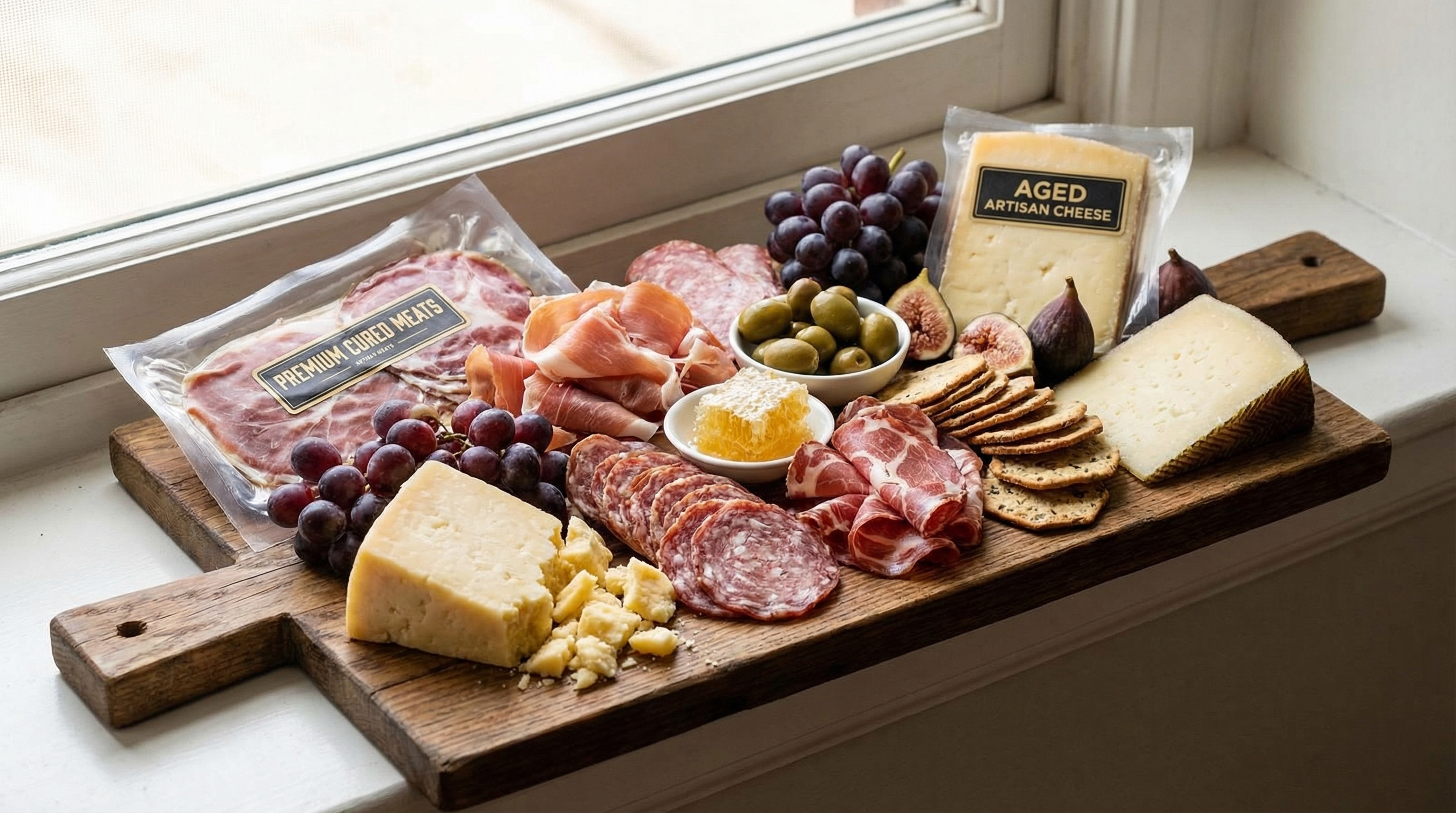
Charcuterie represents weeks or months of careful curing, aging, and craftsmanship. Understanding proper storage ensures you enjoy it at peak quality while avoiding food safety risks.
The shelf life of charcuterie varies dramatically based on the type of cure, moisture content, packaging method, and storage conditions. A vacuum-sealed whole salami can last months; sliced prosciutto exposed to air spoils in days.
Unopened Vacuum-Sealed Charcuterie (Refrigerated)
Commercially vacuum-sealed whole or half pieces maintain quality longest because they're protected from oxygen and bacteria.
Whole muscle cures (prosciutto, bresaola, coppa, lonza): 2-3 months refrigerated in original vacuum packaging. These are solid muscle cures with low moisture content and intact casings or wrappings.
Salami and sausages (whole, unsliced): 4-6 weeks refrigerated. The fermentation and drying process creates a hostile environment for bacteria, but once vacuum-sealed packaging is opened, that protection ends.
Fresh sausages (chorizo, Italian, breakfast sausage): 1-2 weeks refrigerated. These are NOT cured — they contain fresh meat and require refrigeration and faster use.
Pâté, rillettes, and terrines: 2-3 weeks unopened. These are cooked but still perishable due to high fat content and spreadable texture.
Opened Charcuterie (Refrigerated)
Once you break the vacuum seal, oxygen accelerates oxidation and bacterial growth. Re-wrapping in butcher paper or wax paper slows this but doesn't stop it.
Sliced cured meats (prosciutto, salami, coppa): 3-5 days refrigerated in resealable packaging or wrapped in butcher paper. Slicing exposes more surface area to air, which speeds deterioration.
Whole dry-cured meats (opened): 2-3 weeks refrigerated if wrapped properly. The exterior will develop harmless white mold (Penicillium nalgiovense), which you can wipe off with vinegar-dampened cloth before slicing.
Fresh sausages (opened): 1-2 days refrigerated. Treat these like raw meat — cook within 48 hours of opening.
Pâté and spreadable charcuterie: 3-5 days refrigerated after opening. Cover tightly with plastic wrap pressed directly against the surface to prevent oxidation.
Room Temperature Storage (For Specific Types Only)
Only fully cured, whole, unsliced charcuterie can be stored at room temperature — and only in specific conditions.
Whole salami (hard, fermented, fully dried): 4-6 weeks at room temperature (60-70°F) in a cool, dry place away from direct sunlight. This applies to traditional European-style salami with casings intact.
Whole prosciutto or jamón (bone-in): Can hang at room temperature for months in a dedicated prosciutto holder in a cool, dry environment (below 70°F, 60-70% humidity). Once sliced, refrigerate immediately.
NOT safe at room temperature: Sliced charcuterie, pâté, terrines, fresh sausages, or any charcuterie that's been vacuum-sealed (opening breaks the protective barrier).
Charcuterie Board Assembly: How Long Before Serving?
Once you've assembled a charcuterie board with meats, cheeses, and accompaniments, it becomes perishable at room temperature.
Maximum time at room temperature: 2 hours total. After 2 hours, bacteria multiply rapidly in the "danger zone" (40-140°F).
Hot weather (above 90°F): 1 hour maximum. This includes outdoor events, picnics, and summer parties.
Best practice: Assemble the board right before guests arrive. If the party runs long, refrigerate the board for 20-30 minutes, then bring it back out for a second round.
Cheese Storage on Charcuterie Boards
Cheese behaves differently than cured meats. Hard aged cheeses tolerate room temperature better; soft cheeses spoil faster.
Hard cheeses (Parmigiano-Reggiano, aged Manchego, aged Gouda): 4 hours at room temperature before quality degrades. They won't become unsafe immediately, but they'll dry out and lose flavor.
Semi-soft cheeses (Gruyère, young Gouda, Fontina): 2 hours maximum. These contain more moisture and are more vulnerable to bacterial growth.
Soft cheeses (Brie, Camembert, fresh goat cheese): 1-2 hours maximum. These are highly perishable.
Blue cheese: 2 hours maximum. The mold cultures are intentional, but other bacteria will grow if left warm too long.
Freezing Charcuterie (Yes, You Can — With Caveats)
Freezing extends shelf life significantly but changes texture in some cases.
Whole cured meats: Freeze for up to 3 months. Wrap tightly in plastic wrap, then aluminum foil. Thaw slowly in the refrigerator overnight. Texture remains excellent.
Sliced cured meats: Freeze for up to 2 months. Separate slices with parchment paper to prevent sticking. Texture becomes slightly drier after thawing, but flavor remains intact.
Fresh sausages: Freeze for up to 2 months. These freeze very well. Thaw in refrigerator and cook within 24 hours.
Do NOT freeze: Pâté, rillettes, terrines, or any emulsified charcuterie. The fat separates during freezing, ruining the texture.
Signs Your Charcuterie Has Gone Bad
Even properly stored charcuterie eventually spoils. Here's how to tell:
Visual signs:
- Slimy surface: Bacterial growth. Discard immediately.
- Rainbow sheen (iridescence): Normal on cured meats when light hits the fat at certain angles. This is NOT spoilage.
- Gray or greenish discoloration: Oxidation or mold growth. Discard.
- White mold on whole salami: Harmless Penicillium mold. Wipe with vinegar-dampened cloth and continue using.
- Black, pink, or fuzzy mold: Discard. These are not safe mold varieties.
Smell test:
- Sour, rancid, or ammonia-like odor: Bacterial spoilage. Discard.
- Yeasty or tangy fermentation smell: Normal for salami and fermented sausages.
Texture changes:
- Excessive dryness or hardness: Oxidation from improper wrapping. Still safe but unpleasant to eat.
- Sticky or tacky surface: Bacterial film. Discard.
Best Practices for Maximum Shelf Life
Use butcher paper or wax paper — not plastic wrap. Plastic traps moisture and promotes bacterial growth. Butcher paper allows the meat to breathe while protecting it from drying out.
Store whole pieces instead of slicing in advance. Slicing exposes surface area to oxygen. Slice only what you need right before serving.
Keep different charcuterie types separated. Fresh sausages and pâté should be stored away from dry-cured meats to prevent cross-contamination.
Label everything with the date opened. It's easy to lose track. A simple masking tape label saves guesswork.
Maintain consistent refrigerator temperature (35-38°F). Temperature fluctuations accelerate spoilage. Keep charcuterie in the coldest part of the fridge (usually the back of the bottom shelf).
Don't store charcuterie in the door. The door is the warmest part of the refrigerator due to frequent opening and closing.
FAQ: Charcuterie Storage Questions
Can I leave a charcuterie board out overnight? No. After 2 hours at room temperature, bacterial growth enters the danger zone. Overnight exposure guarantees spoilage and potential foodborne illness.
Does vacuum-sealing extend shelf life after opening? Yes, if you have a home vacuum sealer. Re-sealing sliced charcuterie can extend refrigerated life to 7-10 days instead of 3-5.
What's the white powder on my salami? Either salt that has migrated to the surface during curing (harmless) or Penicillium mold (also harmless and intentional). Both are safe. Wipe with a dry cloth if you prefer.
Can I eat charcuterie past the "best by" date? "Best by" refers to peak quality, not safety. If the charcuterie was stored properly and shows no signs of spoilage, it's usually safe for 1-2 weeks past the date. Use your senses to assess.
How do I store leftover charcuterie after a party? Wrap meats and cheeses separately in butcher paper or wax paper, refrigerate immediately, and consume within 3-5 days. Discard anything that sat out for more than 2 hours (or 1 hour if outdoor temperature exceeded 90°F).
Is it safe to cut mold off charcuterie? Depends. White mold on whole salami is safe to wipe off and eat. Black, pink, or fuzzy mold means discard the entire piece. Mold on sliced charcuterie or pâté means discard — mold roots penetrate deeper than visible surface growth.
Takeaway
Charcuterie is designed for longevity, but once you break packaging or slice it, the clock starts ticking. Whole, vacuum-sealed pieces last months; sliced, opened pieces last days. Store properly, trust your senses, and when in doubt, throw it out.
The best charcuterie experience comes from buying in smaller quantities more frequently rather than hoarding large amounts that degrade before you can enjoy them.
More Charcuterie Guides
What Is Pink Curing Salt? Sodium Nitrite Explained for Home Charcuterie
Pink curing salt is the most essential — and most misunderstood — ingredient in meat curing. This guide explains what it is, why it's pink, how sodium nitrite prevents botulism, proper usage rates, and whether you can cure meat without it.
10 min readUnknown
10 min readWhat Is Lardo? The Italian Cured Fat That Changes Everything
Lardo is cured pork fatback seasoned with herbs, spices, and salt, then aged for months until it develops a silky texture and complex flavor.