Competition Ribs: St. Louis vs Baby Back Breakdown
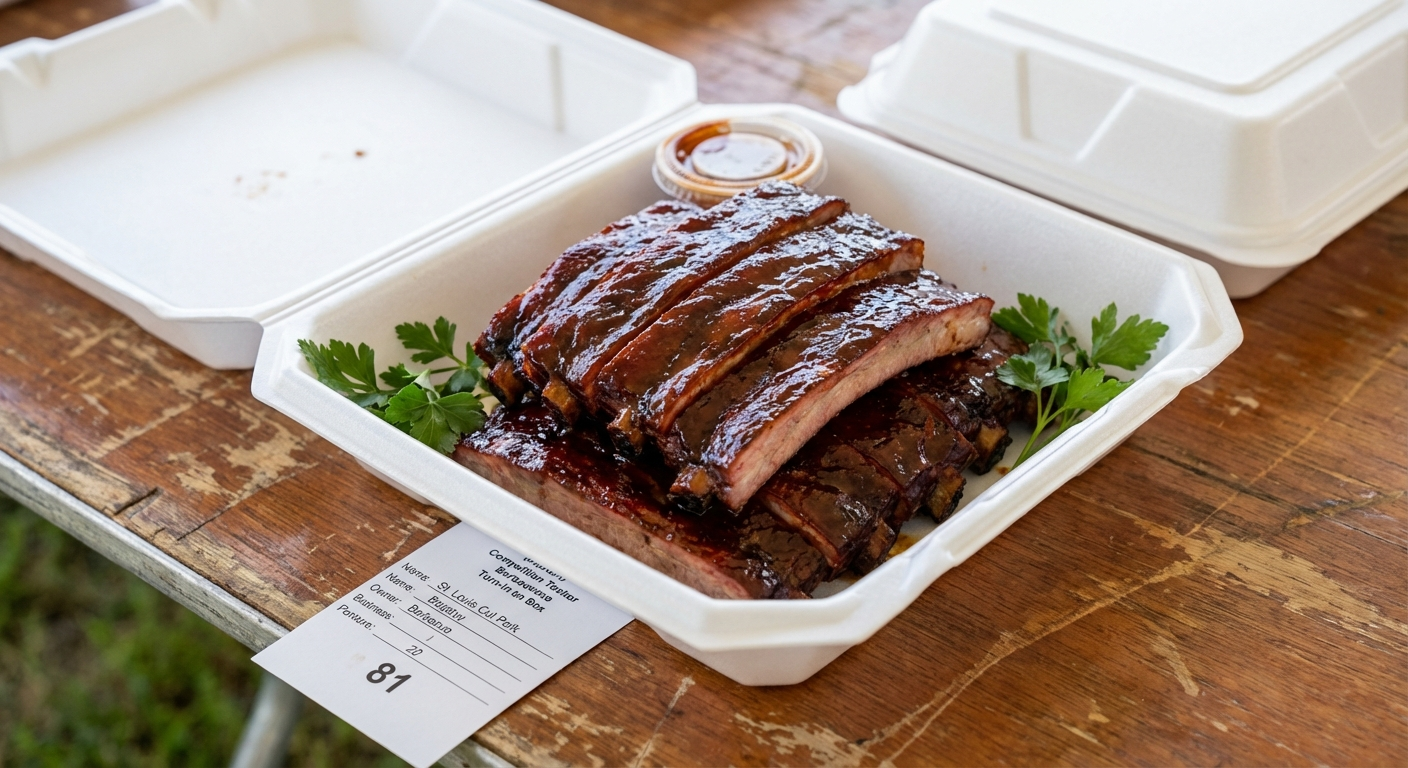
Ribs are the crowd-pleaser of BBQ. Brisket gets the mystique, but ribs are what everybody reaches for first at a cookout. They're also the most forgiving cut for beginners — harder to mess up than brisket, faster to cook, and the feedback loop is shorter so you learn quicker.
I've cooked competition ribs for 15 years and won more than a few trophies with them. The secret isn't complicated: start with good ribs, season them well, cook them at the right temperature, and know when to stop. Let me walk you through it.
St. Louis vs. Baby Back: What's the Difference?
Baby Back Ribs
Baby backs come from the upper part of the rib cage, near the spine. They're the ribs that are removed when a bone-in pork loin is cut. They're called "baby" because they're smaller than spare ribs — typically 3-4 inches wide and curved. A full rack weighs 1.5-2 pounds.
Characteristics:
- Leaner meat with less fat marbling
- Shorter bones, more curved
- Cooks faster (3-4 hours at 250°F)
- More tender but less flavorful than spares
- More expensive per pound
St. Louis Cut Spare Ribs
Spare ribs come from the belly side of the rib cage — lower, closer to the sternum. A full spare rib slab includes the rib tips (a cartilage-heavy section along the bottom edge). When you trim off the rib tips and square the slab into a uniform rectangle, you've got a St. Louis cut.
Characteristics:
- More fat and marbling, richer flavor
- Straighter, more uniform bones
- Takes 5-6 hours at 250°F
- More forgiving of overcooking (the fat keeps them moist)
- Better value — cheaper per pound with more meat
Which Do I Prefer?
For competition, I cook St. Louis cut spares. The uniform rectangular shape looks better in a turn-in box, the higher fat content gives you a bigger margin of error, and the richer flavor impresses judges. For backyard cooking, I love both — baby backs when I'm in a hurry, spares when I want maximum flavor.
Trimming St. Louis Style
If you buy untrimmed spare ribs, you'll need to cut them into St. Louis style yourself. It's easy once you've done it a couple times:
- Flip the slab bone-side up. You'll see a flap of meat on the back — that's the skirt (diaphragm muscle). Peel it off or cut it away. It cooks at a different rate and will overcook before the ribs are done.
- Remove the membrane. There's a thin, translucent membrane covering the back of the bones. Get under a corner with a butter knife, grab it with a paper towel for grip, and peel it off in one sheet. This membrane prevents smoke and seasoning from penetrating the back side.
- Cut the rib tips. Flip the slab meat-side up. You'll see where the straight bone ends and the cartilage section begins — there's usually a visible line of fat and a change in texture. Cut along that line with a sharp knife to separate the tips from the main slab. Save the tips — they're great smoked on their own.
- Square the ends. Trim any uneven meat or thin flaps from the ends to create a clean rectangle.
Seasoning
My competition rub is more complex than what I put on brisket. Ribs can handle — and benefit from — more flavoring. Here's my base formula:
- Paprika (for color and mild sweetness)
- Brown sugar (caramelization and bark)
- Black pepper (heat and bark texture)
- Kosher salt (seasoning)
- Garlic powder
- Onion powder
- Chili powder (mild heat)
- Cumin (earthiness — a touch of my family's Tex-Mex roots)
Apply a thin layer of yellow mustard on the ribs first — it acts as a binder for the rub and the flavor cooks off completely. Then apply rub generously on both sides. Let the ribs sit with the rub on for at least 30 minutes before cooking. The surface should look wet and glossy — that's called "sweating" and it means the salt is pulling moisture and the rub is adhering.
The Cook: The 3-2-1 Method (and Why I Modify It)
The 3-2-1 method is the most widely taught rib technique: 3 hours unwrapped, 2 hours wrapped, 1 hour unwrapped with sauce. It works for spare ribs at 225°F, but I modify it because 2 hours wrapped often overcooks the ribs into mush.
My Method: 3-1.5-0.5
Phase 1: Smoke (3 hours at 250°F)
Place the ribs bone-side down on the grate. Maintain thin blue smoke — I use a 70/30 hickory/cherry blend for ribs. Don't open the lid during this phase. The ribs are building bark and absorbing smoke.
After 3 hours, the ribs should have a deep mahogany color and the bark should feel firm to the touch. If the color is still light, give them another 30 minutes unwrapped.
Phase 2: Wrap (1.5 hours at 250°F)
Lay out a sheet of aluminum foil. Place the ribs meat-side down on the foil. Add a couple tablespoons of apple juice, a pat of butter, and a drizzle of honey. Wrap tightly — you're creating a braising environment. The liquid steams inside the foil, tenderizing the meat and melting the connective tissue.
Check after 1.5 hours. The meat should have pulled back from the bone ends by about 1/4 inch, and the rack should bend easily when you lift one end with tongs. If you can pull a bone out cleanly, they're overcooked. You want a slight tug — not falling off the bone.
Phase 3: Sauce and Set (30 minutes at 250°F)
Unwrap the ribs and place them back on the grate meat-side up. Apply a thin layer of your finishing sauce. Let it set and tack up — the sugars in the sauce will caramelize and create a glossy, slightly sticky surface. Apply a second coat if desired.
What Judges Look For
In competition, ribs are judged on appearance, taste, and tenderness. Here's what actually matters:
Appearance
- Uniform color — no blotchy spots or uneven bark
- Clean bone presentation — meat pulled back evenly from the bone ends
- Glossy sauce finish — not too thick, not dripping
- Six ribs per box, evenly sized and neatly arranged
Taste
- Balance of smoke, meat, rub, and sauce flavors — no single element should dominate
- Sweetness should complement, not overwhelm
- Smoke flavor should be present but not heavy
- Good seasoning penetration — not just surface flavor
Tenderness (the Big One)
- The meat should pull cleanly off the bone with a gentle bite — leaving a clean bite mark
- It should NOT fall off the bone. That's overcooked. Competition judges will score overcooked ribs lower than slightly tough ones.
- The ideal is what competition cooks call "competition tender" — the meat holds together when you pick up a rib, but releases cleanly when you bite. There's a slight pull, then a clean separation.
Baby Back Specifics
If you're cooking baby backs instead of spares, adjust the timing:
- Phase 1: 2 hours unwrapped (not 3 — they're thinner)
- Phase 2: 1 hour wrapped
- Phase 3: 30 minutes with sauce
Baby backs dry out faster than spares because they're leaner. Be more careful with temperature — 250°F is plenty. Don't go hotter.
Common Rib Mistakes
- "Fall off the bone" as a goal: That means overcooked. Competition judges know it, and once you've had properly cooked ribs with a little bite, you'll know it too.
- Too much sauce: Sauce should complement the meat, not cover it. If you can't taste the pork and smoke under the sauce, you've used too much.
- Skipping the membrane: That membrane on the back will prevent rub penetration and create a chewy, unpleasant texture. Always remove it.
- Not enough rub: Ribs have more surface area relative to their mass than brisket. They need more seasoning per pound to be properly flavored.
- Cheap meat: Quality ribs make a real difference. Source the best pork you can — and for beef ribs, wagyu beef ribs from The Meatery are a competition-worthy upgrade.
Frequently Asked Questions
Should ribs fall off the bone?
No. "Fall off the bone" means overcooked. Properly cooked ribs should pull cleanly from the bone with a gentle bite, leaving a clean bite mark. The meat should hold together when you pick up a rib but separate easily when you bite. Competition judges will score fall-off-the-bone ribs lower.
What temperature do you smoke ribs at?
I smoke ribs at 250°F. The 3-2-1 method (which I modify to 3-1.5-0.5) works at this temperature for St. Louis cut spare ribs. Baby backs cook faster — use 2-1-0.5 timing. Going hotter than 275°F risks drying out the ribs before they're tender.
St. Louis or baby back ribs — which is better?
St. Louis cut spare ribs have more fat, richer flavor, and are more forgiving of overcooking. Baby backs are leaner, more tender, and cook faster. For competition and maximum flavor, I prefer St. Louis. For a quicker weeknight cook, baby backs are great.
What wood is best for smoking ribs?
I use a 70% hickory, 30% cherry blend for ribs. The hickory provides strong smoky flavor that stands up to the pork, while cherry adds sweetness and gives the ribs a beautiful reddish-mahogany color. Pecan and apple are also excellent choices.
How do you know when ribs are done?
Three tests: (1) The meat has pulled back from the bone ends by about 1/4 inch. (2) When you pick up the rack from one end with tongs, it bends easily and the surface cracks. (3) A toothpick slides into the meat between the bones with little resistance. Internal temp should be 195-203°F.
More Charcuterie Guides
What Is Pink Curing Salt? Sodium Nitrite Explained for Home Charcuterie
Pink curing salt is the most essential — and most misunderstood — ingredient in meat curing. This guide explains what it is, why it's pink, how sodium nitrite prevents botulism, proper usage rates, and whether you can cure meat without it.
10 min readHow Long Does Charcuterie Last? Storage Guide for Cured Meats & Cheese
Understanding proper charcuterie storage ensures you enjoy it at peak quality while avoiding food safety risks.
10 min read