Cold Smoking vs Hot Smoking: Complete Guide to Both Methods
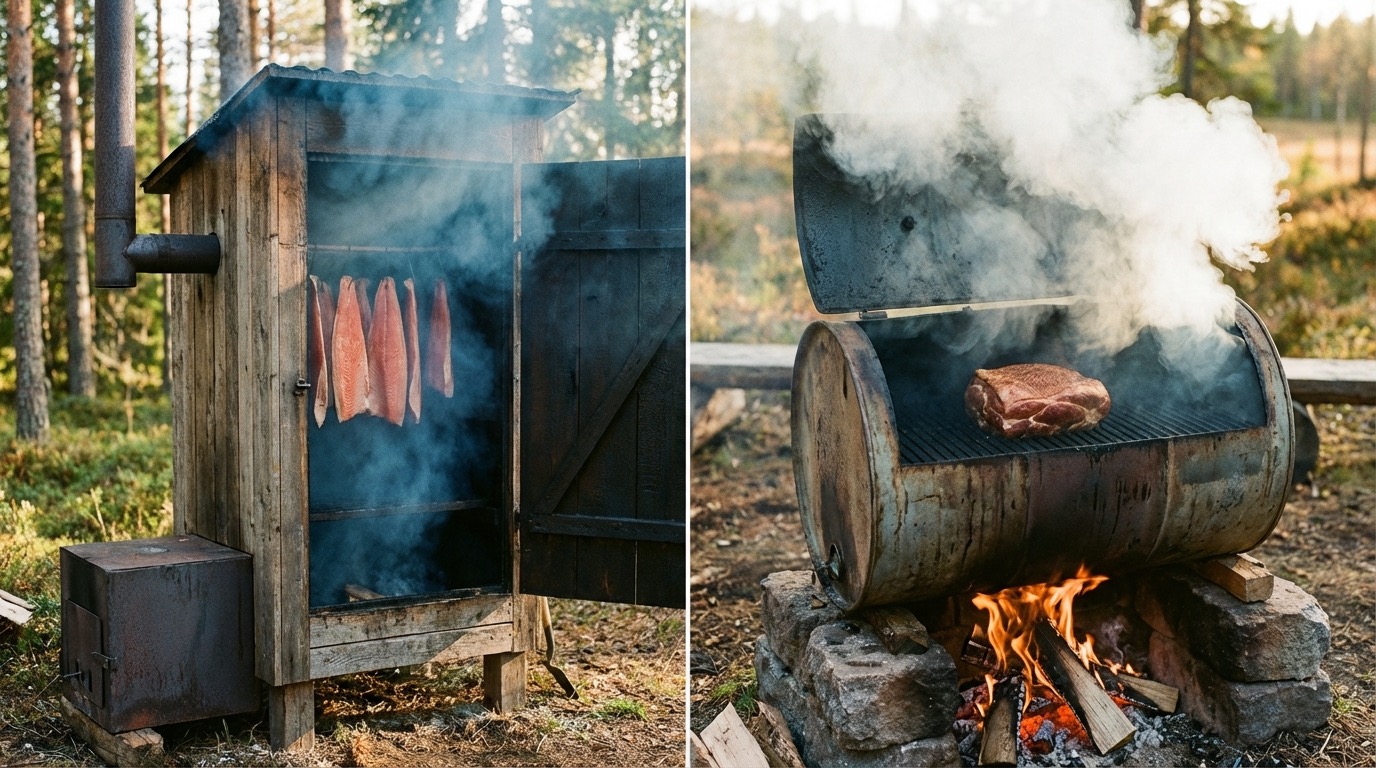
People use the word “smoking” like it’s one thing. It’s not. Cold smoking and hot smoking are fundamentally different processes that happen to share a name. One cooks your food while adding smoke flavor. The other adds smoke flavor without cooking anything at all. Confusing them can ruin a project—or worse, make someone sick.
I’ve spent years doing both, and the distinction matters more than most people realize. Let me break down exactly how each method works, what equipment you need, which foods work best, and the safety rules you absolutely cannot skip.
The Core Difference: Temperature
Everything comes down to temperature. That single variable determines whether you’re cold smoking or hot smoking, and it dictates the entire process from start to finish.
Cold smoking: 68–86°F (20–30°C). The food stays in the “danger zone” the entire time, which is why curing is mandatory. The goal is flavor and preservation—not cooking.
Hot smoking: 126–350°F (52–176°C), with most BBQ happening between 225–275°F. The food cooks through while absorbing smoke. When it comes off the smoker, it’s ready to eat.
That temperature gap isn’t just a detail—it changes everything about how you prepare the food, what equipment you use, how long the process takes, and what safety precautions are required.
How Cold Smoking Works
Cold smoking is the older technique by thousands of years. Before refrigeration existed, cold smoking was one of the primary ways humans preserved meat and fish. The process deposits antimicrobial compounds from wood smoke onto the food’s surface while slowly dehydrating it—both of which inhibit bacterial growth.
The Process
- Cure the food first. This is non-negotiable. Salt-cure (dry cure or brine) the meat or fish before any smoke touches it. The cure draws out moisture and creates an environment hostile to bacteria. For most meats, this means 1–7 days of curing depending on thickness.
- Form a pellicle. After curing, rinse the food and let it air-dry in the refrigerator uncovered for 12–24 hours. This creates a tacky surface layer called a pellicle that smoke compounds bond to. Without a pellicle, smoke just bounces off the wet surface.
- Smoke at low temperature. Place the cured food in the smoking chamber and generate smoke without significant heat. This requires separating your smoke source from your food—the smoke travels through a pipe or channel, cooling before it reaches the chamber.
- Time. Cold smoking sessions last anywhere from 4 hours to several days, depending on the product. Traditional cold-smoked salmon takes 12–24 hours. Some European sausages are cold-smoked for 3–5 days.
Equipment for Cold Smoking
You need a way to generate smoke without heat reaching the food. Several approaches work:
- Smoke generator (tube or maze): A perforated metal tube or maze filled with wood pellets or dust. You light one end and it smolders for hours, producing smoke with minimal heat. The A-MAZE-N tube smoker is the most popular. These sit inside your regular smoker or any enclosed chamber.
- External firebox with pipe: Build a small fire in a separate firebox connected to your smoking chamber by a 4–6 foot pipe or duct. The smoke cools as it travels through the pipe. This is the traditional method and produces excellent results.
- Smoke generator attachment: Commercial units like the Smoke Daddy or Smoke Chief bolt onto your smoker and feed cold smoke through a port. They use wood chips or pellets and produce minimal heat.
- Dedicated cold smoker: Purpose-built units like the Bradley Digital Smoker or converted refrigerators. If you’re serious about cold smoking, a dedicated setup is worth the investment.
Critical rule: Monitor your chamber temperature. If it climbs above 90°F, you’re no longer cold smoking—you’re in a dangerous middle ground where the food is warm enough for bacterial growth but not hot enough to kill bacteria. Open vents, add ice pans, or shut down and wait for cooler conditions.
Best Foods for Cold Smoking
- Salmon and trout: The classics. Cold-smoked salmon (lox) is silky, translucent, and intensely flavored. Cure with a 2:1 sugar-to-salt ratio for 12–24 hours, then cold-smoke for 12–18 hours.
- Bacon: Real cold-smoked bacon has a completely different character than the hot-smoked version most Americans know. It’s denser, more deeply flavored, and needs to be cooked before eating. Cure the pork belly for 7 days, then cold-smoke for 8–12 hours.
- Cheese: This is the easiest cold-smoking project for beginners. No curing needed—just smoke. Cheddar, gouda, mozzarella, and pepper jack all take smoke beautifully. Smoke for 2–4 hours, then vacuum-seal and refrigerate for 1–2 weeks to let the flavor mellow.
- Sausages: Many European sausage traditions involve cold smoking—German landjäger, Spanish chorizo, Hungarian kolbász. The smoke adds flavor and aids in preservation during the curing process.
- Salt: Smoked salt is a secret weapon in any kitchen. Spread kosher salt on a sheet pan and cold-smoke for 4–6 hours. Store in an airtight jar. Use it on everything.
- Butter, nuts, and spices: All take smoke well with minimal effort. Smoke at low temps for 1–3 hours.
How Hot Smoking Works
Hot smoking is what most people picture when they think of BBQ. The food sits in a chamber where heat and smoke work simultaneously. The heat cooks the food to a safe internal temperature while the smoke infuses flavor. When you pull a brisket off your offset smoker at 203°F, that’s hot smoking.
The Process
- Season or brine the food. Unlike cold smoking, curing isn’t required for safety—the heat will kill bacteria. But seasoning adds flavor. A dry rub, marinade, or wet brine all work.
- Set up your smoker. Any smoker works for hot smoking—offset, pellet, kamado, drum, electric, or even a kettle grill set up for indirect cooking. Build your fire and stabilize your temperature.
- Smoke and cook. Place the food in the smoker and maintain your target temperature. Wood selection matters here—the species you burn determines the flavor profile. Most BBQ happens between 225–275°F.
- Monitor internal temperature. Use a probe thermometer. The food is done when it reaches the target internal temp for that protein: 195–205°F for brisket and pork shoulder, 145°F for pork chops, 165°F for poultry.
Equipment for Hot Smoking
The beauty of hot smoking is that almost any outdoor cooker can do it:
- Offset smoker: The traditional choice. Burns wood logs or chunks for both heat and smoke. Requires active fire management but produces the deepest smoke flavor. Read my complete offset guide.
- Pellet smoker: Uses compressed wood pellets fed by an auger. A digital controller maintains temperature automatically. Great for beginners and long cooks. See the stick burner vs pellet smoker comparison.
- Kamado (Big Green Egg, Kamado Joe): Ceramic cookers that retain heat exceptionally well. Efficient with fuel and excellent for both low-and-slow smoking and high-heat grilling.
- Drum smoker (UDS): A 55-gallon steel drum converted into a smoker. Simple, effective, and surprisingly good at maintaining steady temperatures.
- Kettle grill: A standard Weber kettle set up for indirect cooking with wood chunks on the charcoal can produce excellent smoked food. It’s how many pitmasters started.
Best Foods for Hot Smoking
- Brisket: The king of hot-smoked meats. 12–16 hours at 250°F transforms a tough cut into something transcendent. Post oak is the traditional wood choice.
- Pork shoulder: Forgiving, flavorful, and perfect for beginners. 8–12 hours at 250°F until it probes like butter at 200°F+.
- Ribs: St. Louis spare ribs or baby backs. 5–6 hours at 250–275°F. Hickory or a cherry-hickory blend is ideal.
- Poultry: Whole chickens, turkey, wings. Higher temps (275–325°F) work better for poultry to crisp the skin. Fruit woods or pecan pair well.
- Sausage: Hot links, bratwurst, kielbasa. 2–3 hours at 225–250°F until internal temp hits 160°F.
- Fish: Hot-smoked salmon, trout, or mackerel. 2–4 hours at 200–225°F. The result is flaky and fully cooked, unlike cold-smoked lox.
Side-by-Side Comparison
| Factor | Cold Smoking | Hot Smoking |
|---|---|---|
| Temperature | 68–86°F | 126–350°F |
| Curing required? | Yes (mandatory) | No (optional) |
| Cooking the food? | No | Yes |
| Time | 4 hours to several days | 1–16+ hours |
| Result texture | Raw or semi-raw, silky | Fully cooked, tender |
| Shelf life | Extended (weeks to months) | Standard cooked food (days) |
| Equipment complexity | Specialized (smoke without heat) | Any smoker or grill |
| Skill level | Intermediate to advanced | Beginner-friendly |
| Safety risk | Higher (requires curing knowledge) | Lower (heat kills bacteria) |
| Best season | Fall/winter (cool ambient temps) | Any season |
Safety: The Non-Negotiable Rules
I don’t take safety lightly, and neither should you. Hot smoking is relatively straightforward—cook food to safe internal temperatures and you’re fine. Cold smoking is where people get into trouble.
Cold Smoking Safety
- Always cure before cold smoking meat or fish. The cure (salt, and often curing salt #1 containing sodium nitrite) inhibits Clostridium botulinum and other pathogens. Without proper curing, cold smoking creates a low-oxygen, room-temperature environment that’s ideal for botulism. This is not a suggestion—it’s a rule.
- Use curing salt correctly. Prague Powder #1 (6.25% sodium nitrite) is used for cold-smoked products that will be cooked before eating (like bacon). Prague Powder #2 (sodium nitrite + sodium nitrate) is for dry-cured products that won’t be cooked. Follow recipes exactly—too little is unsafe, too much is toxic.
- Monitor chamber temperature. Stay below 90°F. Above that, you’re growing bacteria without killing them. Cold smoke during cool weather or at night. If you live somewhere hot, wait for winter.
- Source quality meat and fish. For cold-smoked fish, use sushi-grade or previously frozen fish (frozen to -4°F for 7 days kills parasites). For meat, buy from a trusted butcher—freshness matters when the product won’t be cooked to safe temperature.
- Cheese and non-meat items are low-risk. Cold smoking cheese, salt, nuts, and butter carries minimal safety risk. These are great starter projects.
Hot Smoking Safety
- Cook to safe internal temperatures. Poultry: 165°F. Pork: 145°F (whole muscle) or 160°F (ground). Beef: 145°F (whole muscle) or 160°F (ground). Brisket and pork shoulder go well beyond these minimums for tenderness.
- Don’t let meat sit in the danger zone. Get your smoker to temp before putting food on. If your fire dies and the smoker drops below 140°F for an extended period, you have a problem. Restart the fire quickly or move the food to an oven.
- Use a thermometer. Don’t guess. An instant-read thermometer costs $15 and is the most important tool you own.
Can You Do Both With One Smoker?
Yes, with some creativity. If you own a standard smoker (offset, pellet, kettle, kamado), you can adapt it for cold smoking by adding an external smoke source:
- Tube smoker method: Place an A-MAZE-N tube smoker filled with pellets inside your cold (unlit) smoker. The tube produces smoke for 4–6 hours with minimal heat—maybe a 5–10°F rise. Works well in cooler weather.
- Mailbox mod: Connect a metal mailbox to your smoker’s intake vent with dryer duct. Place the smoke source (tube smoker or soldering iron in wood chips) inside the mailbox. Smoke travels through the duct and into the smoker chamber at ambient temperature. This is popular with pellet smoker owners.
- Ice pan trick: For borderline temperatures, place a pan of ice inside the smoke chamber above the smoke source. The ice absorbs heat and keeps the chamber cooler. Replace ice as needed.
Dedicated cold smokers are better, but these workarounds produce good results for occasional cold smoking projects.
Getting Started: Which Should You Try First?
If you’ve never smoked food before, start with hot smoking. It’s more forgiving, requires less specialized knowledge, and produces results you can eat right away. A pork shoulder or rack of ribs on any basic smoker is an excellent first project.
Once you’re comfortable with hot smoking and understand fire management, try cold smoking something low-risk: cheese or salt. No curing required, minimal safety concerns, and you’ll learn how your equipment handles cold smoke generation.
When you’re ready for cold-smoked meat or fish, start with bacon. The pork belly is forgiving, the cure is straightforward, and the result—real cold-smoked bacon that you cook in a pan—is worth every minute of effort. Check my curing guide for the fundamentals before you start.
Whether you’re chasing the deep bark of a 14-hour brisket or the silky complexity of cold-smoked salmon, understanding which technique to use—and why—is what separates someone who smokes food from someone who understands smoking. Both methods have their place, and mastering both opens up a world of charcuterie and BBQ that most backyard cooks never explore.
Frequently Asked Questions
What is the temperature difference between cold smoking and hot smoking?
Cold smoking happens at 68–86°F (20–30°C)—below cooking temperature. Hot smoking ranges from 126–350°F, with most BBQ occurring at 225–275°F. Cold smoking adds flavor without cooking; hot smoking cooks and flavors simultaneously.
Do you need to cure meat before cold smoking?
Yes, always. Cold smoking keeps food in the bacterial danger zone for hours or days. Without proper curing (using salt and often curing salt containing sodium nitrite), you risk botulism and other foodborne illness. This rule is non-negotiable for meat and fish. Cheese, salt, and nuts don’t need curing.
What is the easiest food to cold smoke for beginners?
Cheese is the easiest cold smoking project. No curing required, minimal safety risk, and the results are impressive. Use a tube smoker in your regular smoker (unlit) and smoke cheddar or gouda for 2–4 hours. Vacuum-seal and refrigerate for 1–2 weeks before eating to let the flavor mellow.
Can you cold smoke in a regular smoker?
Yes, with modifications. The most common methods: place an A-MAZE-N tube smoker inside your unlit smoker, use a “mailbox mod” with external smoke piped in through dryer duct, or add ice pans to keep chamber temperature down. Cold smoke during cool weather or at night for best results.
Is cold smoking safe?
Cold smoking carries more risk than hot smoking because the food stays at temperatures where bacteria can grow. The risk is managed through proper curing, temperature monitoring (stay below 90°F), using quality ingredients, and following established recipes. Non-meat items like cheese and salt are low-risk. Always cure meat and fish before cold smoking.
More Charcuterie Guides
What Is Pink Curing Salt? Sodium Nitrite Explained for Home Charcuterie
Pink curing salt is the most essential — and most misunderstood — ingredient in meat curing. This guide explains what it is, why it's pink, how sodium nitrite prevents botulism, proper usage rates, and whether you can cure meat without it.
10 min readHow Long Does Charcuterie Last? Storage Guide for Cured Meats & Cheese
Understanding proper charcuterie storage ensures you enjoy it at peak quality while avoiding food safety risks.
10 min read