Charcuterie Cheese Pairing Guide: Match Meats & Cheeses Like a Pro
By Hank Delgado·12 min read·
# Charcuterie Cheese Pairing Guide: Match Meats & Cheeses Like a Pro
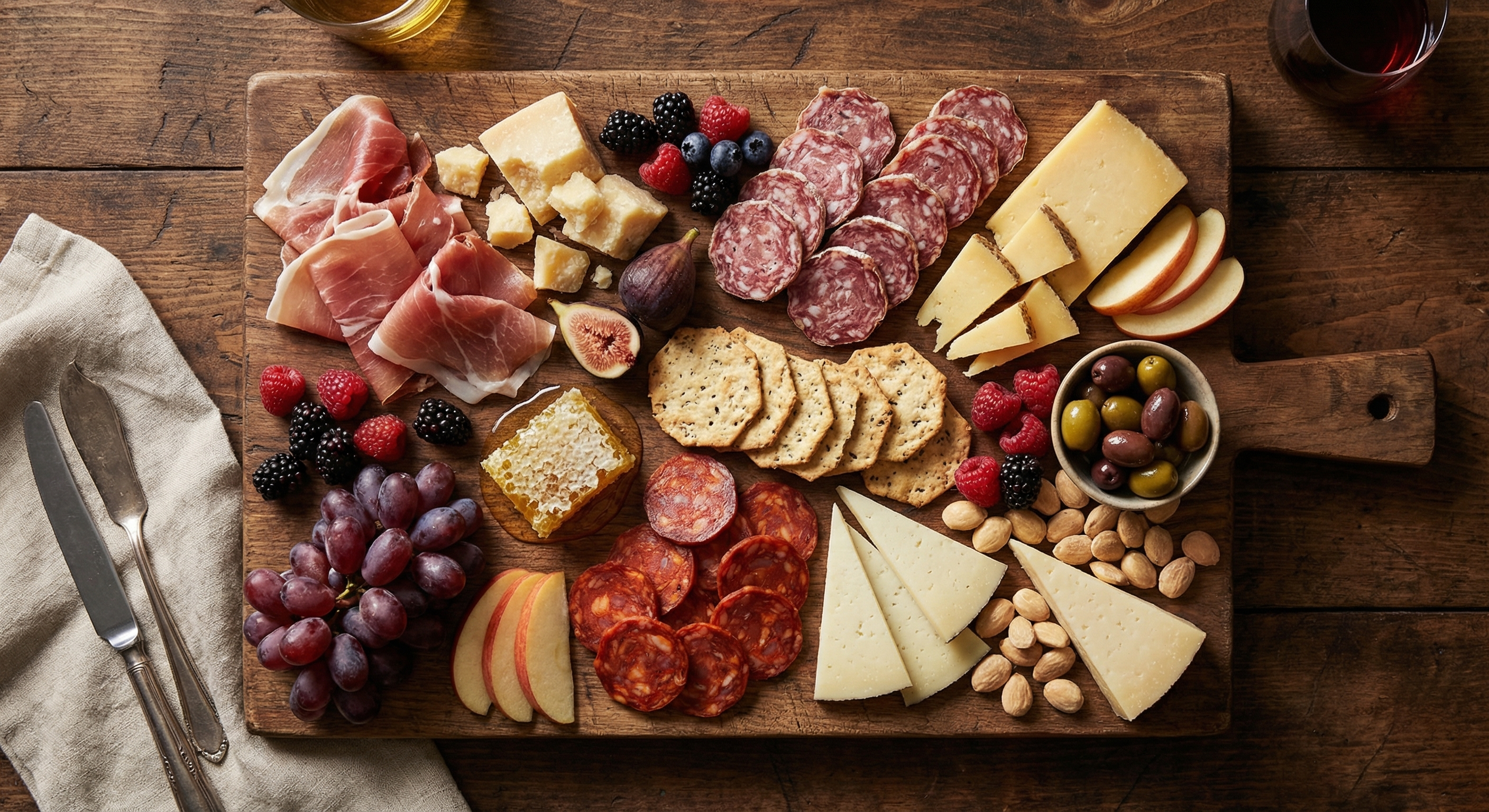
The magic of a great charcuterie board lies in the interplay between meats and cheeses. When paired correctly, they elevate each other — creating flavor combinations that are greater than the sum of their parts. When paired poorly, even premium ingredients fall flat.
After years of crafting charcuterie boards and studying traditional European pairing principles, I've learned that successful meat-cheese pairings follow predictable patterns based on fat content, intensity, texture, and regional origin.
This guide breaks down the science and art of charcuterie cheese pairing, giving you a framework to create balanced, memorable boards every time.
## Understanding Pairing Fundamentals
### The Fat Balance Principle
Fat is the carrier of flavor in both cheese and cured meats. The key is balancing fat levels to avoid overwhelming richness or insufficient mouthfeel.
**High-fat meats** (coppa, lardo, 'nduja, pork rillettes) pair best with **lower-fat cheeses** (aged Manchego, Parmigiano-Reggiano, aged Gouda) to cut through the richness.
**Lean meats** (bresaola, duck prosciutto, venison salami) pair best with **creamier, higher-fat cheeses** (triple-cream Brie, fresh mozzarella, Camembert) to add moisture and richness.
**Medium-fat meats** (prosciutto, salami, soppressata) are the most versatile — they pair well with almost any cheese style.
### Intensity Matching
Match the intensity level of your cheese to your cured meat. Delicate flavors get lost when paired with bold ones.
- **Delicate meats** (prosciutto di Parma, duck prosciutto) → **mild cheeses** (fresh ricotta, burrata, young Pecorino)
- **Medium-intensity meats** (salami, soppressata, coppa) → **medium cheeses** (aged cheddar, Gruyère, Comté)
- **Bold meats** ('nduja, chorizo, pepperoni) → **strong cheeses** (aged Gouda, Roquefort, aged Manchego)
### Texture Contrast
Pair soft, spreadable meats with firm, aged cheeses — and vice versa. Texture contrast keeps the palate engaged.
- **Soft meats** (pâté, rillettes, mousse) → **hard cheeses** (Parmigiano-Reggiano, aged Manchego, Comté)
- **Firm, sliced meats** (prosciutto, bresaola, lonza) → **soft, creamy cheeses** (Brie, Camembert, triple-cream)
- **Medium-texture meats** (salami, soppressata) → **semi-soft or semi-hard cheeses** (Havarti, Gouda, fontina)
### Regional Pairing Wisdom
Traditional European pairings work because meats and cheeses from the same region share terroir, aging conditions, and culinary traditions.
**Italian pairings:**
- Prosciutto di Parma + Parmigiano-Reggiano
- Soppressata + Pecorino Romano
- Bresaola + Grana Padano
- Mortadella + fresh mozzarella
**Spanish pairings:**
- Jamón Serrano + Manchego
- Chorizo + Mahón
- Lomo + Idiazábal
**French pairings:**
- Duck rillettes + Comté
- Pork terrine + Camembert
- Saucisson sec + Reblochon
## Cheese Pairing by Meat Type
### Prosciutto Pairing
**Best cheese matches:**
1. **Parmigiano-Reggiano** — classic Italian pairing, nutty and salty notes complement the sweet, delicate ham
2. **Fresh mozzarella or burrata** — creamy, mild contrast to prosciutto's salt
3. **Young Pecorino Toscano** — sheep's milk sweetness balances the cure
4. **Melon (not a cheese, but worth mentioning)** — the traditional sweet-salty contrast
**Why they work:** Prosciutto is delicate, sweet, and salty. It needs cheeses that won't overpower it — either mild and creamy or nutty and aged with complementary salt levels.
### Salami Pairing
**Best cheese matches:**
1. **Aged cheddar** — sharpness cuts through salami's fat and spice
2. **Gruyère or Comté** — nutty, firm texture contrasts with salami's soft bite
3. **Aged Gouda** — caramelized sweetness balances salami's pepper and garlic
4. **Manchego** — Spanish sheep's milk cheese with firm texture and slight tang
**Why they work:** Salami is fatty, garlicky, and often peppery. It needs cheeses with enough structure and flavor intensity to stand up to bold spices.
### Bresaola Pairing
**Best cheese matches:**
1. **Grana Padano or Parmigiano-Reggiano** — classic Italian pairing, adds moisture to lean beef
2. **Fresh ricotta** — creamy, mild contrast to bresaola's intense, dry texture
3. **Burrata** — creamy center adds richness to lean beef
4. **Young Asiago** — mild, slightly sweet, traditional Lombardy pairing
**Why they work:** Bresaola is extremely lean and intensely beefy. It needs moisture and creaminess to balance the dryness, or aged hard cheeses that share its intensity.
### Coppa (Capicola) Pairing
**Best cheese matches:**
1. **Aged Manchego** — firm, nutty, cuts through coppa's marbling
2. **Parmigiano-Reggiano** — classic pairing, nutty and crystalline
3. **Aged Provolone** — sharp, firm, traditional Italian match
4. **Pecorino Romano** — salty, hard, intense enough for fatty coppa
**Why they work:** Coppa is rich, fatty, and marbled. It needs firm, aged cheeses with lower fat content to cut through the richness.
### Chorizo Pairing
**Best cheese matches:**
1. **Manchego** — traditional Spanish pairing, firm and slightly sweet
2. **Aged Gouda** — caramelized notes complement paprika and garlic
3. **Mahón** — Spanish cow's milk cheese, slightly salty and nutty
4. **Idiazábal** — smoked Spanish sheep's milk cheese (if chorizo isn't smoked)
**Why they work:** Chorizo is bold, spicy, garlicky, and often smoky. It needs cheeses with enough structure and sweetness to balance the heat.
### Pâté and Terrine Pairing
**Best cheese matches:**
1. **Comté** — firm, nutty, traditional French pairing
2. **Aged Gruyère** — crystalline texture contrasts with smooth pâté
3. **Manchego** — firm, slightly sweet, balances liver richness
4. **Aged cheddar** — sharpness cuts through fatty pâté
**Why they work:** Pâté and terrine are soft, rich, and spreadable. They need firm, aged cheeses with crystalline texture to provide contrast.
### 'Nduja Pairing
**Best cheese matches:**
1. **Fresh ricotta** — cools the heat, creamy contrast
2. **Burrata** — creamy center balances spice
3. **Pecorino Romano** — salty, hard, traditional Calabrian pairing (for those who want more intensity)
4. **Fresh mozzarella** — mild, cooling, moisture balances 'nduja's oil
**Why they work:** 'Nduja is fiery, spreadable, and oily. It needs cooling, creamy cheeses or salty, hard cheeses that can match its intensity.
### Duck Prosciutto Pairing
**Best cheese matches:**
1. **Aged Gouda** — caramelized sweetness complements gamey duck
2. **Comté** — nutty, firm, French pairing tradition
3. **Blue cheese (mild)** — Gorgonzola dolce or young Roquefort adds tang to rich duck
4. **Triple-cream Brie** — creamy, buttery, luxurious match
**Why they work:** Duck prosciutto is gamey, rich, and lean. It needs cheeses with sweetness, creaminess, or a touch of funk to complement the unique flavor.
## Building a Balanced Charcuterie Board
### The 3-3-3 Rule
For a balanced board with variety, use:
- **3 meats** (one delicate, one medium, one bold)
- **3 cheeses** (one soft, one semi-hard, one hard)
- **3 accompaniments** (one sweet, one acidic, one crunchy)
**Example board:**
- **Meats:** Prosciutto (delicate), salami (medium), chorizo (bold)
- **Cheeses:** Brie (soft), aged cheddar (semi-hard), Parmigiano-Reggiano (hard)
- **Accompaniments:** Fig jam (sweet), cornichons (acidic), almonds (crunchy)
### Pairing Map for a Classic Board
| Meat | Best Cheese Pairing | Accompaniment |
|------|-------------------|---------------|
| Prosciutto | Parmigiano-Reggiano | Fig jam |
| Salami | Aged cheddar | Whole-grain mustard |
| Chorizo | Manchego | Marcona almonds |
| Bresaola | Burrata | Arugula, lemon |
| Coppa | Aged Provolone | Castelvetrano olives |
| Pâté | Comté | Cornichons |
### Common Pairing Mistakes
**Mistake #1: All soft cheeses**
A board with only Brie, Camembert, and goat cheese lacks texture contrast and becomes monotonous.
**Solution:** Include at least one hard, aged cheese (Parmigiano, Manchego, aged Gouda) for contrast.
**Mistake #2: Overpowering with blue cheese**
Blue cheese dominates everything around it, making subtle meats invisible.
**Solution:** Use blue cheese sparingly, paired only with bold meats like 'nduja or pepperoni, or save it for its own section of the board.
**Mistake #3: All intense flavors**
A board with only aged, pungent cheeses and spicy, garlicky meats is exhausting to eat.
**Solution:** Include at least one mild cheese (fresh mozzarella, young Gouda, ricotta) and one delicate meat (prosciutto, duck prosciutto) for palate relief.
**Mistake #4: Ignoring temperature**
Cheese straight from the fridge is flavorless; fat-based flavors are muted when cold.
**Solution:** Bring all cheeses to room temperature 30-60 minutes before serving. This is non-negotiable for soft and aged cheeses.
## Advanced Pairing Techniques
### Seasonal Pairing Adjustments
**Summer boards:**
Favor fresh, creamy cheeses (burrata, fresh mozzarella, chèvre) with lean meats (prosciutto, bresaola, duck prosciutto). Add fresh fruit (melon, figs, berries).
**Winter boards:**
Favor aged, firm cheeses (aged Manchego, Comté, Parmigiano-Reggiano) with rich, fatty meats (coppa, lardo, pâté). Add dried fruit (apricots, figs, dates).
### Wine Pairing Synergy
Your cheese-meat pairings should also consider the wine:
**Red wine boards:**
Pair bold meats (salami, chorizo, 'nduja) with aged, firm cheeses (Manchego, aged Gouda, Parmigiano-Reggiano). Red wine tannins cut through fat.
**White wine boards:**
Pair delicate meats (prosciutto, duck prosciutto) with creamy cheeses (Brie, Camembert, goat cheese). White wine acidity balances creaminess.
**Sparkling wine boards:**
Pair a variety of textures — the bubbles reset the palate between bites. This is the most forgiving pairing for mixed boards.
### Creating Taste Journeys
Arrange your board so guests naturally progress from mild to bold flavors:
**Start:** Fresh mozzarella + prosciutto
**Middle:** Aged cheddar + salami
**Finish:** Aged Manchego + chorizo
This progression keeps the palate engaged and prevents early bites from being overwhelmed.
## Vegetarian and Dietary Adjustments
### Vegetarian Charcuterie Pairing
Without meat, focus on contrasting cheese textures and intensities:
**Board structure:**
- **Soft cheese:** Brie or Camembert
- **Semi-hard cheese:** Aged cheddar or Gruyère
- **Hard cheese:** Parmigiano-Reggiano or Manchego
- **Blue cheese (optional):** Gorgonzola dolce or Roquefort
**Add vegetable "charcuterie":**
- Marinated mushrooms (meaty texture)
- Roasted red peppers (sweet, soft)
- Artichoke hearts (briny, firm)
- Sun-dried tomatoes (intense, chewy)
### Lactose-Free Options
Replace traditional cheese with:
- **Aged hard cheeses** (naturally low lactose): Parmigiano-Reggiano, aged Gouda, aged Manchego
- **Lactose-free cheese alternatives:** Violife, Kite Hill (almond-based)
- **Non-dairy options:** Marinated tofu "feta", cashew-based spreads
## Storage and Service Tips
### Cheese Serving Temperature
| Cheese Type | Ideal Temp | Time Out of Fridge |
|-------------|------------|-------------------|
| Soft (Brie, Camembert) | 65-70°F | 60 minutes |
| Semi-hard (Cheddar, Gouda) | 60-65°F | 45 minutes |
| Hard (Parmigiano, Manchego) | 55-60°F | 30 minutes |
| Blue cheese | 60-65°F | 45 minutes |
### Cutting and Presentation
**Soft cheeses:** Leave whole with a cheese knife nearby
**Semi-hard cheeses:** Pre-slice half, leave half whole
**Hard cheeses:** Break into chunks (Parmigiano-Reggiano) or slice thin (Manchego)
**Blue cheese:** Crumble or cut into small wedges
## Final Thoughts
Great charcuterie cheese pairing isn't about following rigid rules — it's about understanding the principles of fat balance, intensity matching, texture contrast, and regional traditions. Once you understand the framework, you can improvise with confidence.
Start with classic pairings (prosciutto + Parmigiano-Reggiano, salami + aged cheddar, chorizo + Manchego), then branch out as you develop your palate.
The best boards tell a story — whether that's a regional Italian journey, a seasonal celebration, or a personal exploration of favorite flavors. Trust your instincts, taste as you go, and enjoy the process.
For more charcuterie guidance, see our complete guide to [the best cheeses for charcuterie boards](/guides/best-cheeses-for-charcuterie-board) and [how to build a charcuterie board for beginners](/guides/charcuterie-board-for-beginners).
More Charcuterie Guides
11 min read
What Is Pink Curing Salt? Sodium Nitrite Explained for Home Charcuterie
Pink curing salt is the most essential — and most misunderstood — ingredient in meat curing. This guide explains what it is, why it's pink, how sodium nitrite prevents botulism, proper usage rates, and whether you can cure meat without it.
10 min readHow Long Does Charcuterie Last? Storage Guide for Cured Meats & Cheese
Understanding proper charcuterie storage ensures you enjoy it at peak quality while avoiding food safety risks.
10 min read