Charcuterie Board Accompaniments: The Complete Guide to Jams, Crackers, Pickles & More
Charcuterie Board Accompaniments: The Complete Guide to Jams, Crackers, Pickles & More
A charcuterie board without accompaniments is like a painting without a frame. The cured meats and cheeses might be spectacular on their own, but it's the crackers, jams, pickles, nuts, and fruits surrounding them that turn a plate of food into a complete experience. Accompaniments add contrast — sweet against salty, crunchy against creamy, acidic against rich — and that interplay is what keeps people reaching back for one more bite.
After building hundreds of charcuterie boards for everything from casual weeknight dinners to catered events, I've learned that the accompaniments deserve as much thought as the meats themselves. The right fig jam transforms a slice of soppressata. The right pickle cuts through the fat of mortadella perfectly. And the wrong cracker can overpower a delicate prosciutto.
This guide covers every accompaniment category in detail: what to buy, what to skip, and exactly which pairings work best with specific cured meats and cheeses.
Why Accompaniments Matter More Than You Think
The science behind great charcuterie pairings comes down to contrast and complement. Cured meats are intensely savory — rich in salt, fat, and umami. Your palate fatigues quickly when eating the same flavor profile repeatedly. Accompaniments reset your taste buds between bites, creating the perception that each piece of meat tastes as good as the first.
There are five roles that accompaniments play on a board:
- Acid cuts fat. Cornichons, pickled onions, and vinegar-based condiments slice through the richness of fatty meats like salami and mortadella, refreshing your palate between bites.
- Sweet balances salt. Honey, fig jam, and dried fruit counteract the salt intensity of cured meats, creating the kind of sweet-savory combination that humans are biologically wired to enjoy.
- Crunch adds texture. Crackers, nuts, and crostini provide textural contrast against soft cheeses and silky prosciutto. Without crunch, boards feel one-dimensional.
- Fresh brightens. Grapes, berries, and fresh herbs introduce moisture and brightness that prevent the board from feeling heavy.
- Spreads bridge gaps. Mustard, pâté, and compound butters connect flavors that might not pair directly, acting as the mortar between meat and cracker.
The goal is balance across all five. A board heavy on sweet but light on acid will feel cloying. A board with plenty of crunch but no fresh elements will feel dry. When you hit all five, guests won't be able to explain why the board tastes so good — they'll just keep eating.
Crackers and Bread: The Foundation
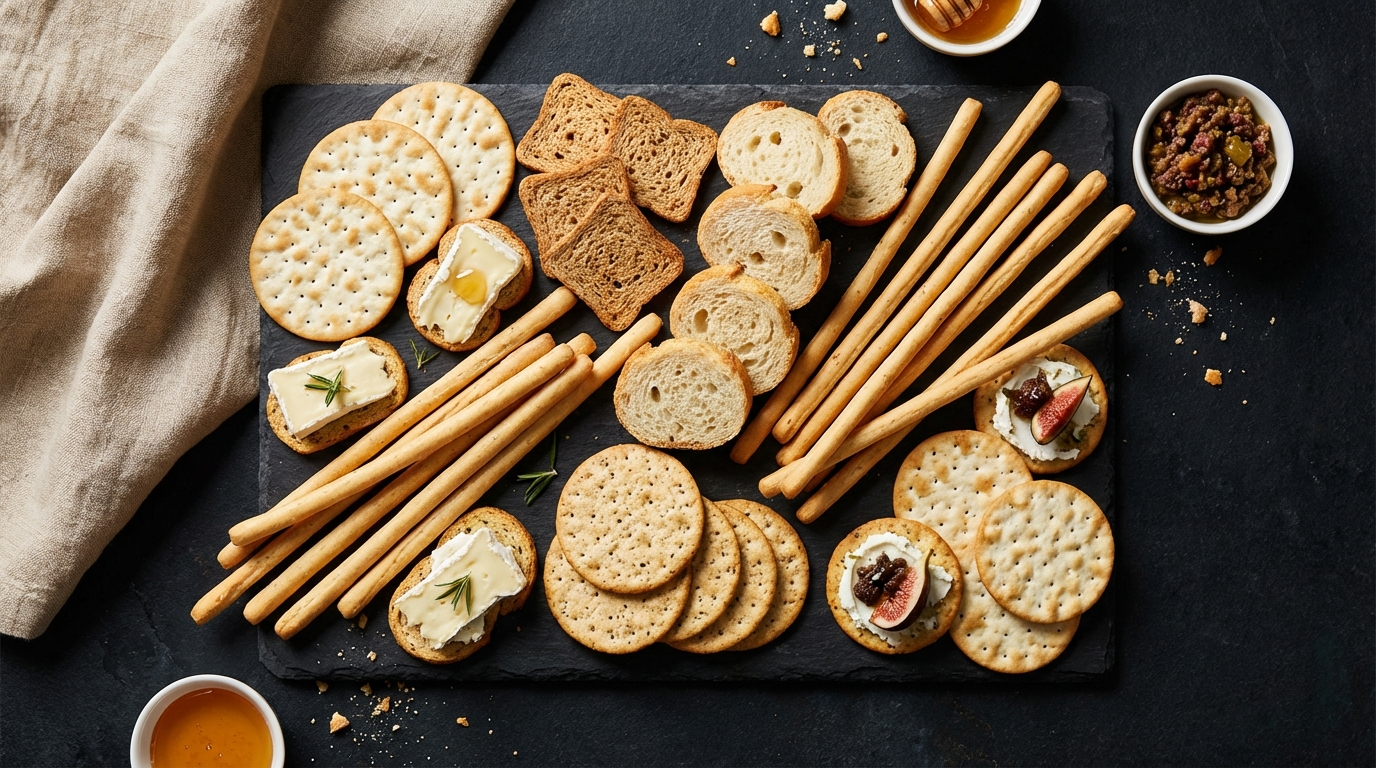
Crackers and bread serve as the vehicle for everything else on the board. They're not the star — they're the stage. The biggest mistake people make is choosing crackers with too much flavor. Rosemary-olive oil crackers sound appealing, but they compete with the cured meats instead of supporting them.
Best Crackers for Charcuterie
Plain water crackers are the workhorse of any charcuterie board. Their neutral flavor lets the meat and cheese speak, and their crisp texture provides satisfying crunch without crumbling into dust. Carr's Table Water Crackers are the gold standard, but any plain water cracker works.
Seeded crackers — with sesame, flax, or everything-bagel seasoning — add subtle complexity without overwhelming. They pair especially well with stronger cheeses like aged cheddar and Manchego.
Whole wheat or multigrain crisps bring an earthy, nutty backbone that pairs beautifully with aged, hard cheeses and robust cured meats like coppa or finocchiona. Look for thin, crisp varieties rather than thick, bready ones.
Grissini (Italian breadsticks) add visual height to your board and work perfectly wrapped in prosciutto. They're thin, crisp, and mild — exactly what you want alongside delicate meats.
Best Bread for Charcuterie
Sliced baguette is the classic choice. Cut it on a diagonal into rounds about a quarter-inch thick, then lightly toast them for stability. Fresh baguette goes stale fast on a board, so toast is better for events lasting more than thirty minutes.
Crostini — thinly sliced baguette brushed with olive oil and baked until golden — are the most reliable bread option. They stay crisp for hours and hold up under the weight of soft cheeses and piled-on toppings.
Focaccia torn into irregular pieces adds a rustic, generous feel to larger boards. It's best for casual gatherings where you want people to tear and share rather than carefully assemble bites.
What to Avoid
Skip flavored crackers where the seasoning competes with your meats. Jalapeño crackers, ranch-flavored crisps, and heavily herbed options belong in a snack bowl, not on a charcuterie board. Also avoid thick, soft bread like sandwich bread — it absorbs moisture from the meats and turns soggy within minutes.
Jams, Honey & Spreads: The Sweet Element
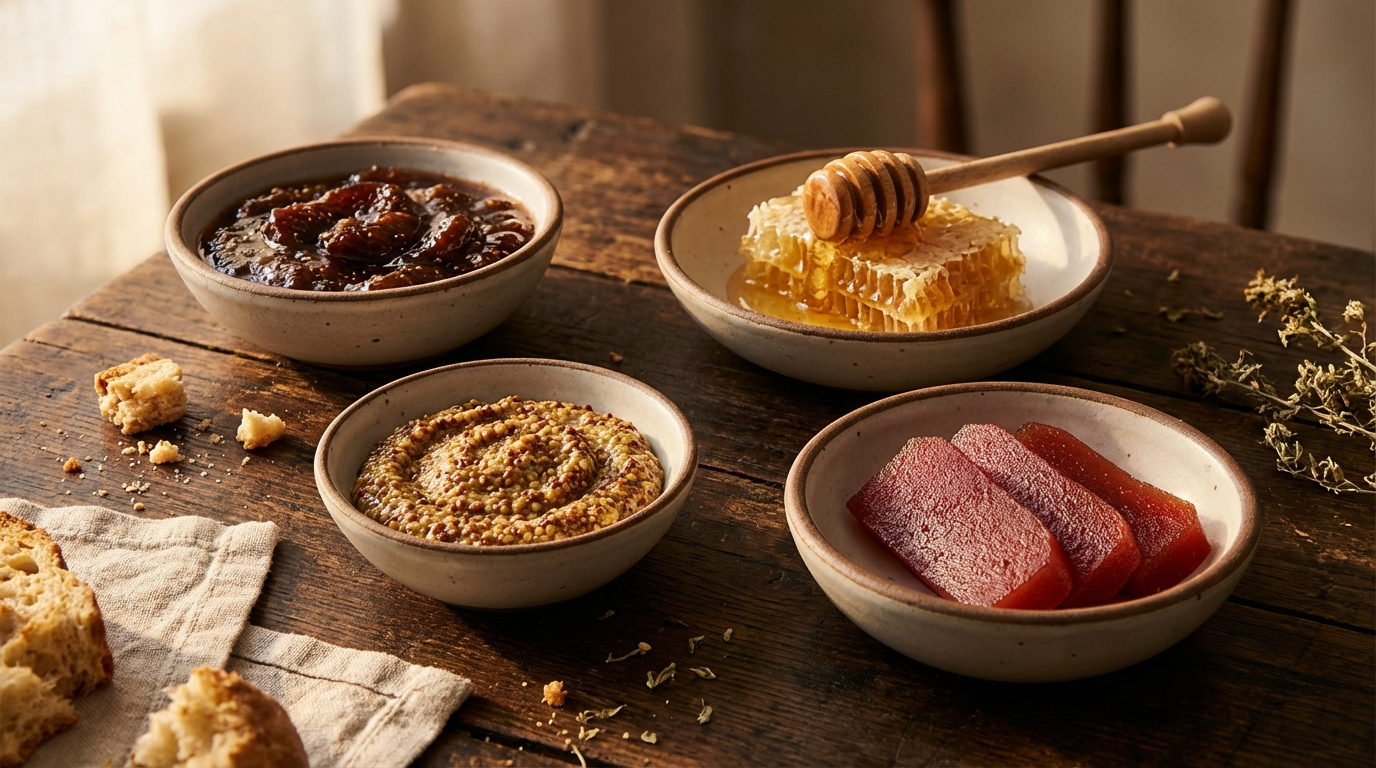
Sweet spreads and condiments are what elevate a charcuterie board from good to unforgettable. The sweet-salty contrast between jam and cured meat triggers the same pleasure response that makes chocolate-covered pretzels irresistible. But not all sweets work equally well.
Must-Have Spreads
Fig jam (or fig preserves) is the single most versatile charcuterie accompaniment. Its deep, earthy sweetness pairs with virtually every cured meat and cheese on your board. A slice of prosciutto draped over a cracker with a smear of fig jam is one of the best bites in food. Dalmatia brand fig spread is widely available and excellent.
Raw honeycomb is both a visual showpiece and a flavor bomb. Breaking off a piece of honeycomb and pairing it with aged Manchego or blue cheese creates an extraordinary bite. The wax adds a subtle chewiness that liquid honey can't match. If honeycomb isn't available, a small bowl of good wildflower honey with a dipper works nearly as well.
Whole grain mustard straddles the line between sweet and savory. Its gentle heat and tangy flavor cut through fatty meats like saucisson sec and summer sausage. Maille Old Style is a reliable choice, or any Dijon with visible mustard seeds.
Quince paste (membrillo) is the traditional Spanish pairing for Manchego cheese, but it works beautifully with any firm, aged cheese on your board. Slice it into thin strips rather than trying to spread it — it's firm enough to eat like candy.
Other Excellent Options
Hot pepper jelly adds a sweet-spicy kick that pairs especially well with cream cheese and mild, soft cheeses. It also complements spicy cured meats like soppressata or 'nduja by echoing their heat.
Apricot preserves offer a brighter, more tart sweetness than fig jam. They're particularly good with goat cheese and prosciutto.
Chutney — particularly mango or tomato chutney — brings a complexity of sweet, tart, and spice that works when you want your board to lean international rather than strictly Italian.
Pickles, Olives & Briny Bites: The Acid Element
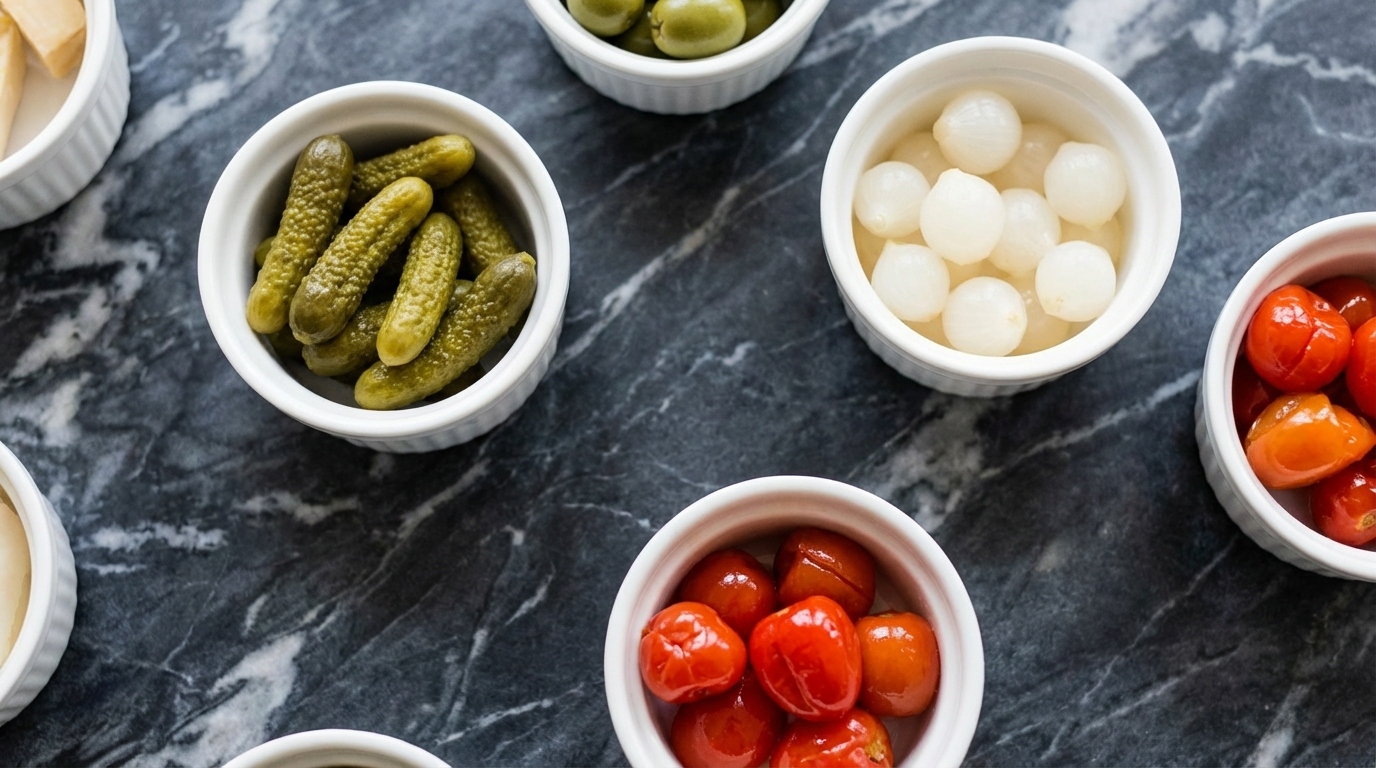
If sweet elements are the soul of a charcuterie board, pickled and briny accompaniments are the backbone. They perform the critical job of cutting through fat and resetting your palate so every bite of meat tastes as good as the first. Without acid, even the best board becomes exhausting after a few bites.
Essential Pickled Items
Cornichons are the classic French pairing for charcuterie and pâté. These tiny, tart pickles deliver a sharp vinegar snap that cuts through fatty meats like rilettes, mortadella, and salami. Their small size makes them easy to eat in a single bite alongside a piece of meat. Maille cornichons are excellent, as are any imported French variety.
Pickled pearl onions are underrated on charcuterie boards. Their mild sweetness and gentle acidity complement both cured meats and strong cheeses without overwhelming. They're especially good alongside country pâté and aged Gouda.
Giardiniera — Italian pickled vegetables including cauliflower, carrots, and peppers — adds both acid and crunch. It's a natural fit for Italian-leaning boards heavy on salumi.
Essential Olives
Castelvetrano olives are the undisputed king of charcuterie olives. Bright green, buttery, and mild, they appeal even to people who think they don't like olives. Their meaty texture and gentle brininess pair with everything on the board without dominating.
Kalamata olives bring a stronger, more assertive olive flavor that stands up to robust cured meats like coppa and finocchiona. Their deep purple color also adds visual contrast to the board.
Oil-cured black olives — wrinkled, intensely flavored, and slightly bitter — are for olive lovers. They pair best with aged, hard cheeses and bold red wines.
Other Briny Additions
Peppadew peppers — small, sweet-hot pickled peppers from South Africa — have become a charcuterie board staple. Their cavity makes them perfect for stuffing with cream cheese or goat cheese. They add color, sweetness, and a mild kick.
Marinated artichoke hearts contribute an herby, tangy element that pairs well with mild cured meats. Drain them well before placing on the board to prevent oil from running onto other items.
Capers and caper berries bring an intense brininess that works in small amounts. Caper berries — the larger, stem-attached variety — are easier for guests to pick up and eat.
Nuts & Dried Fruit: The Pantry Staples
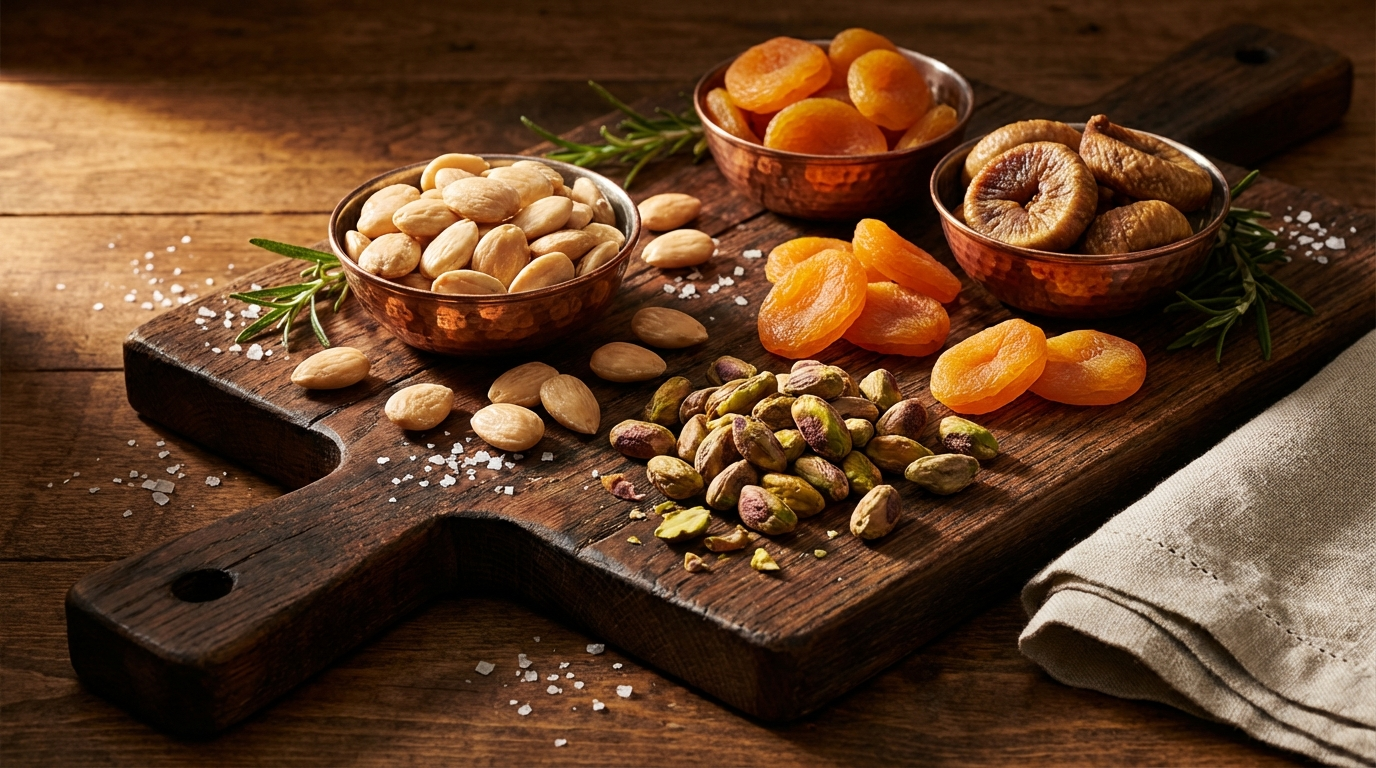
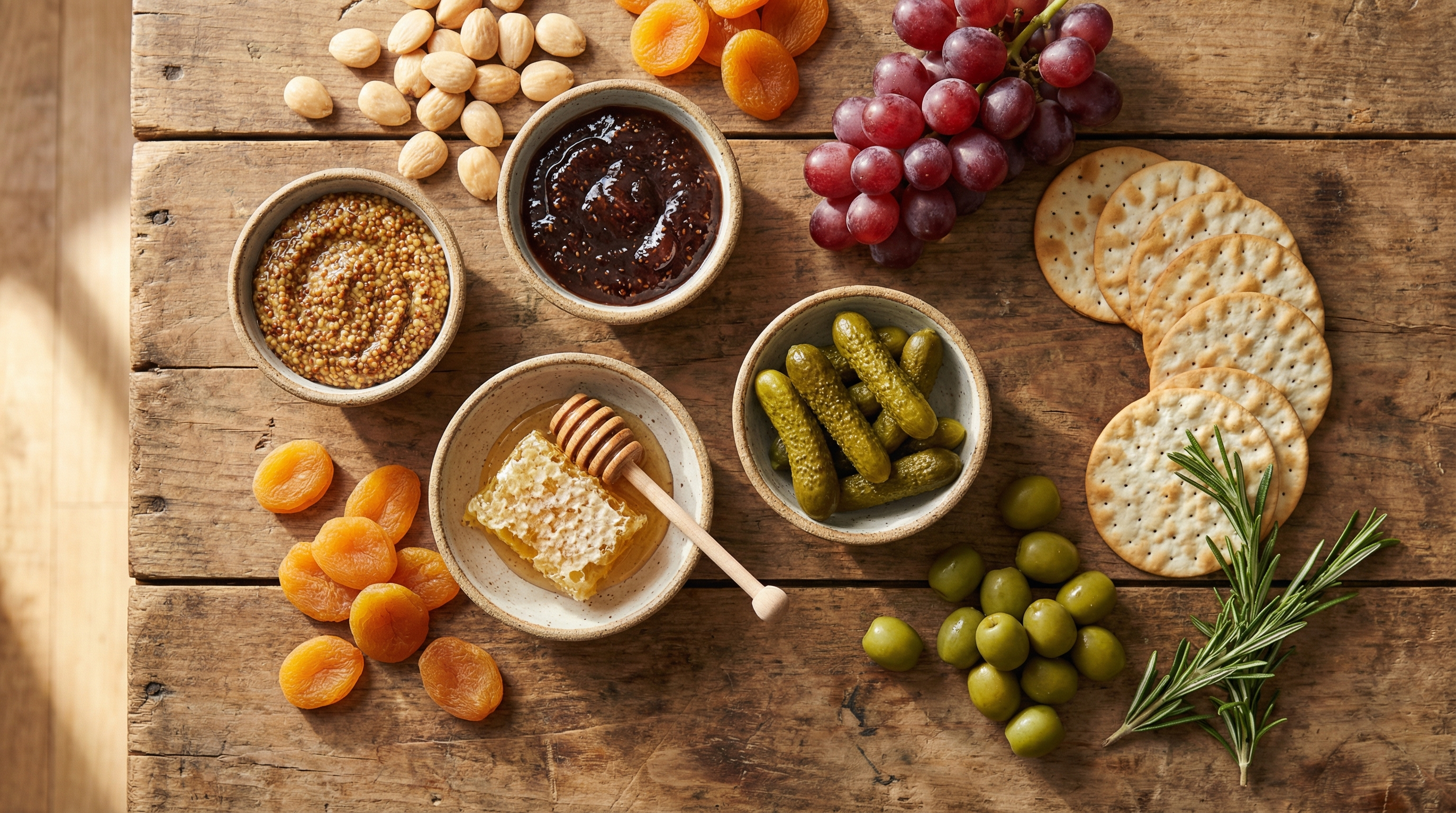
Nuts and dried fruit are the unsung heroes of charcuterie boards. They're shelf-stable, require zero preparation, and fill gaps on the board both visually and culinarily. A handful of almonds and some dried apricots can turn a sparse-looking board into one that feels abundant.
Best Nuts for Charcuterie
Marcona almonds are the gold standard. These Spanish almonds are roasted in olive oil and lightly salted, giving them a richer, more buttery flavor than regular almonds. They're softer too, with a texture closer to macadamia nuts. Marconas pair with practically every cheese, and their mild savoriness complements both sweet and salty elements on the board.
Roasted pistachios add vibrant green color and a distinctive, slightly sweet flavor. Their association with charcuterie runs deep — mortadella traditionally contains pistachios, and many Italian salumi are studded with them. Shell-on pistachios look more natural; shelled are more convenient for guests.
Walnuts and pecans bring an earthier, more tannic crunch that pairs exceptionally with blue cheese and aged cheddar. Toast them lightly in a dry pan to amplify their flavor. Candied versions — tossed with a little maple syrup and salt — bridge the sweet and savory worlds perfectly.
Hazelnuts have a natural affinity for both chocolate and cheese. Skinned, roasted hazelnuts pair beautifully with Gruyère, Comté, and any Alpine-style cheese.
Best Dried Fruit for Charcuterie
Dried apricots are the most versatile dried fruit for charcuterie. Their bright tartness and chewy texture contrast beautifully with salty, fatty cured meats. They're especially good with prosciutto and goat cheese — the classic combination of fruit, salt, and tang.
Dried figs — particularly Turkish or Calimyrna figs — have a honey-like sweetness and jammy interior that pairs with blue cheese and aged Gouda. Cut larger figs in half to expose their interior and make them easier to eat.
Medjool dates are nature's caramel. Split them open, remove the pit, and stuff them with a sliver of Parmesan or a dab of blue cheese for one of the most addictive bites on any board. Their intense sweetness demands a salty or sharp partner.
Dried cranberries add tartness and bright red color. They work best scattered around the board as both garnish and nibble, particularly in fall and winter when their flavor feels seasonal.
Fresh Fruit: The Finishing Touch
Fresh fruit introduces moisture, brightness, and a sense of abundance that dried fruit alone can't achieve. It also provides the most immediate visual impact — a cluster of red grapes or a scattering of fresh berries instantly makes any board look more inviting and generous.
Red and green grapes are the single most important fresh fruit on a charcuterie board. Their juicy pop cleanses the palate between rich bites, their natural sweetness complements salty meats, and visually, grape clusters draped across a board create an effortlessly elegant look. Break large bunches into smaller clusters of four to six grapes for easier serving.
Fresh figs — when in season (late summer through early fall) — are a charcuterie board luxury. Slice them in half to reveal their jewel-toned interior. They pair magnificently with prosciutto, blue cheese, and honey. Out of season, skip them rather than buying inferior imports.
Fresh berries — raspberries, blackberries, and blueberries — add color and a light sweetness that doesn't compete with other flavors. Scatter them in small clusters rather than piling them in one spot. Avoid strawberries, which are too large and watery for charcuterie boards.
Apple and pear slices provide a clean, crisp crunch that pairs well with sharp cheddar, Brie, and blue cheese. Toss them in a little lemon juice immediately after cutting to prevent browning. Thinly slice them so they're easy to top with cheese and eat in one bite.
Seasonal citrus — blood orange segments in winter, mandarin sections in fall — adds unexpected brightness. Use sparingly; a few segments go a long way and prevent the board from feeling too sweet.
How to Balance Your Board: The Accompaniment Formula
With so many options, it's easy to overcrowd a board or lean too heavily in one direction. Here's a simple formula that ensures balance every time:
For a board serving 4 to 6 people, include:
- 2 types of crackers or bread (one plain, one with mild flavor)
- 2 sweet elements (one jam or honey, one dried fruit)
- 2 acidic elements (one pickle, one olive)
- 1 to 2 types of nuts
- 1 fresh fruit (grapes are the default)
- 1 specialty item (honeycomb, stuffed peppers, or a unique spread)
This ratio — roughly equal parts sweet, acid, crunch, and fresh — mirrors the balance that professional charcuterie caterers use. It ensures that no matter which meat or cheese a guest picks up, there's a perfect accompaniment within arm's reach.
Placement Strategy
Place accompaniments in small clusters distributed around the board rather than grouping all nuts together or all pickles together. This approach serves two purposes: it looks more natural and abundant, and it means guests don't have to reach across the board for the accompaniment they want.
Put wet items (olives, pickles, jams) in small ramekins or bowls to prevent their liquids from soaking into crackers or bread. This is not just aesthetic — soggy crackers will ruin your board faster than anything else.
Fill visible gaps with scattered nuts, dried fruit, and fresh herbs. Rosemary sprigs, thyme clusters, and small sage leaves add color and aroma without taking up real estate meant for edible items. Some guests will eat the herbs; others will ignore them. Either way, they serve their purpose.
The Quantity Rule
Plan for roughly two ounces of accompaniments total per person. That sounds like a lot, but it includes crackers, which take up volume quickly. For a board serving six, that means about twelve ounces total of accompaniments — roughly a small bowl of each item rather than a heaping portion. You want guests to feel like there's plenty without drowning the meats and cheeses that should remain the focal point.
Quick Reference: Accompaniment Pairing Cheat Sheet
These are specific pairings that work exceptionally well together. When building your board, try to include at least three of these combinations:
- Prosciutto + fig jam + Marcona almonds — the classic Italian combination of salt, sweet, and crunch
- Soppressata + cornichons + whole grain mustard — the acid and tang cut through soppressata's spicy fat
- Manchego + quince paste + walnuts — the traditional Spanish trio that's lasted centuries for good reason
- Blue cheese + honeycomb + dried figs — bold, sweet, and jammy in every bite
- Brie + apricot preserves + fresh grapes — mild, fruity, and universally crowd-pleasing
- Coppa + Castelvetrano olives + focaccia — a Mediterranean combination that tastes like a trip to Italy
- Mortadella + pickled giardiniera + crostini — the Italian deli sandwich, deconstructed
- Goat cheese + hot pepper jelly + dried apricots — tangy, spicy, and sweet with textural contrast
These pairings aren't rules — they're starting points. The beauty of charcuterie is that every guest builds their own bites. Your job is to give them the best possible ingredients to work with.
Frequently Asked Questions
What are the best accompaniments for a charcuterie board?
The best charcuterie board accompaniments include fig jam, whole grain mustard, cornichons, Castelvetrano olives, Marcona almonds, dried apricots, fresh grapes, honeycomb, and a mix of plain water crackers and sliced baguette. Aim for a balance of sweet, acidic, crunchy, and fresh elements.
How much accompaniments do I need per person?
Plan for roughly two ounces of total accompaniments per person, including crackers and bread. For a board serving six people, that means about twelve ounces total spread across your various accompaniment categories.
What jam goes best with charcuterie?
Fig jam is the most versatile jam for charcuterie boards. Its deep, earthy sweetness pairs with virtually every cured meat and cheese. Apricot preserves and hot pepper jelly are excellent secondary options.
What olives are best for a charcuterie board?
Castelvetrano olives are the best all-around choice — they are buttery, mild, and appeal even to people who typically do not enjoy olives. Kalamata olives are a good second option for a more assertive olive flavor.
Can I prepare charcuterie board accompaniments in advance?
Yes. Nuts, dried fruit, jams, olives, and pickles can be portioned into ramekins a day ahead and refrigerated. Slice fresh fruit and toast crostini within two hours of serving for the best texture and appearance.
More Charcuterie Guides
What Is Pink Curing Salt? Sodium Nitrite Explained for Home Charcuterie
Pink curing salt is the most essential — and most misunderstood — ingredient in meat curing. This guide explains what it is, why it's pink, how sodium nitrite prevents botulism, proper usage rates, and whether you can cure meat without it.
10 min readHow Long Does Charcuterie Last? Storage Guide for Cured Meats & Cheese
Understanding proper charcuterie storage ensures you enjoy it at peak quality while avoiding food safety risks.
10 min read