3 Mistakes Every New Smoker Makes
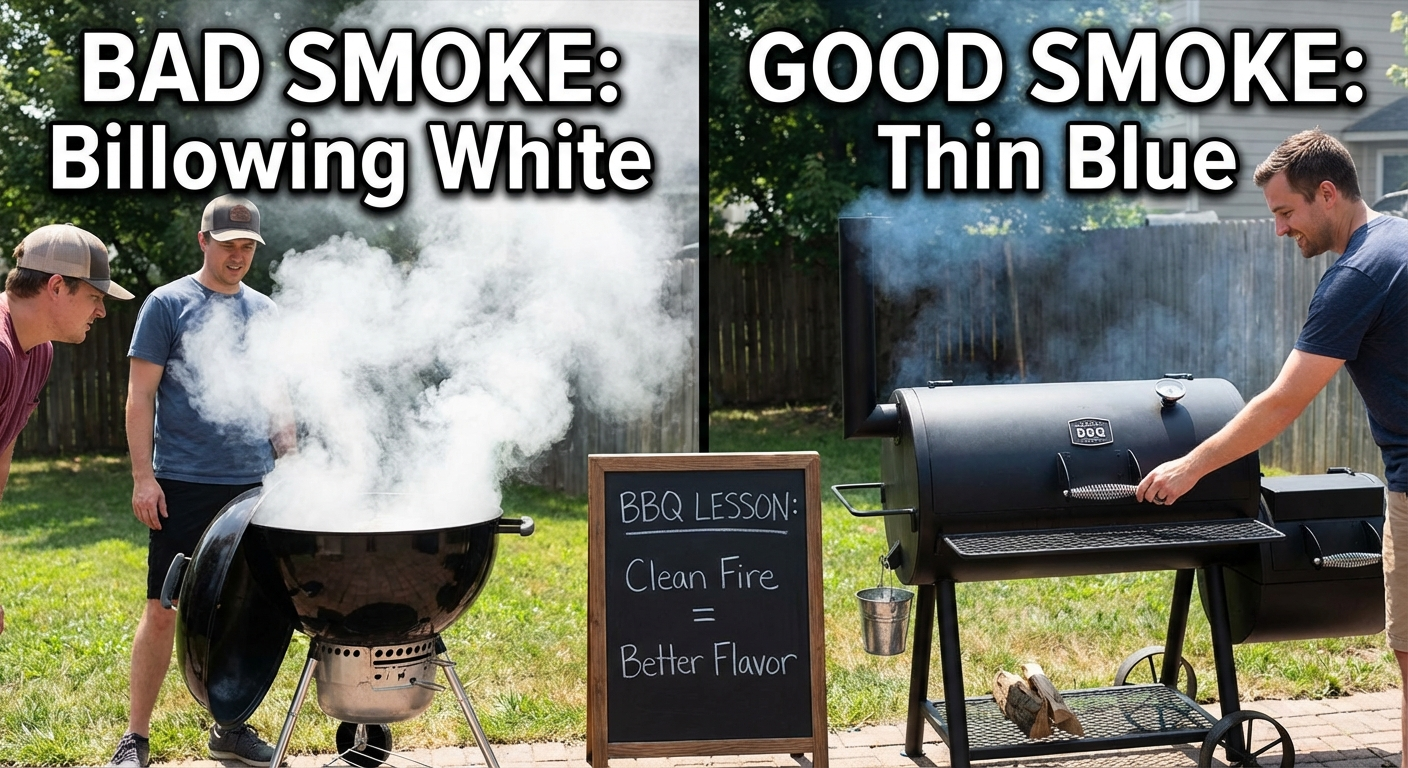
I've been teaching smoking classes and workshops for over a decade now. Every new batch of students — doesn't matter if they're engineers, chefs, or retirees — makes the same three mistakes on their first few cooks. These aren't obscure technique issues. They're fundamental habits that, once corrected, make everything better immediately.
Mistake #1: Too Much Smoke
This is the big one. New smokers think more smoke equals more flavor, so they pile on the wood and let it billow. The result is meat that tastes like a campfire — acrid, bitter, and harsh. Nobody wants to eat ashtray brisket.
Here's the thing: you want thin blue smoke, not thick white smoke. Thin blue smoke is clean combustion — the wood is burning efficiently and producing the desirable flavor compounds (syringol, guaiacol) without the harsh byproducts of incomplete combustion. You can barely see thin blue smoke. It looks like heat shimmer. That's what you're after.
Thick white smoke — what I call dirty smoke — means the wood isn't burning completely. Not enough oxygen, not enough heat, too much wood, or green unseasoned wood. The smoke deposits creosote and soot on your meat. It looks dramatic in photos, but it ruins food.
The fix: Use less wood. Build a proper coal bed before adding splits. Make sure your wood is seasoned (6+ months air-dried). Keep your intake damper open enough for good airflow. If you see thick white smoke for more than 5 minutes after adding wood, something's wrong.
Mistake #2: Opening the Lid
I call this "looky-loo syndrome." New smokers can't resist peeking. They open the lid every 30 minutes to check color, spritz, rearrange, take photos, or just stare at the meat. Every single time that lid opens, you lose heat and extend your cook time.
On an offset smoker, opening the cook chamber door drops the temperature 25-50°F instantly. It takes 15-20 minutes to recover. If you open the lid four times in the first three hours, you've added an hour to your cook. On a kamado or bullet smoker, the temperature swing is even worse.
But the bigger issue isn't time — it's consistency. Temperature fluctuations affect how bark develops, how fat renders, and how evenly the meat cooks. The best bark comes from steady, uninterrupted heat. Every time you break that consistency, the bark suffers.
The fix: Use a remote thermometer with probes in both the meat and the cook chamber. Monitor temps from your phone or a receiver without opening the lid. If the temperature is where it should be, leave the smoker alone. I check my briskets visually at the 5-hour mark and then when it's time to wrap. That's it. Two lid opens in a 14-hour cook.
Mistake #3: Skipping or Rushing the Rest
This one physically hurts me. Someone spends 12 hours smoking a beautiful brisket — perfect bark, right temp, everything done correctly — and then they slice into it immediately because they're hungry and excited. Juice rivers onto the cutting board. The meat is noticeably drier than it should be. All that patience, undone in 30 seconds of impatience.
The rest period is not optional. It's not a "nice to have." It's a critical part of the cooking process. Here's what happens during the rest:
- Muscle fibers, which contracted during cooking, relax and reopen
- Moisture that was pushed to the center of the meat redistributes throughout
- Residual heat continues converting collagen to gelatin
- The internal temperature equalizes — no more hot exterior and cooler center
A brisket that's rested properly will hold its juices when sliced. A brisket that's sliced immediately will lose a quarter of its moisture on the cutting board. Same brisket, same cook — dramatically different result based entirely on patience at the end.
The fix: Wrap the finished brisket in butcher paper, then a towel, and place it in a cooler (no ice) or a Cambro. Rest for a minimum of 1 hour. For brisket and pork shoulder, 2-4 hours is even better. I've held briskets for 6 hours in a cambro and they come out at 155°F — perfect slicing temperature, incredibly moist. Plan your cook backwards from when you want to eat, and build in rest time.
The Common Thread
All three of these mistakes come from the same place: impatience. Too much smoke because you want flavor fast. Opening the lid because you want to see progress. Rushing the rest because you want to eat.
BBQ is patience. The fire teaches patience. The meat demands patience. The rest rewards patience. Once you make peace with that, everything gets better.
Fix these three things and your next cook will be noticeably, immediately, dramatically better. I guarantee it.
More from the Blog
Why I'll Never Use a Gas Assist on My Offset
Some offset smokers come with gas-assist burners to help start fires and maintain temperature. Here's why I'll never use one and what I think it costs you.
The Brisket That Changed Everything
In 1999, I cooked the worst brisket of my life at a competition in Taylor, Texas. It was also the most important brisket I ever cooked.