Why I'll Never Use a Gas Assist on My Offset
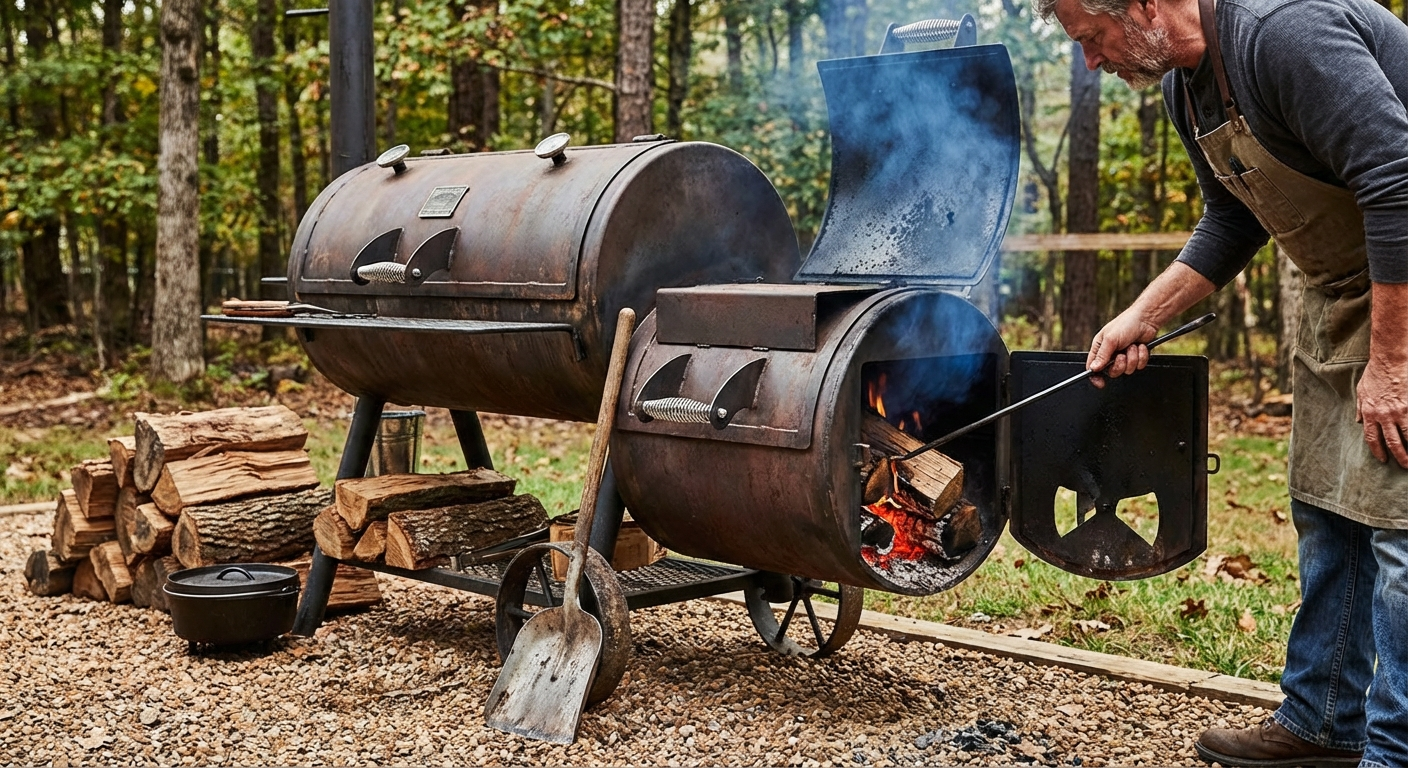
A buddy of mine just bought a new offset smoker — beautiful rig, quarter-inch steel, reverse flow design, the works. Then he showed me the gas-assist burner kit mounted inside the firebox. "Makes fire management way easier," he said. "Just turn the knob to keep temps steady."
I didn't say anything at the time because nobody wants to hear an opinion they didn't ask for. But since you're here, I'll tell you what I think: gas assist defeats the purpose of cooking on a stick burner.
What Gas Assist Does
A gas-assist system puts a propane or natural gas burner inside the firebox of an offset smoker. It supplements the wood fire with consistent BTU output, making it easier to maintain stable temperatures. Some people use it to start their fires faster. Others leave it running low during the entire cook as a "safety net" for temperature dips.
On paper, it sounds great. Why wouldn't you want more consistent temperatures and less babysitting?
What It Costs You
The whole reason to cook on an offset smoker — the only reason — is the flavor that comes from burning real wood. The combustion of seasoned hardwood produces hundreds of flavor compounds that deposit on the surface of your meat, penetrate the bark, and create that deep, complex smoke flavor that BBQ lovers chase.
When you supplement with gas, you're diluting that. The gas burner produces heat but no smoke compounds. Every BTU coming from the gas burner is a BTU that isn't coming from wood combustion. You're literally replacing smoke-producing fuel with flavor-neutral fuel.
Is the difference dramatic? Maybe not on a single cook. But over time, the pitmasters who produce the best BBQ are the ones who've learned to manage a wood fire so well that they don't need a crutch. The gas assist keeps you from developing that skill.
The Skill Argument
This is the bigger issue for me. Fire management is the core skill of offset smoking. It's what separates a pitmaster from someone who owns a smoker. Learning to read your fire — when to add a split, how far to open the damper, how to build a coal bed that burns steady for hours — that knowledge comes from practice. From failure. From sitting next to your pit at 2 AM and realizing you let the fire get too low and now you have to rebuild it.
Gas assist skips all of that. It's a shortcut around the skill that makes offset cooking worth doing. If you're using gas to maintain your fire, you're not really cooking on a stick burner — you're cooking on a gas grill with wood chunks for flavor. And at that point, why not just buy a pellet grill and be honest about it?
The Counter-Argument
I know what people will say: "Not everyone has time to babysit a fire." "Some people just want good BBQ without the hassle." "Stop gatekeeping."
Fair points, all of them. And look — if gas assist gets you cooking outside and smoking meat when you otherwise wouldn't, then it's a net positive. I'd rather you smoke a brisket with gas assist than not smoke one at all.
But if you bought an offset because you wanted the craft experience — the challenge, the learning, the satisfaction of producing great BBQ through skill rather than technology — then the gas assist works against that goal. It's training wheels that prevent you from learning to ride.
What I'd Do Instead
If you're struggling with fire management on your offset, here's what I'd try before reaching for gas:
- Better wood: Properly seasoned hardwood (15-20% moisture) makes fire management dramatically easier. If your wood is green or poorly seasoned, every cook is going to be a fight.
- Smaller splits: Smaller pieces catch faster and are easier to control. Cut your splits in half until you get comfortable.
- Build a bigger coal bed: Most fire problems come from an insufficient coal bed. Burn down extra splits into coals before you put meat on. A strong coal base is the foundation of stable temps.
- Practice without meat: Run your smoker empty a few times. Practice fire management without the pressure of an expensive brisket on the grate. It's cheaper education.
My grandfather didn't have gas assist. My father didn't either. They learned to read fire the way you learn to drive stick — through practice and patience. The skill is the reward. Don't skip it.
More from the Blog
The Brisket That Changed Everything
In 1999, I cooked the worst brisket of my life at a competition in Taylor, Texas. It was also the most important brisket I ever cooked.
3 Mistakes Every New Smoker Makes
I've taught hundreds of people to smoke meat. These three mistakes show up almost every single time, and they're all easy to fix once you know what to look for.