The Brisket That Changed Everything
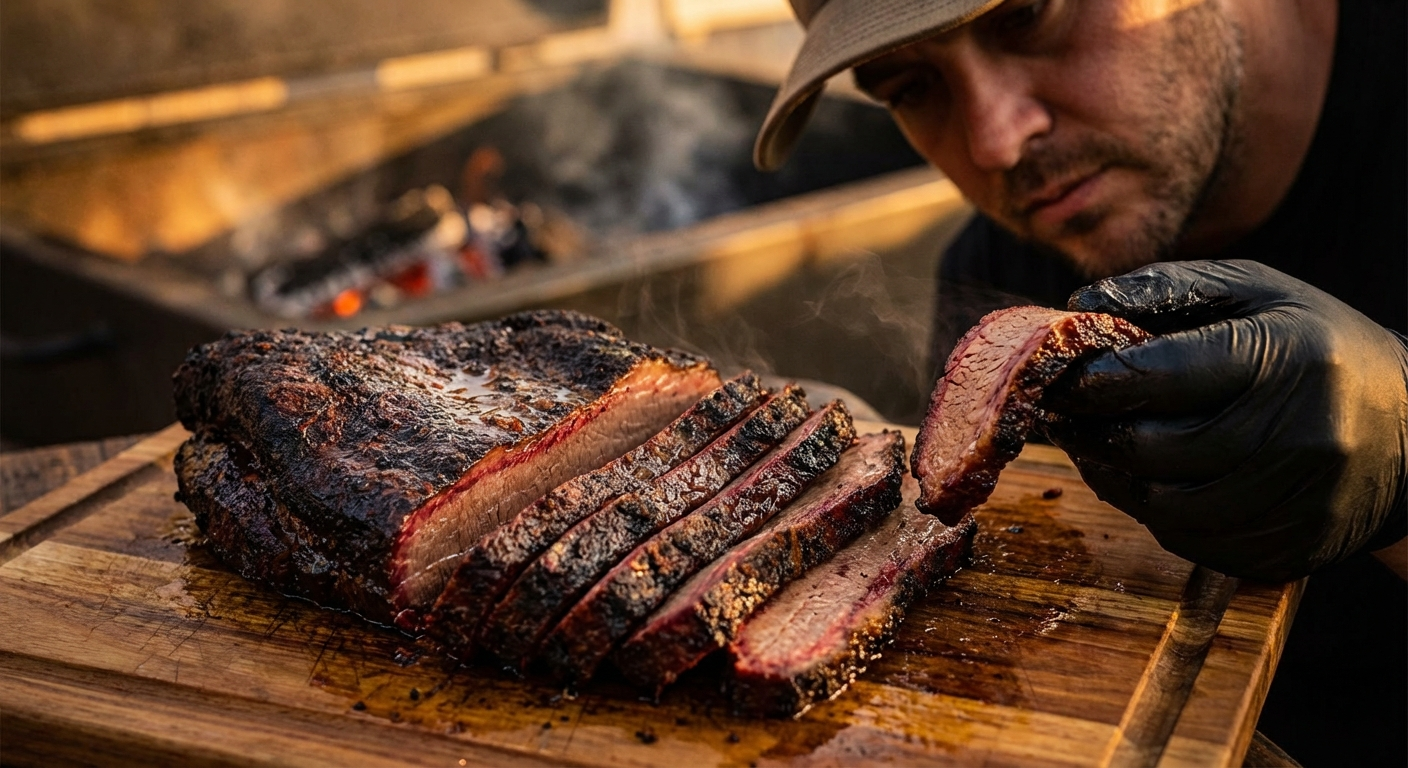
It was October 1999, and I was competing in the Lone Star BBQ Championship in Taylor, Texas. My second year on the competition circuit. I'd placed well at a few smaller events and my head was getting big. I thought I knew brisket. I'd been cooking it at Delgado's since I was a teenager, feeding hundreds of people every weekend. How hard could a competition be?
The answer: humbling.
The Setup
I showed up with a rented trailer, my father's old 500-gallon offset, and four USDA Choice whole packers from a distributor I'd been buying from for years. Good briskets — not great, but solid. I trimmed them the way I'd always trimmed them at the restaurant: minimal. Just knock off the loose stuff and throw them on.
I seasoned with the same rub I used at the shop — salt, pepper, garlic, a little paprika. Started my fire at 10 PM with post oak, just like every other cook I'd done. Business as usual.
The night went fine. Fire management was second nature by then. I'd been cooking on that pit for years. Temps stayed steady at 225°F (I was still a 225 guy back then). I added splits every 45 minutes, caught a couple hours of sleep in the truck, and by morning the briskets looked beautiful.
The Turn-In
I pulled the briskets around 9 AM, wrapped them in foil, threw them in a cooler. At noon, I sliced for the turn-in box. The bark looked good. The smoke ring was deep. I was feeling confident.
Then I took a bite.
It was dry. Not terrible — you could eat it. But compared to what I knew brisket could be, it was mediocre. The flat especially was tight and lean, missing that buttery, melt-in-your-mouth quality that great brisket has. The seasoning was fine but one-dimensional. And the smoke flavor — which I thought was my strong suit — tasted a little harsh. Not bitter exactly, but heavier than it needed to be.
I submitted my box anyway. What else are you going to do?
I placed 23rd out of 28 teams in brisket. Twenty-third.
What I Learned
I spent the rest of that weekend watching the top teams and talking to anyone who'd share. Here's what I learned — lessons that completely changed my approach:
1. Grade Matters More Than I Thought
The teams placing first and second were cooking USDA Prime briskets. I'd been using Choice my whole career because that's what the restaurant bought. The difference in marbling — and in the finished product — was visible. I started buying Prime for competition and never went back. The extra $2-3 per pound is nothing compared to the difference in results.
2. Trimming Is an Art
I watched a pitmaster from Houston spend 20 minutes trimming a brisket. Twenty minutes. I was doing mine in three. He shaped it into a perfect aerodynamic form — even thickness, squared edges, fat cap trimmed to a precise quarter inch. Every surface was going to cook evenly and develop bark. My briskets had thick spots, thin spots, and flaps of meat that burned while the center was still raw.
3. Temperature Management Is Precision
I'd been eyeballing my pit temperature with a gauge that turned out to be 30°F off. Thirty degrees. The top teams had calibrated thermometers at grate level, some with multiple probes. They knew exactly what temperature their meat was sitting at, not what some cheap gauge on the lid said.
4. The Rest Is Not Optional
I'd rested my briskets for about 90 minutes. The winning team rested theirs for four hours in an insulated Cambro. When he sliced, juice pooled on the cutting board. When I sliced, the juice had already left the building.
The After
I went home and threw out everything I thought I knew about competition brisket. I bought a calibrated thermometer. I upgraded to Prime. I spent hours practicing trimming. I raised my cook temp to 250°F after experimenting with different ranges. I started resting briskets for a minimum of two hours.
The next year, I placed third at the same Taylor event. The year after that, I won my first state championship.
That terrible brisket in 1999 was the most important cook of my life. It taught me something I should have known already: doing something for years doesn't mean you're doing it well. The restaurant had let me get comfortable. Competition showed me how much room I had to grow.
I tell this story to every student who comes through my classes. No matter how long you've been cooking, stay humble. Stay curious. The best pitmasters I know are the ones who are still learning. The worst ones are the ones who think they've figured it all out.
I've been at this for 30 years now, and I'm still learning. The fire keeps teaching if you're willing to listen.
More from the Blog
Why I'll Never Use a Gas Assist on My Offset
Some offset smokers come with gas-assist burners to help start fires and maintain temperature. Here's why I'll never use one and what I think it costs you.
3 Mistakes Every New Smoker Makes
I've taught hundreds of people to smoke meat. These three mistakes show up almost every single time, and they're all easy to fix once you know what to look for.